In the chaotic and often unpredictable digital landscape of India, few accounts have managed to capture the raw reality of daily life as effectively as 'Ghar Ke Kalesh' (GKK). Boasting millions of followers across platforms like X (formerly Twitter) and Instagram, the account became a digital archive of public brawls, domestic disputes, and road rage incidents. However, the recent allegations by its founder, Abhishek Bhadana, regarding a systematic crackdown and threats from authorities, open a new chapter in the debate over free speech in the world's most populous democracy.
The Rise of a Digital Phenomenon
'Ghar Ke Kalesh,' which loosely translates to 'Household Quarrels,' did not start as a political tool. It was a platform that capitalized on innate human curiosity—or voyeurism—regarding conflict. From fights in the Delhi Metro to heated confrontations in local neighborhoods, GKK offered an unfiltered look at India's social friction. For the country's Gen Z, the account became more than mere entertainment; it became a way to witness a reality that traditional media often sanitizes or ignores.
The account's success was built on speed and authenticity. In an era where content is frequently staged, GKK offered the 'real.' But this rawness soon began to irritate those in power. Authorities, seeking to maintain an image of 'law and order,' began to view Bhadana’s viral content not as a mirror of society, but as a threat to public tranquility and national reputation.
Allegations of Crackdown and the Legal Framework
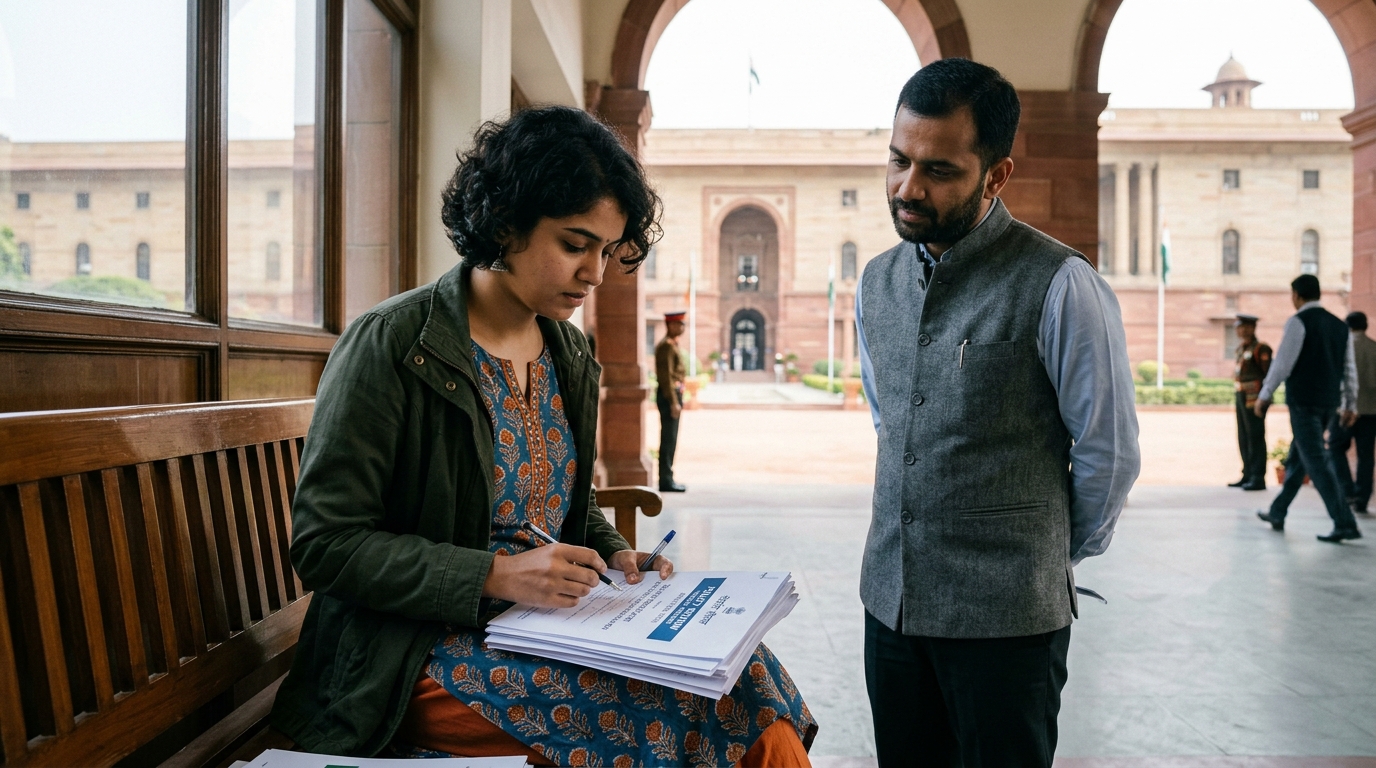
Bhadana claims he is facing intense pressure to take down specific videos, alongside direct threats of legal retribution. This case is not an isolated incident. India has dramatically tightened its social media regulatory framework through the Information Technology (IT) Rules of 2021 and subsequent amendments. These rules grant the government expansive powers to order the removal of content deemed 'harmful' or 'misleading.'
According to analysts, the pressure on GKK is part of a broader strategy to control the digital narrative. When a video showing police high-handedness or social dysfunction goes viral, the state’s reaction is often to suppress the messenger rather than address the underlying issue. Bhadana maintains that the threats he faces are intended to intimidate not just him, but the entire community of independent content creators who bypass traditional gatekeepers.
The Social Dimension: Voyeurism or Testimony?
However, there is an ethical dimension that complicates the matter. 'Ghar Ke Kalesh' often posts videos without the consent of those involved, raising serious privacy concerns. Critics of the account argue that commodifying human misery and anger is not journalism, but a form of digital cannibalism. On the other hand, Bhadana’s supporters emphasize that in a public space, recording reality is a right, and these videos often serve as evidence of injustices that would otherwise go unnoticed.
- The fine line between public interest and invasion of privacy.
- The use of social media as a tool for social accountability.
- The role of algorithms in promoting conflict-based content.
This clash highlights the legislative vacuum in India regarding personal data protection in relation to freedom of expression. While the government uses 'citizen protection' as a pretext for censorship, the lack of a clear and fair legal framework leaves creators exposed to both state whims and the backlash of those filmed.
Conclusion and the Future of Digital Expression
The 'Ghar Ke Kalesh' case is a microcosm of the global battle for control over the internet. In India, where smartphone penetration has brought millions online, the government is in a constant struggle to harness the power of viral phenomena. If Bhadana is forced into silence, the message to India’s Gen Z will be clear: the digital platform is free only as long as it does not disturb the status quo.
The future of independent content creation in India hangs in the balance. The need for a balanced approach that protects privacy without stifling free speech is more urgent than ever. Until then, the 'kalesh' (conflict) will not be limited to Bhadana's videos but will be fought daily in courtrooms and the corridors of power.