In an era where digital security is no longer merely a technical issue but a fundamental parameter of national sovereignty, Cisco Systems is sounding the alarm. According to recent reports and statements from company executives in FedTech, the rapid proliferation of Artificial Intelligence (AI) has created a new, extremely hazardous threat landscape. Cisco's central thesis is clear: the private sector can no longer weather the storm of AI-generated vulnerabilities alone; centralized, government-led coordination is required to act as a shield for critical infrastructure.
AI as a Threat Multiplier
Artificial Intelligence has transformed the cybersecurity game into a race of speed and automation. Attackers are now utilizing Large Language Models (LLMs) and specialized algorithms to scan millions of lines of code in seconds, identifying security gaps that previously would have required months of human labor. This "democratization" of cyberattacks means that even less experienced hackers can now launch sophisticated zero-day exploits.
As Cisco points out, the volume of new vulnerabilities has increased exponentially. The traditional method of patching after a problem is discovered is now hopelessly slow. AI allows malicious actors to create polymorphic malware that changes form to evade detection, making traditional antivirus software almost obsolete. In this environment, the need for proactive, AI-driven defense is imperative, but managing these systems requires resources and data that often exceed the capabilities of a single enterprise.
The Role of Government in Coordination
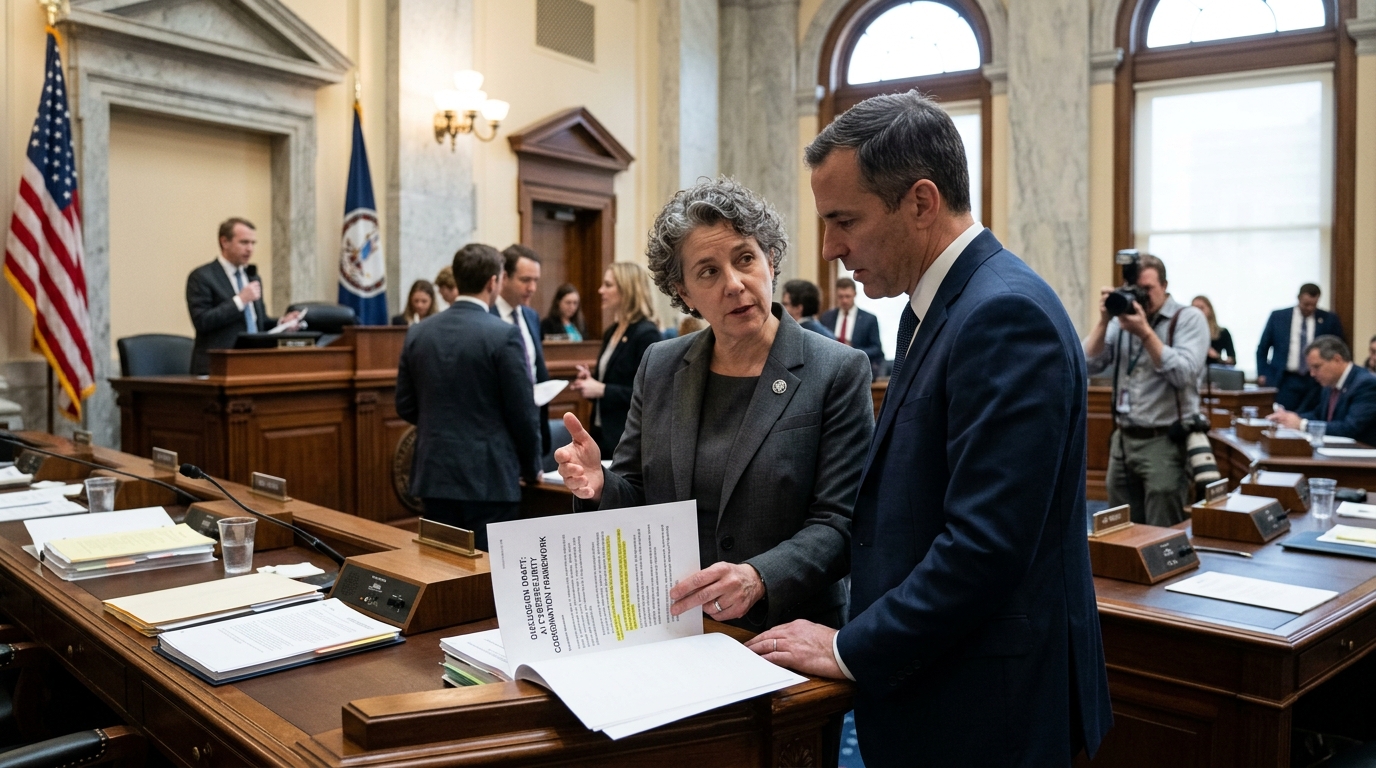
Cisco's proposal focuses on the need for an "orchestrated response." The government, through agencies such as CISA (Cybersecurity and Infrastructure Security Agency) in the US, possesses the panoramic view necessary to identify attack patterns across different sectors of the economy. This coordination is not just about providing guidance, but also about creating a common framework for real-time information sharing.
- Centralized Threat Data Management: Creating national databases where businesses can anonymously and instantaneously report every new threat.
- AI Security Standards: Establishing strict rules for how AI models are developed and trained to ensure they do not contain inherent vulnerabilities.
- Investment in Human Capital: State programs to train a new generation of cybersecurity experts who understand how to manage AI systems.
Cisco argues that if the government takes on the role of "referee" and "coordinator," the cost of protection for small and medium-sized enterprises—which are often the weak link in the supply chain—will decrease. Furthermore, legislative intervention can compel software manufacturers to adopt a "Secure by Design" approach, ensuring that security is integrated into the product from day one.
Geopolitics and National Security
The geopolitical dimension cannot be overlooked. The use of AI in cyber warfare is now a tool of state actors. When an attack is backed by a state budget, private defense is destined to fail unless it has the support of its own state. Cisco emphasizes that public-private partnership is the only bulwark against digital attacks aimed at destabilizing power grids, telecommunications, and banking systems.
"Cybersecurity in the AI era is no longer a race; it is a war of attrition. Without a government umbrella, businesses will find themselves fighting with swords in a laser battle."
In conclusion, Cisco's call for government intervention is not a request for more bureaucracy, but for a strategic upgrade of national defense. The speed at which AI is evolving leaves no room for complacency. The convergence of technological innovation with state oversight is the only path toward a secure digital future in 2026 and beyond.