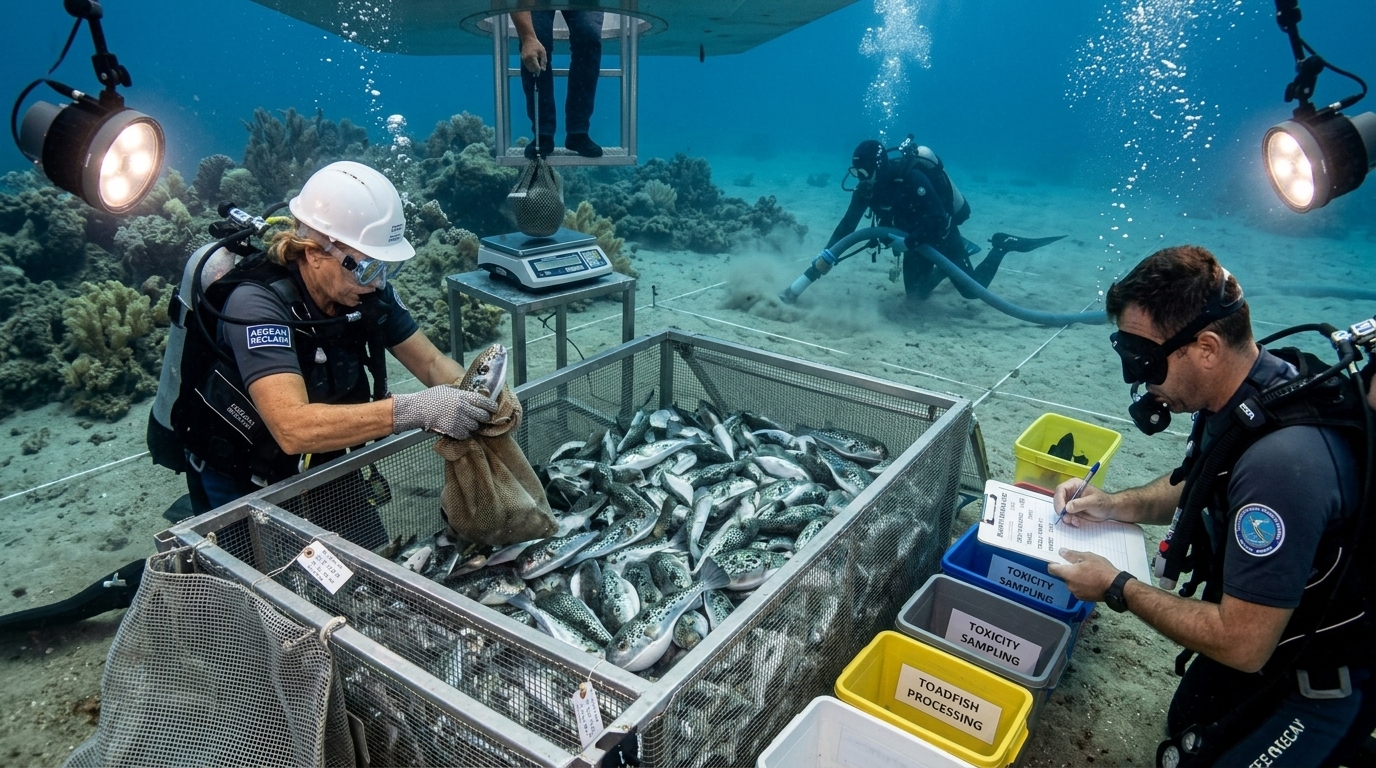
The Mediterranean Sea is undergoing a profound transformation, and with it, the centuries-old balances that have sustained Greek fisheries are being disrupted. The emergence and rapid spread of the silver-cheeked toadfish (Lagocephalus sceleratus), one of the most dangerous Lessepsian migrants, has become a recurring nightmare for professional fishers in Crete and the Dodecanese. In an effort to mitigate this ecological and economic disaster, the Greek Ministry of Rural Development and Food has launched a pilot management program, offering a compensation of €5.33 per kilogram for every toadfish caught and delivered for destruction.
The Chronicle of an Invasion
The silver-cheeked toadfish is not merely a foreign species in Greek waters; it is a biological invader with devastating consequences. Originating from the Red Sea and entering through the Suez Canal, its population has exploded over the last decade, fueled by rising sea temperatures and a total lack of natural predators in the Mediterranean ecosystem. It is an exceptionally aggressive species that destroys fishing gear—nets and longlines alike—with its powerful beak-like teeth. Furthermore, it preys on commercially valuable local species such as octopus and squid, decimating local stocks.
The most critical issue, however, remains its toxicity. The silver-cheeked toadfish contains tetrodotoxin (TTX), a potent neurotoxin that can cause respiratory failure and death in humans if consumed. Since there is no known antidote, the fish is strictly prohibited from being sold or consumed, rendering it a valueless and dangerous catch for fishers. The new program, funded by the European Maritime, Fisheries and Aquaculture Fund (EMFAF) 2021-2027, aims to create a financial incentive for fishers to actively target this species, despite its lack of market value.
Program Logistics: The €5.33 Bounty
The pilot program focuses on the regions most severely affected: the Region of Crete and the Region of the South Aegean (including the Cyclades and Dodecanese). Eligible participants are professional fishers with valid licenses and registered vessels. To prevent fraud and ensure the safe handling of the toxic catch, the procedure is strictly regulated. Fishers must deliver their catch to designated collection points, where weighing and recording take place under the supervision of port authorities or regional fishery officers.
Following collection, the fish are transported to certified facilities for incineration or other approved disposal methods, as returning them to the sea is strictly forbidden. While the price of €5.33 per kilo is considered fair by many in the industry—covering fuel, labor, and equipment repairs—fishermen's associations remain cautious. Their primary concern is whether the allocated budget will suffice to address the sheer scale of the infestation currently plaguing the Cretan and Carpathian Seas.
Ecological Impact and the Climate Crisis
The toadfish crisis is the "canary in the coal mine" for the Mediterranean’s climate reality. Scientists at the Hellenic Centre for Marine Research (HCMR) warn that the "tropicalization" of the Mediterranean is an irreversible trend. Beyond the toadfish, species like the lionfish and the dusky spinefoot (Germanos) have already established permanent populations. The difference is that the lionfish is edible and can be integrated into local cuisine, whereas the toadfish remains a toxic liability.
"This is no longer just a matter of fishery policy; it is an environmental rescue operation. If we do not control the toadfish population now, there will be nothing left for future generations to fish in the Aegean," a senior fishery official noted.
While the €5.33 bounty is a necessary first step, experts argue for a more holistic strategy. This could involve utilizing the toadfish for industrial purposes, such as fertilizer production or even the extraction of tetrodotoxin for pharmaceutical research—a field currently being explored in international laboratories. Until such solutions become viable, the government's bounty remains the only line of defense against this toxic invader.
Looking Ahead: Challenges and Sustainability
The success of this pilot program will be measured by the participation rates of the fishing community and the efficiency of the disposal infrastructure. If the results are positive, the Ministry intends to expand the initiative to other regions, such as the Peloponnese and the Ionian Islands, where sightings of the species are becoming more frequent. The battle for the Aegean is a long-term struggle requiring coordination, sustained funding, and a collective realization that the sea we once knew is changing. Supporting coastal fisheries is not just an economic necessity; it is a matter of national and ecological survival in the face of a changing climate.