In the landscape of modern American politics, few agencies have ignited as much controversy as Immigration and Customs Enforcement (ICE). Under the administration of Donald Trump, this agency has shifted from a border control mechanism to a heavily armed extension of executive power, often operating on the fringes of legality and ethics. Recent reports highlight a disturbing trend: the use of lethal force followed by flimsy justifications, alongside the systematic intimidation of those who dare to criticize the regime.
The Anatomy of Violence and the Rhetoric of Justification
The first case that recently shocked the public involves the shooting of a man by federal agents. What followed was a familiar pattern: the immediate mobilization of ICE’s PR machine to paint the victim as a threat using the most transparently thin pretenses. The ease with which the agency resorts to firearms suggests a culture of impunity cultivated over years. When agents operate under the belief that political leadership will protect them at all costs, respect for human life takes a backseat to displays of dominance.
Analysis of these incidents shows they are not isolated errors but part of a systemic approach. ICE, equipped with military-grade hardware and trained in battlefield tactics, increasingly treats American cities as occupied territories. The rhetoric of "law and order" serves as a smokescreen for operations that lack clear strategic goals, beyond creating a climate of fear within immigrant communities and the broader populace.
Intimidation and House Calls: The Suppression of Dissent
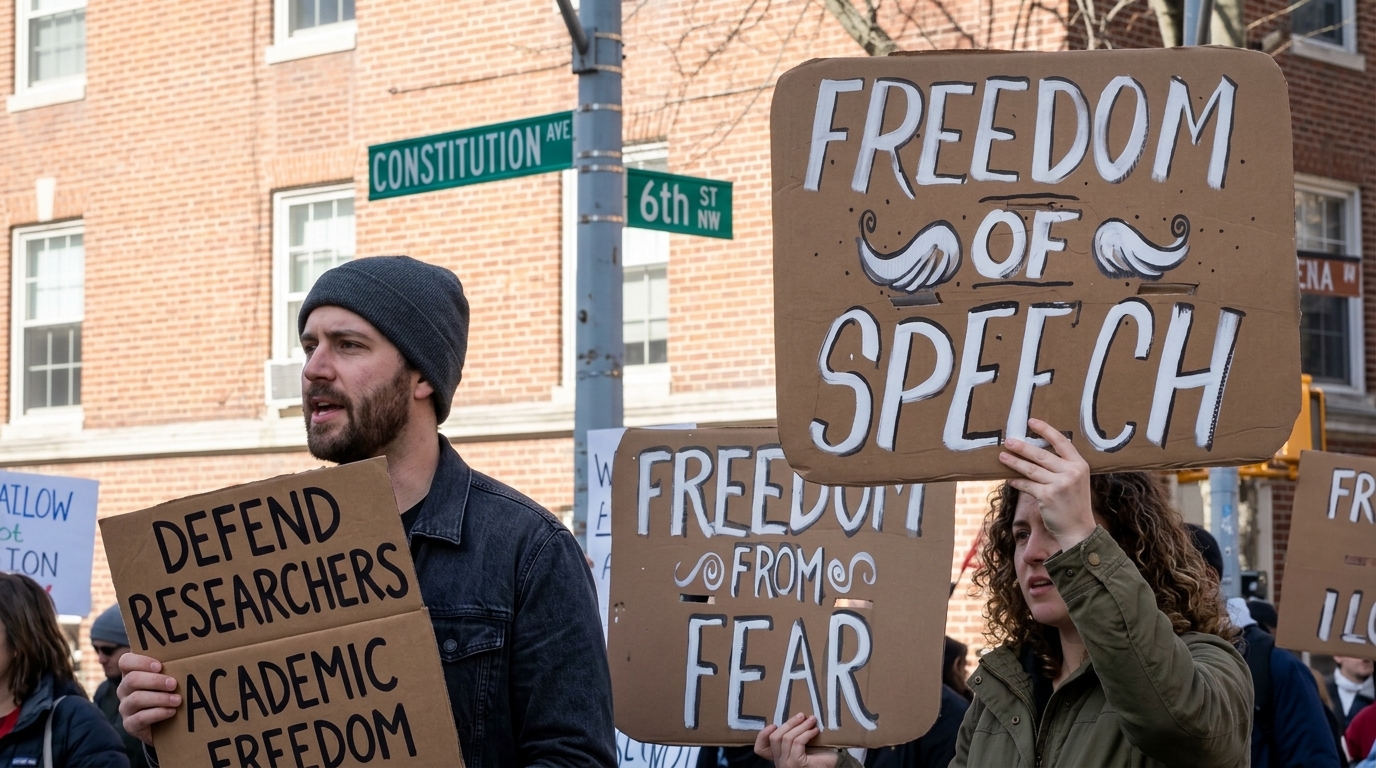
The second facet of ICE’s recent activity is perhaps even more alarming for the health of American democracy. Agents have reportedly conducted "house calls" to individuals who expressed public opposition to Department of Homeland Security (DHS) policies. These visits, often framed as routine inquiries, are nothing less than an attempt to muzzle citizens. When federal agents knock on your door because of a critical social media post or participation in a protest, the message is clear: you are being watched.
- Targeting journalists and activists investigating detention center conditions.
- Using surveillance technology to monitor legal political activity.
- Criminalizing acts of solidarity with undocumented immigrants.
This tactic mirrors authoritarian regimes and stands in direct opposition to Constitutional guarantees of free speech. The fact that ICE is being used as a tool for political retribution undermines public trust in federal institutions and transforms a security agency into a praetorian guard for the sitting administration.
Why ICE is Considered a "Loser" Despite Its Power
Despite a massive budget and state-of-the-art equipment, many analysts describe ICE as a "losing" organization. This characterization doesn't refer to a lack of firepower, but to its failure to fulfill its mission in an effective or humane way. The obsession with mass deportations and high-profile raids hasn't solved the immigration issue; instead, it has created a massive bureaucratic and humanitarian crisis.
"Power without moral legitimacy is nothing but brute force. ICE has lost the battle for public opinion and efficacy, ending up as a costly mechanism that produces more problems than it solves."
This failure is also fiscal. Billions of taxpayer dollars are funneled into private detention centers and military equipment, while basic border infrastructure remains neglected. ICE has become an agency that feeds off the very crisis it helps perpetuate. The lack of accountability ensures that mistakes are repeated, budgets are bloated, and social cohesion is eroded.
Conclusions and the Urgency for Reform
The situation, as detailed by The Verge, underscores the need for a radical rethinking of the role of federal law enforcement. Changing leadership is insufficient; what is required is the institutional safeguarding of civil rights and the imposition of strict rules of engagement. ICE, in its current form, operates as a state within a state, answering to a specific political agenda rather than the public interest. History will judge this period harshly—a time when fear was used as a tool of governance and violence was the primary response to complex social challenges.