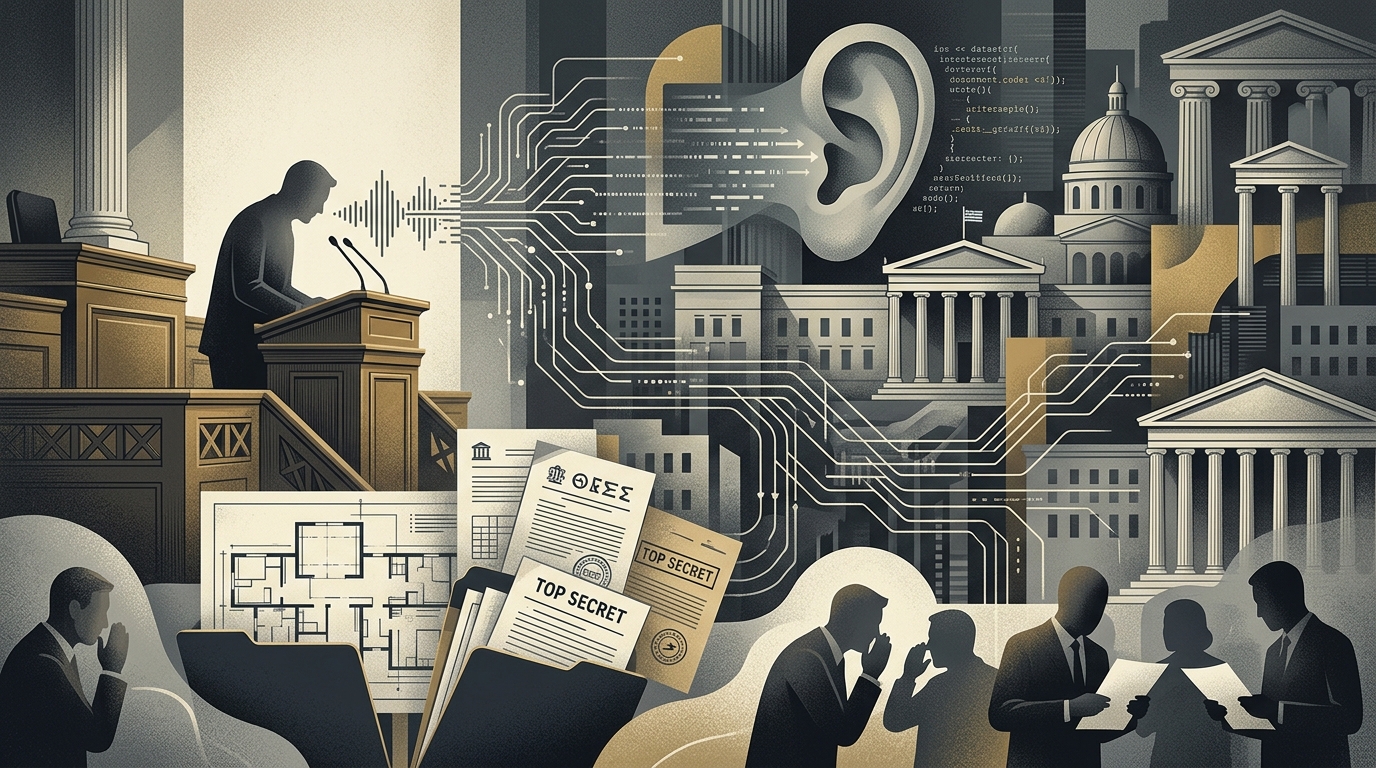
Greek political life in recent years has been overshadowed by the dark affair of wiretapping, a crisis that tested the resilience of institutions and the credibility of the Mitsotakis government. At the heart of this storm stood one figure: Grigoris Dimitriadis. The former General Secretary to the Prime Minister and nephew of Kyriakos Mitsotakis, who resigned in August 2022, has broken his silence in an interview that is triggering a chain reaction—not just for what he said about the past, but for his blunt analysis of the country's political personnel.
Assumption of Responsibility as a Political Shield
Dimitriadis' resignation in 2022 was not a simple administrative departure; it was a move of political survival for the Maximos Mansion. In his latest statements, Mr. Dimitriadis clarifies that taking responsibility was a conscious act to protect the Prime Minister. He argues that in a toxic environment where attacks were directed straight at Kyriakos Mitsotakis, his removal acted as a "lightning rod." However, this rhetoric raises questions: Is taking responsibility an act of bravery or a strategy to conceal deeper institutional malfunctions?
He insists he had no personal involvement in the "legal interceptions" by the National Intelligence Service (EYP), nor in the illegal Predator malware. Nevertheless, he admits that his position made him objectively responsible for overseeing the services. This distinction between "objective political responsibility" and "personal culpability" is the key to his defense—a line that attempts to disconnect the government from the stigma of deep-state operations.
The Opposition X-Ray: Tsipras and Androulakis
Perhaps the most intriguing part of Dimitriadis' intervention is his critique of opposition leaders. His admission that Alexis Tsipras was underestimated by New Democracy is a rare moment of candor from an official who was at the hard core of power. Mr. Dimitriadis recognizes the former SYRIZA president's political instinct and resilience, implying that New Democracy's strategy should have been different.
Conversely, his attack on Nikos Androulakis is fierce. Describing the PASOK president as "shallow," Dimitriadis does not just attack the person but also the strategy PASOK followed during the wiretapping crisis. The view that Mr. Androulakis failed to politically capitalize on the fact that he was a victim of surveillance reflects a broader belief within the ruling party that the opposition was consumed by legalisms without offering a convincing alternative proposal for governance.
The Institutional Trauma and the Day After
Beyond the personalities, the wiretapping case has left a deep scar on public trust. Dimitriadis' interview, while attempting to heal wounds for the government, serves as a reminder that the issue of transparency remains open. The use of illegal software in Greece, combined with the official activities of the EYP, created a mixture that alarmed even European institutions. PEGA and other European Parliament committees have repeatedly sought explanations that, according to many, have not been adequately provided.
Grigoris Dimitriadis' return to public discourse is not accidental. It occurs at a time when the political landscape is being rearranged, with SYRIZA in introversion and PASOK seeking a new role. His attempt to redefine the narrative around his name and his period of dominance at the Maximos Mansion shows that he remains a player with aspirations, or at least a man who wants to control his legacy. The question remains: Can a political confession substitute for judicial and institutional accountability?
- Taking responsibility is presented as an act of "sacrifice" for government stability.
- The distinction between EYP and Predator remains the core argument of the government side.
- The critique of Androulakis aims to deconstruct PASOK as an alternative power pole.
- The recognition of Tsipras shows a retrospective understanding of political balances.
In conclusion, Grigoris Dimitriadis attempted to transform a personal and political defeat into a narrative of strategic choice. While his critics will see in this interview an attempt to whitewash responsibilities, his supporters will see a man who "took one for the team." The truth, as always, lies somewhere between the classified files and political agendas.