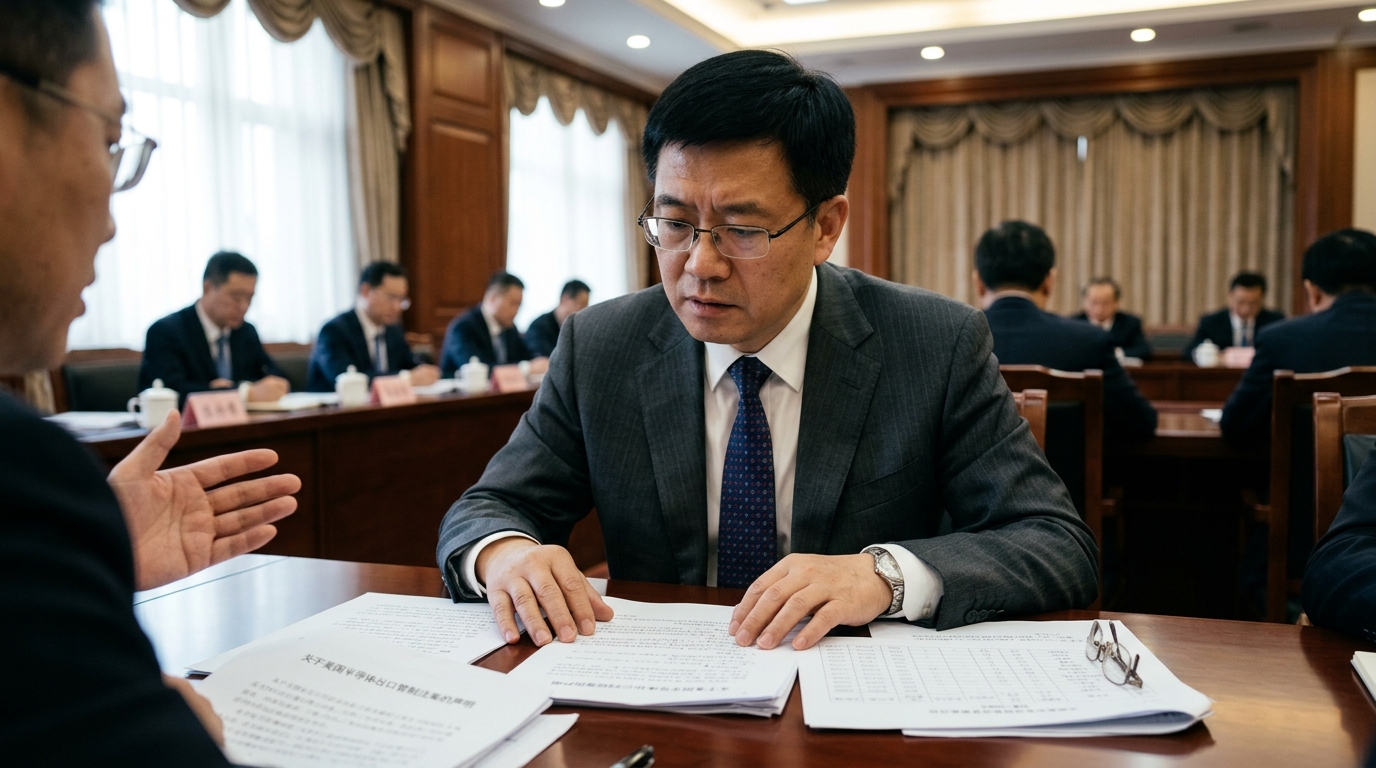
In an era where technological supremacy has become the new battlefield of geopolitical rivalry, tensions between Washington and Beijing are escalating to critical levels. The recent decision by the US House Foreign Affairs Committee to advance a series of bills aimed at controlling semiconductor exports has triggered a sharp reaction from China. Beijing, through its Ministry of Commerce, warned that these moves are not merely targeted at the Chinese economy but threaten to destabilize the entire global supply chain.
Washington's Legislative Offensive
The new bills being pushed through Congress aim to further restrict China's access to critical semiconductor technologies and chip-making equipment. US lawmakers argue that these measures are essential for protecting national security, preventing advanced technology from being used to bolster Beijing's military capabilities. However, the scope of these controls appears to extend far beyond narrow military definitions, striking at the core of the commercial activities of major tech giants.
The US strategy, which began with the 2022 restrictions and was reinforced in 2024, seems to be entering a new, more aggressive phase in 2026. The new measures include tighter controls on exports of Electronic Design Automation (EDA) software, as well as components essential for the development of Artificial Intelligence infrastructure. Washington is seeking to build a "small yard, high fence" around the most advanced technologies, compelling its allies in Europe and Asia to align with its policies.
Beijing's Response and Market Risks
China has not remained silent. A spokesperson for the Chinese Ministry of Commerce stated that "the US is abusing the concept of national security to suppress Chinese enterprises." The warning is clear: disrupting the flow of components and expertise will lead to market fragmentation. Analysts point out that China is the world's largest consumer of semiconductors, and any attempt to exclude it will have a direct impact on the revenues of American and European companies.
Furthermore, there is the looming fear of retaliation. Beijing has already begun restricting exports of critical raw materials, such as gallium and germanium, which are indispensable for chip production. A further escalation could lead to product shortages, ranging from smartphones to electric vehicles, driving up costs for consumers worldwide. The "decoupling" that once seemed theoretical is now becoming a harsh reality threatening global economic growth.
The Allies' Dilemma and the Future of Innovation
US pressure is not limited to China but extends to its allies, including the Netherlands and Japan. Companies like ASML find themselves in an extremely difficult position, forced to choose between access to American technology and maintaining their lucrative relationships with the Chinese market. The European Union, while sharing some security concerns, appears hesitant to follow a policy of full confrontation that could harm its own industries.
"Semiconductor technology is the lifeblood of the modern economy. When you block the arteries, the result is always painful for everyone," industry experts note.
In this context, China is accelerating its efforts toward technological self-reliance. It is investing billions of dollars in domestic production and research, attempting to bridge the gap with the West. While this will take years, US policy may ultimately achieve the opposite of its intended goal: the creation of a robust, independent Chinese tech ecosystem that is not governed by international norms.
Conclusion
The battle for semiconductors is much more than a trade dispute. It is a struggle over who will define the rules of the digital age. As the bills move toward final approval, the world watches with bated breath. The balance between national security and economic cooperation is thinner than ever, and the decisions made today in Washington will determine the course of global technology for decades to come.