In the global chessboard of artificial intelligence, China has just made a move that fundamentally shifts the geopolitical balance. DeepSeek, the AI research lab that has stunned the industry with its high-efficiency models, has announced the release of a new software version specifically optimized for Huawei’s Ascend processors. This development is far more than a technical patch; it is a definitive declaration of intent to build a fully autonomous technological ecosystem, independent of Nvidia’s dominance and U.S. export restrictions.
Divorcing from CUDA: The Rise of CANN
For years, Nvidia has maintained a stranglehold on the AI market not just through its hardware, but primarily through its proprietary CUDA software stack. CUDA serves as the de facto operating system for AI development globally, creating a massive barrier to entry for any competing hardware. However, DeepSeek has managed to bridge this gap by optimizing its algorithms for Huawei’s CANN (Compute Architecture for Neural Networks) architecture.
This optimization allows DeepSeek’s models to run with unprecedented efficiency on Ascend 910B and 910C chips, which are China’s primary contenders against Nvidia’s H100 series. The implications are profound: if Chinese developers can achieve world-class performance without relying on American silicon, Washington’s sanctions risk becoming obsolete, inadvertently accelerating China’s path toward technological self-reliance.
A Strategic Alliance of 'National Significance'
While DeepSeek and Huawei operate as separate entities, their collaboration reflects Beijing’s broader strategy of 'national self-strengthening.' DeepSeek, backed by the quantitative trading giant High-Flyer, has adopted an open-source philosophy that accelerates the adoption of its technologies across domestic industries. Huawei, meanwhile, has spent years and billions of dollars developing its own semiconductor pipeline after being cut off from global 5G and chip markets.
This synergy creates a 'closed-loop' of innovation. Huawei provides the 'iron' (hardware), and DeepSeek provides the 'soul' (software). This duo can now offer Chinese enterprises and government agencies integrated AI solutions that are immune to geopolitical volatility. The ultimate success of this endeavor will depend on whether Ascend chips can close the performance gap with Nvidia’s upcoming Blackwell architecture, but the critical first step of software compatibility has been achieved.
Geopolitical Implications and the Tech Cold War
DeepSeek’s move comes as the U.S. considers even tighter export controls on AI software and hardware. Washington fears that China’s AI progress could enhance its military capabilities or cyber warfare efficiency. However, history suggests that restrictions often act as catalysts for domestic innovation. China, with its back against the wall, is now forced to solve problems it previously solved by simply purchasing Western technology.
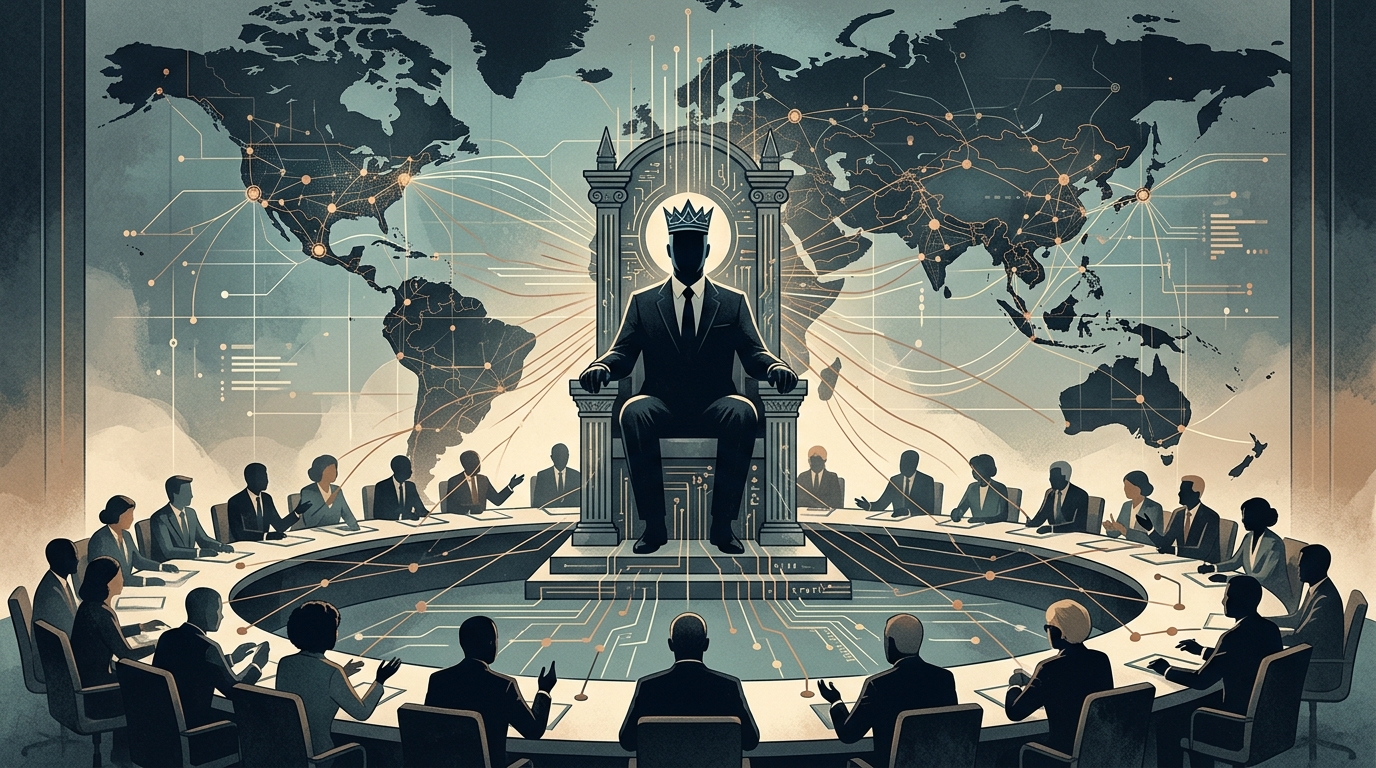
The emergence of two parallel technological worlds—a Western one built on Nvidia/CUDA and an Eastern one built on Huawei/CANN—now seems inevitable. This bifurcation will lead to a fragmentation of standards and research, with unpredictable consequences for global scientific collaboration. If DeepSeek proves that its models can match the performance of GPT-4 or Claude 3 while running on 'sanctioned' hardware, the narrative control held by Silicon Valley will face its most significant challenge in decades.
The Future of DeepSeek and the Challenge of Scale
The next major hurdle for DeepSeek is scaling. While optimizing for Huawei chips is a technical feat, training models with trillions of parameters requires massive compute clusters. Huawei is working feverishly to build these 'ultra-clusters,' but mass-producing high-end chips remains a challenge due to lithography limitations (EUV access).
Nevertheless, DeepSeek’s commitment to supporting domestic hardware signals that the Chinese AI community is no longer waiting for a reprieve from Western sanctions. Instead, they are building their own future out of necessity and technical ingenuity. The battle for AI supremacy will not be decided solely in the labs of San Francisco, but also in the factories of Shenzhen and the data centers of Hangzhou.