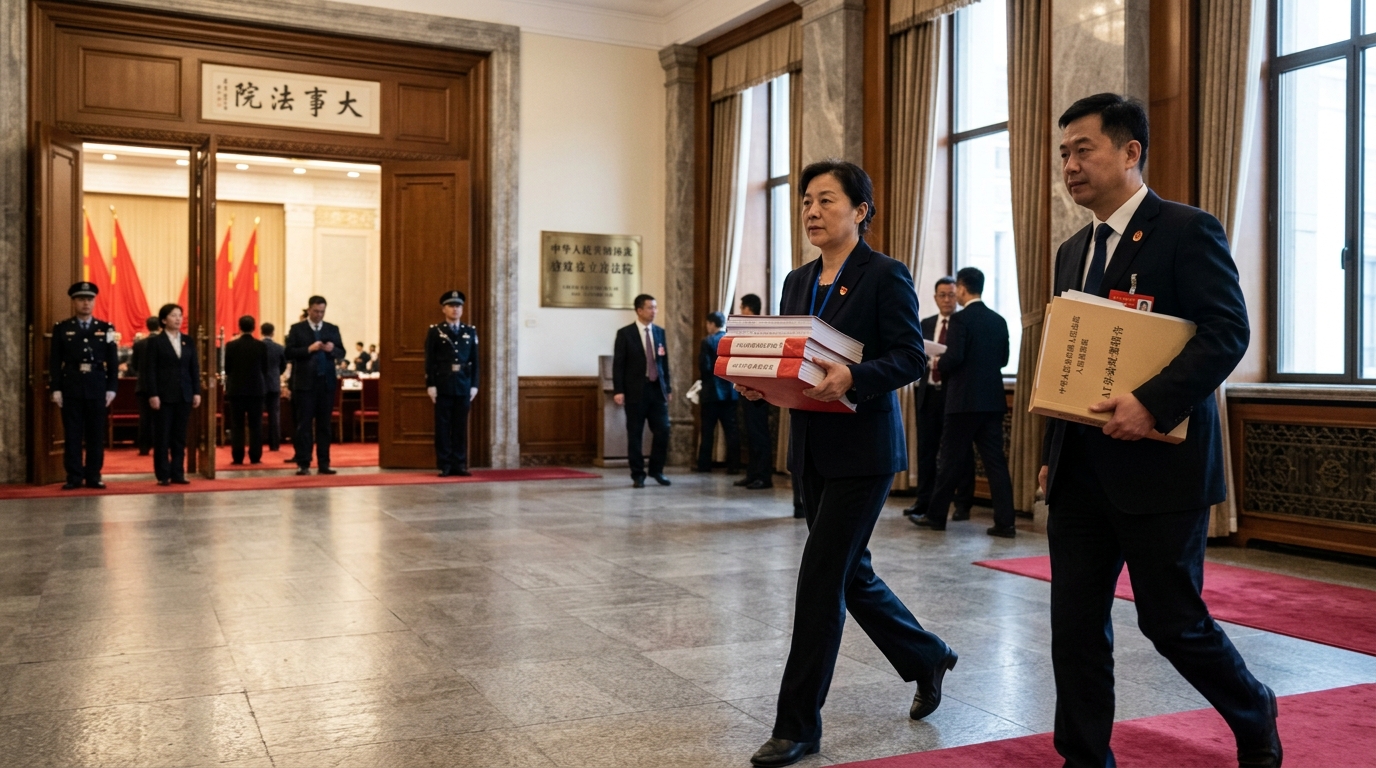
In an era where the rapid advancement of Artificial Intelligence is causing existential anxiety for millions of workers worldwide, a recent court ruling from China has sent shockwaves through the corporate world by providing a legal bulwark against mass layoffs. The court ruled that the mere introduction of AI technologies into a workplace does not constitute a sufficient legal basis for the unilateral termination of employment contracts, setting a critical precedent for the future of work in the digital age.
Anatomy of a Landmark Ruling
The case, which reached the Chinese labor tribunals, involved an employee whose position was eliminated on the grounds that his duties could now be performed faster and cheaper by AI systems. The management argued that the advent of AI represents a "major change in objective circumstances" under which the original contract was signed—a term in Chinese labor law that allows for termination with compensation when continued employment becomes impossible.
However, the court rejected this claim with a rationale that has resonated globally. The judges ruled that technological upgrading is a part of normal business operations and does not constitute an insurmountable obstacle that renders a contract void. According to the ruling, a company has an obligation to explore alternative solutions, such as retraining the employee or transferring them to another department, before resorting to the ultimate step of dismissal.
Legal Interpretation and the Social Contract
This decision is not merely an interpretation of labor law; it reflects Beijing’s deeper political direction toward "Common Prosperity." At a time when China faces demographic challenges and the need for social stability, the unchecked replacement of humans by machines could ignite social unrest. The court emphasized that AI should function as a tool to enhance human productivity rather than a means of full substitution without social cost.
- Technological progress does not legitimize corporate arbitrariness.
- Businesses bear the burden of proof that employment is truly impossible.
- Reskilling is emerging as a legal obligation for the employer.
- Social stability is prioritized over short-term corporate profit.
This judicial stance sends a clear message to the country’s tech giants. While the Chinese state subsidizes and encourages AI innovation to win the global competition, it simultaneously sets boundaries to ensure that this progress does not come at the expense of labor peace. It is a delicate balance between techno-optimism and social protectionism.
Global Implications and the Future of Work
Although the ruling pertains to China's jurisdiction, its implications are international. Many Western economies are grappling with the same dilemma: how to regulate the labor market against a technology that moves faster than legislation. The Chinese approach could serve as a model or a reference point for other nations seeking to protect their citizens from "algorithmic displacement."
"Artificial Intelligence is the means, not the end. If its use leads to the impoverishment of the workforce, then innovation loses its moral legitimacy," the ruling's rationale implicitly suggests.
In the future, it is expected that employment contracts will include specific clauses regarding AI. Workers will need to claim the right to lifelong learning as part of their employment relationship. The Chinese court's decision is the first serious warning that the "digital revolution" will not happen on the terms of algorithms, but on the terms of society.
Conclusion: Putting Humans First
This case serves as a reminder that law remains the last line of defense for humans against automation. As we move deeper into 2026, the debate over Basic Income and reduced working hours will intensify, but until then, protecting existing jobs through judicial means remains the most powerful tool. China, surprisingly for many, is showing a path where technology is not a "blank check" for layoffs.