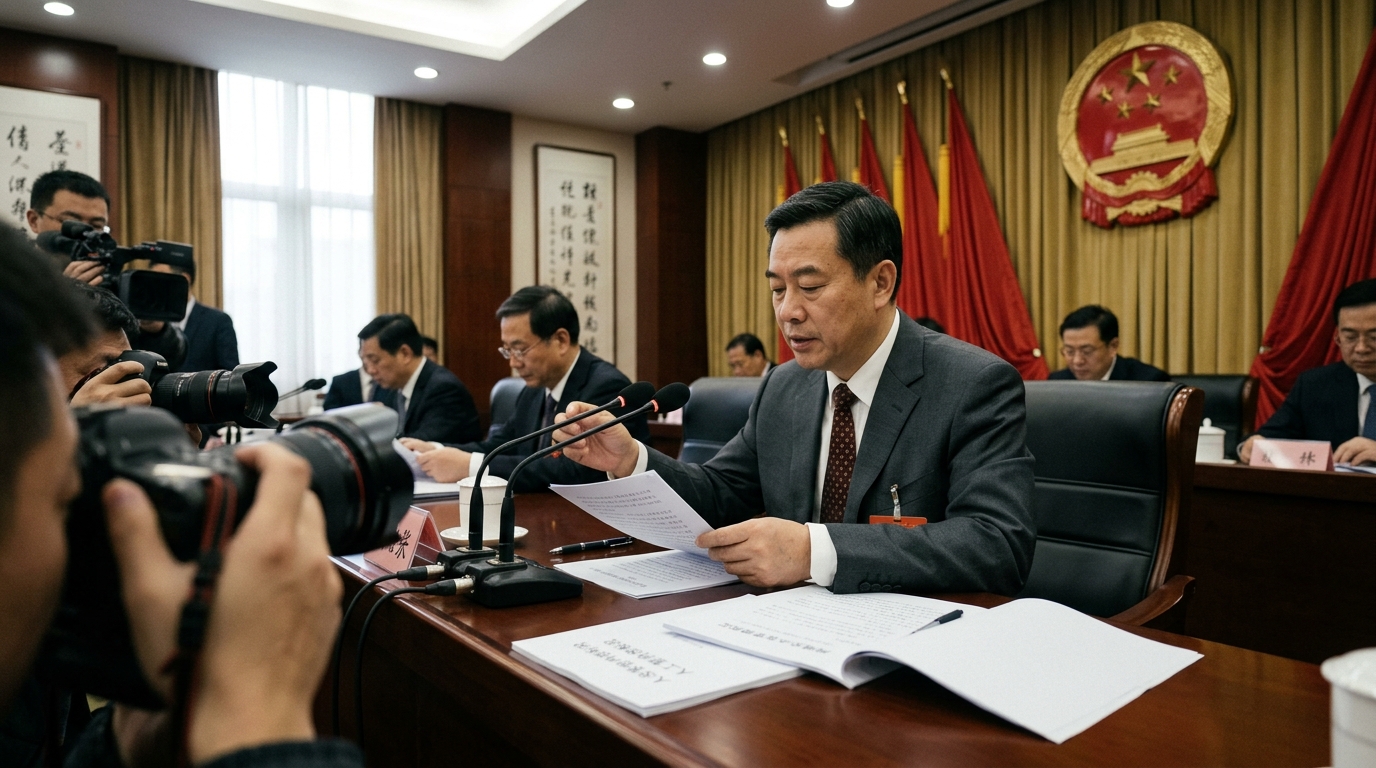
In a move that underscores Beijing's resolve to maintain absolute control over the digital ecosystem, Chinese regulators have issued a stern warning and imposed sanctions on tech giant ByteDance. The reason? The company's failure to fully implement regulations regarding the labeling of artificial intelligence (AI) generated content across its popular platforms, including Douyin (the Chinese version of TikTok).
The Regulatory Storm Context
China is no stranger to technology regulation. As early as 2023, the Cyberspace Administration of China (CAC) established some of the world's most stringent rules for "deep synthesis" and generative AI. These regulations require service providers to ensure that any content—whether video, image, or audio—that has been edited or entirely created by AI, bears a distinct label. ByteDance, despite possessing some of the most advanced algorithms globally, found itself in the crosshairs for gaps in the implementation of these standards.
The current crackdown is not merely about compliance; it is about national security and social stability as perceived by the Communist Party. In an era where deepfakes can trigger political unrest or financial fraud, Beijing demands total traceability. Auditors found that thousands of videos created with AI tools were circulating without the necessary warnings, misleading users and violating the doctrine of "digital truth" promoted by the government.
The Technical Challenge and Platform Responsibility
For ByteDance, the challenge is twofold: technical and operational. Detecting AI content in real-time, when millions of videos are uploaded every hour, requires immense computational power. However, the CAC is clear: the responsibility lies with the platform. The sanctions include not only monetary fines but also the obligation to immediately upgrade detection algorithms and publicly acknowledge failures.
- Mandatory Watermarks: Every piece of AI content must carry visible watermarks informing the user of the material's nature.
- Metadata: Information about the content's origin must be encoded within the file itself to prevent tampering.
- Algorithmic Accountability: Companies must register their algorithms with authorities for auditing.
This strictness sets a precedent that the West is watching closely. While the European Union moves forward with the AI Act, China is already putting the theory of "controlled innovation" into practice.
Geopolitical Implications and TikTok's Future
The pressure on ByteDance within China has a direct impact on its international operations. With TikTok facing existential threats in the US due to data privacy concerns, the parent company's failure to comply with rules at home provides additional ammunition to its critics in the West. If ByteDance cannot control AI content in China, how can it guarantee user safety globally?
"Artificial intelligence is a tool for creation, but without clear boundaries, it turns into a tool for deception. Labeling is not a restriction of freedom, but a protection of reality," a government source in Beijing stated.
In conclusion, this move marks the end of the "grace period" for tech giants. The era where innovation preceded regulation has passed. Now, a company's ability to self-regulate and cooperate with the state is the new barometer of its success.