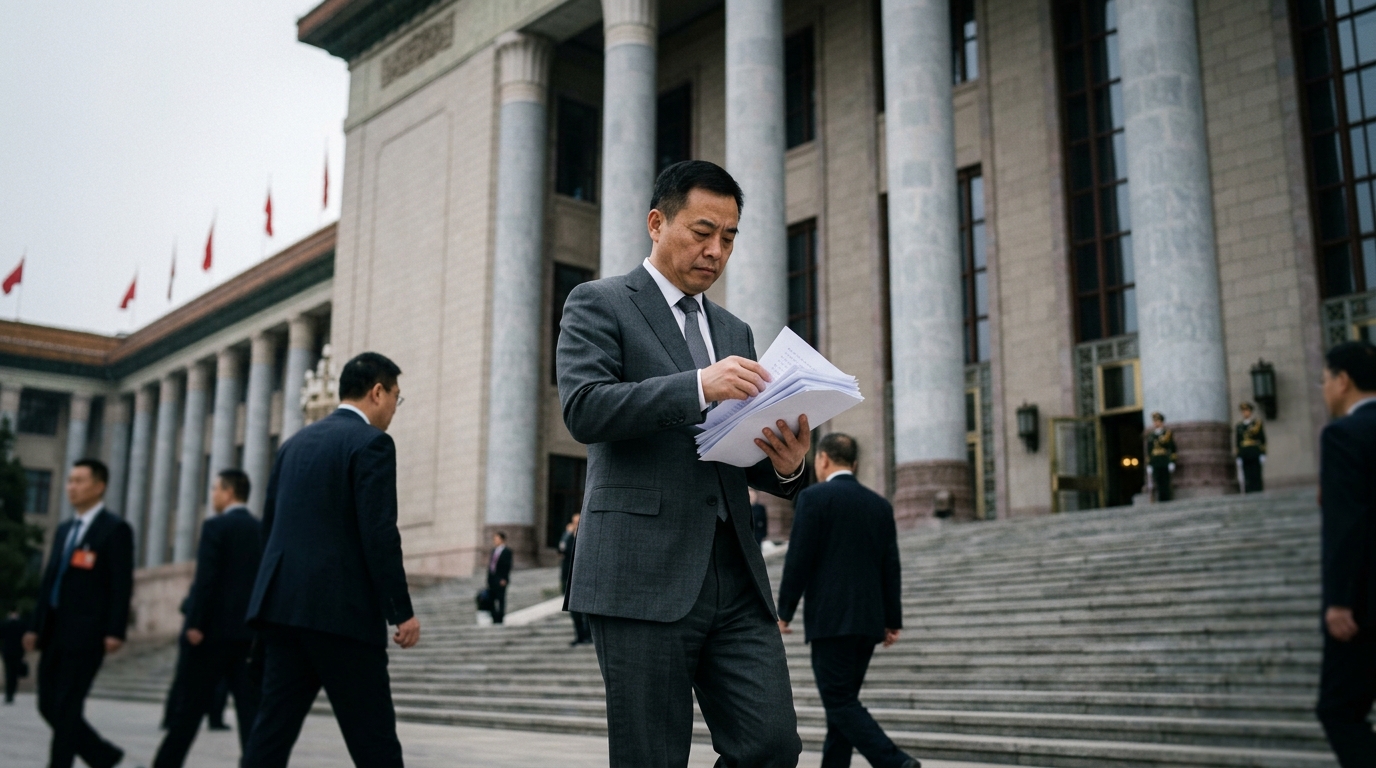
The global technological landscape is facing a new reality that many analysts are calling the 'Digital Iron Curtain.' China's decision to drastically restrict the exports of advanced Artificial Intelligence (AI) models is not merely a commercial decision but a high-stakes strategic move on the chessboard of global hegemony. As we navigate the summer of 2026, this maneuver by Beijing serves as a direct response to ongoing US semiconductor restrictions, shifting the battlefield from hardware to software and intelligence.
The Strategy of 'Controlled Intelligence'
The Cyberspace Administration of China (CAC), in coordination with the Ministry of Commerce, has announced a new 'security assessment' framework for any Large Language Model (LLM) intended for use outside the country's borders. The new regulations dictate that models demonstrating 'strategically significant' capabilities—including advanced reasoning, code generation for critical infrastructure, and sensitive data analysis—will require specific state licenses to be released to foreign markets or through international cloud platforms.
The rationale behind this decision is twofold. On one hand, there is the pressing need to protect intellectual property. Chinese tech giants like Baidu, with its Ernie model, and Alibaba, with Qwen, have invested billions of yuan to match and, in some instances, surpass the capabilities of their Western counterparts. Beijing now views these algorithms as 'national treasures' that must not fall into the hands of competitors without significant concessions.
Ideological Alignment and Global Standards
A less discussed but equally critical aspect is 'ideological security.' China has made it clear that AI models developed within its territory must reflect 'fundamental socialist values.' By exporting these models, Beijing worries about two scenarios: either the models will be 'contaminated' by Western values through interaction with foreign users, or the export of strictly censored models will damage the reputation of Chinese technological prowess abroad. By restricting exports, China maintains total control over the narrative produced by its machines.
- Restriction of API access for foreign companies without prior approval.
- Prohibition on exporting model weights for open-source projects not controlled by Chinese entities.
- Strict audits on collaborations between Chinese research centers and foreign universities.
"Artificial Intelligence is no longer a productivity tool, but the core of national power. Whoever controls the flow of intelligence, controls the future," stated a high-ranking Beijing official in a leaked internal memo.
The Impact on Tech Giants
For companies like ByteDance and Tencent, the new restrictions are a double-edged sword. On one hand, they are protected under the state umbrella against corporate espionage, but on the other, they see their global expansion ambitions thwarted. Markets in Southeast Asia and Africa, where Chinese technology had begun to dominate due to lower costs, may now pivot toward American or European models if accessing Chinese LLMs becomes bureaucratically impossible.
Furthermore, this move bolsters 'technological nationalism.' The US has already begun considering similar measures for exporting models like GPT-5, fearing that China will use them to train its own systems. This vicious cycle of restrictions threatens to halt global scientific collaboration, leading to two separate, incompatible AI ecosystems: one Western and one Sinic.
Conclusion: Toward a Fragmented Intelligence
China's decision to lock its AI behind the Great Wall marks the end of the utopian era of 'open science.' As algorithms become the new nuclear weapons, access to them will be determined by diplomatic agreements rather than the free market. For the rest of the world, the challenge will be navigating this bipolar world, where choosing an AI model will be equivalent to choosing a geopolitical camp.