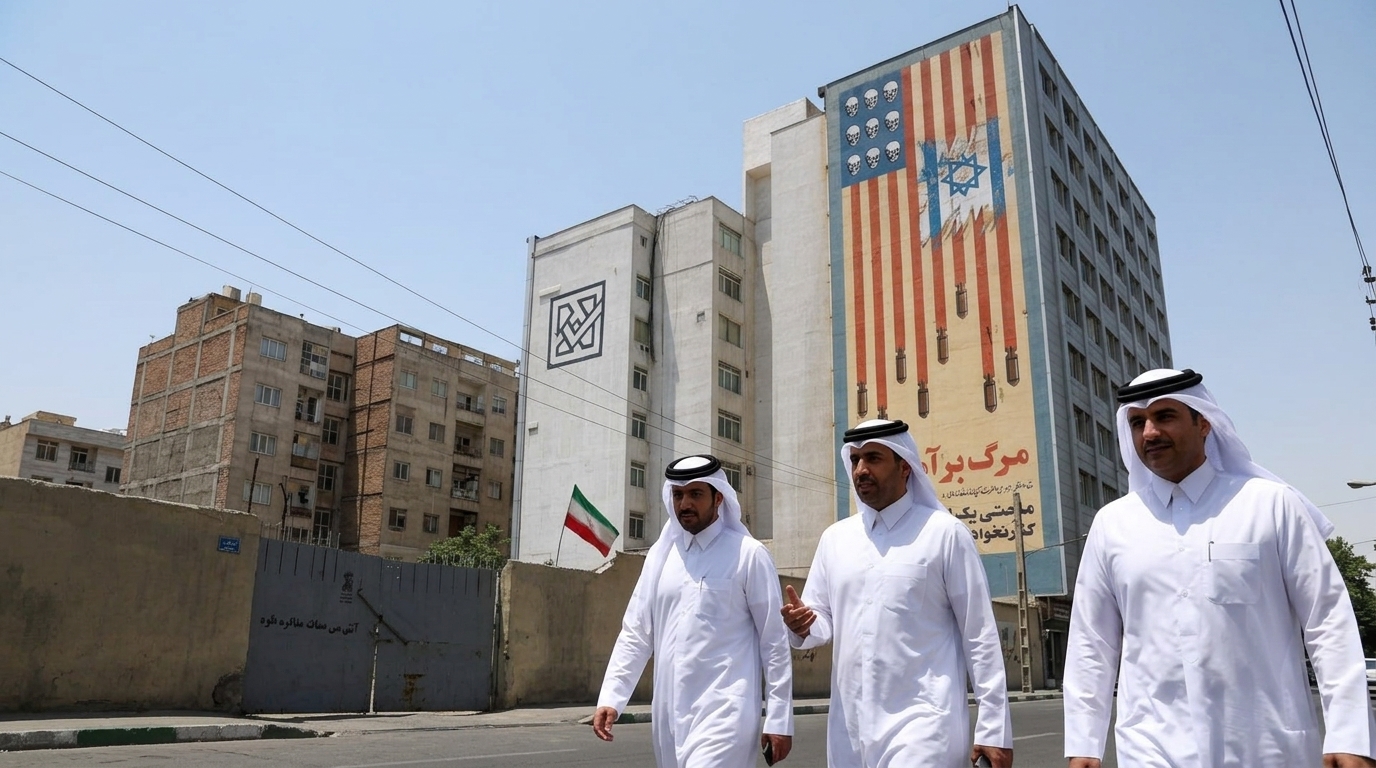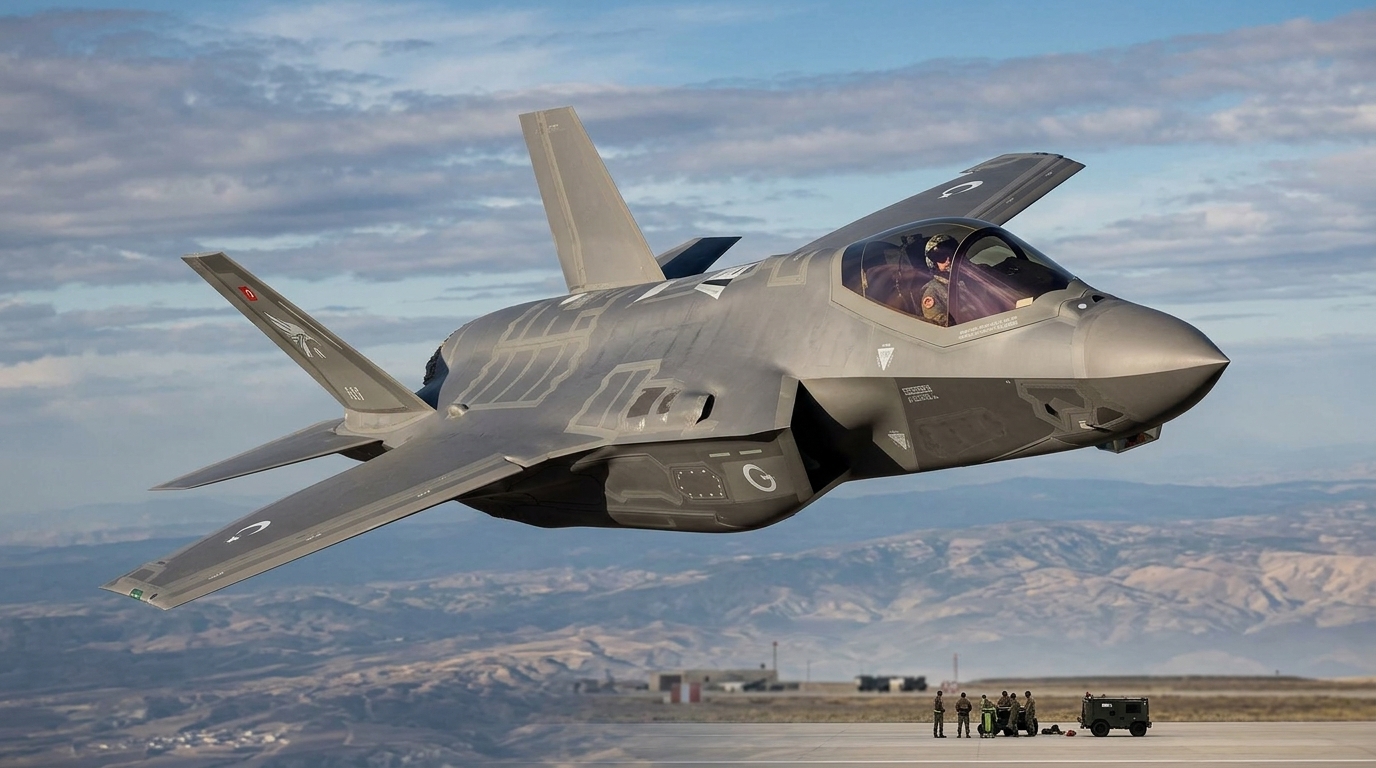
The geopolitical chessboard of the Eastern Mediterranean is once again in turmoil, as new reports bring to light a scenario that could radically alter the balance of power within NATO. Turkey, after years of diplomatic deadlock and the imposition of CAATSA sanctions by Washington, appears to be seriously considering a 'formula' that would allow it to rejoin the F-35 fifth-generation fighter jet program: transferring the Russian S-400 missile systems to a Turkish base in Qatar.
The Deadlock and the Search for Compromise
The root of the problem dates back to 2019, when Ankara received the Russian S-400 air defense system, despite strong warnings from the US that the coexistence of Russian technology with the F-35 would jeopardize the aircraft's classified stealth features. The US response was immediate: Turkey was expelled from the production program, and the delivery of aircraft already ordered was frozen. Since then, the Turkish Air Force has been in a holding pattern, attempting to modernize its F-16 fleet, while Athens has already secured the 'green light' for its own F-35s.
The Qatar scenario is not accidental. Doha is one of Ankara's closest allies, hosting a significant Turkish military base, while simultaneously maintaining excellent relations with Washington, hosting the Al Udeid Air Base. Moving the S-400s there could be viewed as 'storage' outside Turkish territory, satisfying the US requirement that the system not be operationally ready within the territory of a NATO member.
The Trump Factor and New Dynamics
Recent developments in the American political scene and statements by Donald Trump have revived Ankara's hopes. Trump had repeatedly expressed sympathy for the Turkish position, blaming the Obama administration's refusal to sell Patriot missiles to Turkey for the S-400 purchase. A potential shift in Washington's stance could facilitate a 'package deal,' including the lifting of sanctions and a return to the F-35 program, in exchange for a full guarantee that the S-400s will never be activated.
- Transferring to Qatar offers an 'honorable' retreat for Erdogan, as the system remains under Turkish control but outside the NATO operational field.
- The US is looking for ways to bring Turkey back into the Western fold, especially given the situation in Ukraine and the Middle East.
- Russia, on the other hand, is unlikely to look favorably upon its technology being moved to a country that hosts US bases.
Challenges and Greek Concerns
Despite the optimism emanating from certain circles in Ankara, significant obstacles remain. The US Congress maintains a particularly tough stance toward Turkey, citing not only the S-400 issue but also broader challenges in the Eastern Mediterranean and relations with Greece. Athens is closely monitoring developments, with Greek diplomacy emphasizing that Alliance security cannot be negotiated with half-measures.
"The credibility of a NATO member state is judged by its consistency with collective decisions and not by creative solutions that merely shift the problem," diplomatic sources state.
Furthermore, there is the technical issue. The S-400 requires continuous maintenance by Russian technicians. The presence of Russian specialists at a base in Qatar, while Turkey simultaneously tries to convince the US of its 'good faith,' is a complex equation. If Turkey eventually succeeds in unlocking the F-35, the balance of power in the Aegean will enter a new, more complex phase, where the qualitative superiority Athens seeks through its own F-35s and Rafales will be challenged once again.
Conclusion
The Qatar proposal is a high-risk, high-reward move. For Turkey, it is the only way to avoid falling behind in the technological arms race. For the US, it is an opportunity to close a front that divides the Alliance. However, the final decision will depend on whether Washington now trusts Ankara as a predictable partner, or if it considers the 'Qatar Solution' to be merely a maneuver to acquire top-tier American technology without a real commitment to the West.