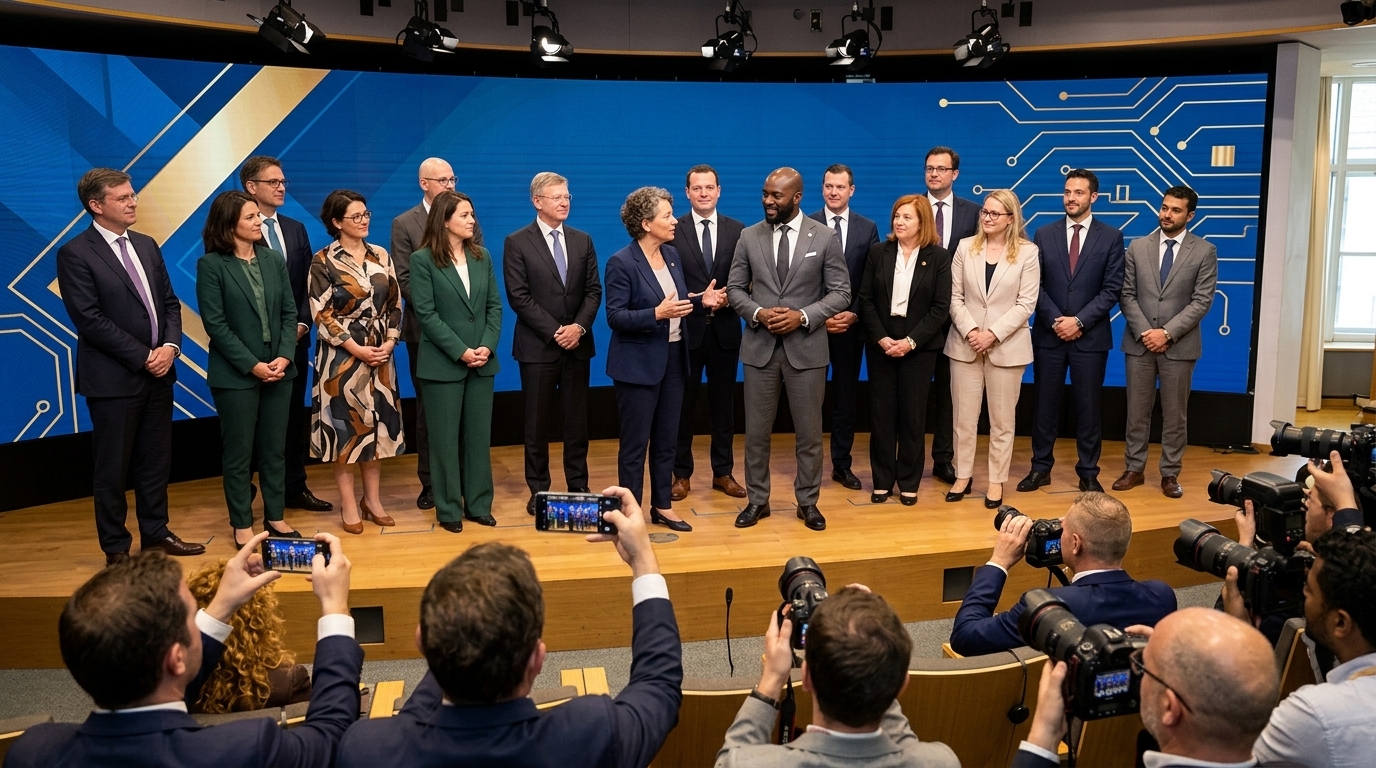
Europe stands at a critical juncture. While the continent has traditionally excelled in generating innovation and boasting a high-quality workforce, its "funding gap" in late-stage development remains its Achilles' heel. The European Investment Bank's (EIB) announcement regarding the launch of the second phase of the European Tech Champions Initiative (ETCI 2.0), featuring the participation of all 27 member states, including Greece, represents a concerted effort to rewrite this narrative.
A Strategic Response to the "Scale-up Gap"
The ETCI is not a mere investment fund; it is a sophisticated "fund of funds" mechanism managed by the European Investment Fund (EIF). The objective is transparent: to channel capital into large European venture capital funds, which in turn invest in European tech companies at the scale-up stage. To date, many of Europe’s most promising enterprises, upon reaching the need for funding rounds exceeding €50 million or €100 million, have been forced to seek American or Asian capital.
This dependency has come at a steep price: the migration of headquarters, intellectual property, and high-skilled jobs outside of Europe. With ETCI 2.0, the EU aims to foster an ecosystem where the continent's "unicorns" can remain European, thereby bolstering the union's strategic autonomy in sectors such as Artificial Intelligence, cybersecurity, and green technology.
Greece as an Active Player in the Digital Transition
Greece's involvement in this initiative is far from incidental. In recent years, the Greek startup ecosystem has demonstrated remarkable maturity. From the initial efforts of EquiFund to the emergence of the first Greek unicorns, the country has proven it possesses the talent, even if it has often lacked the domestic mechanisms for the next leap forward. Participation in ETCI 2.0 allows Greek scale-ups to access a significantly larger pool of capital while positioning Greece at the heart of European tech policy decisions.
- Enhancing the international outlook of Greek tech firms.
- Access to networks of top-tier European investors.
- The ability to fund large-scale digital transformation projects with a domestic base.
The Greek government, through the Ministry of National Economy and Finance, views ETCI 2.0 as a tool that complements Recovery Fund actions, creating a bridge between public investment and private initiative.
The Draghi Influence and the Future of Competitiveness
The timing of the ETCI 2.0 launch coincides with the discourse initiated by Mario Draghi’s report on European competitiveness. Draghi was unequivocal: Europe requires massive investment to avoid falling behind the US and China. The ETCI represents one of the first practical steps in this direction, attempting to mobilize institutional investors—such as insurance companies and pension funds—to allocate capital toward technology.
"Technological sovereignty is not bought with wishful thinking, but with capital that has the will to take risks and the patience to await returns," sources within the EIB noted.
However, challenges persist. EU bureaucracy and market fragmentation (27 different legal and tax frameworks) continue to act as deterrents. While ETCI 2.0 provides a financial solution, political integration is equally necessary to fully realize the Capital Markets Union.
Conclusion and Outlook
The stakes for Greece and Europe are high. If ETCI 2.0 succeeds in creating a critical mass of European capital, the continent will be able to claim its rightful share in the fourth industrial revolution. For Greece, it is an opportunity to transition from a technology "consumer" to a "producer," leveraging its participation in this premier European scheme. Success will be measured by the speed of fund absorption and the ability of companies to compete globally, now backed by the financial security they previously lacked.