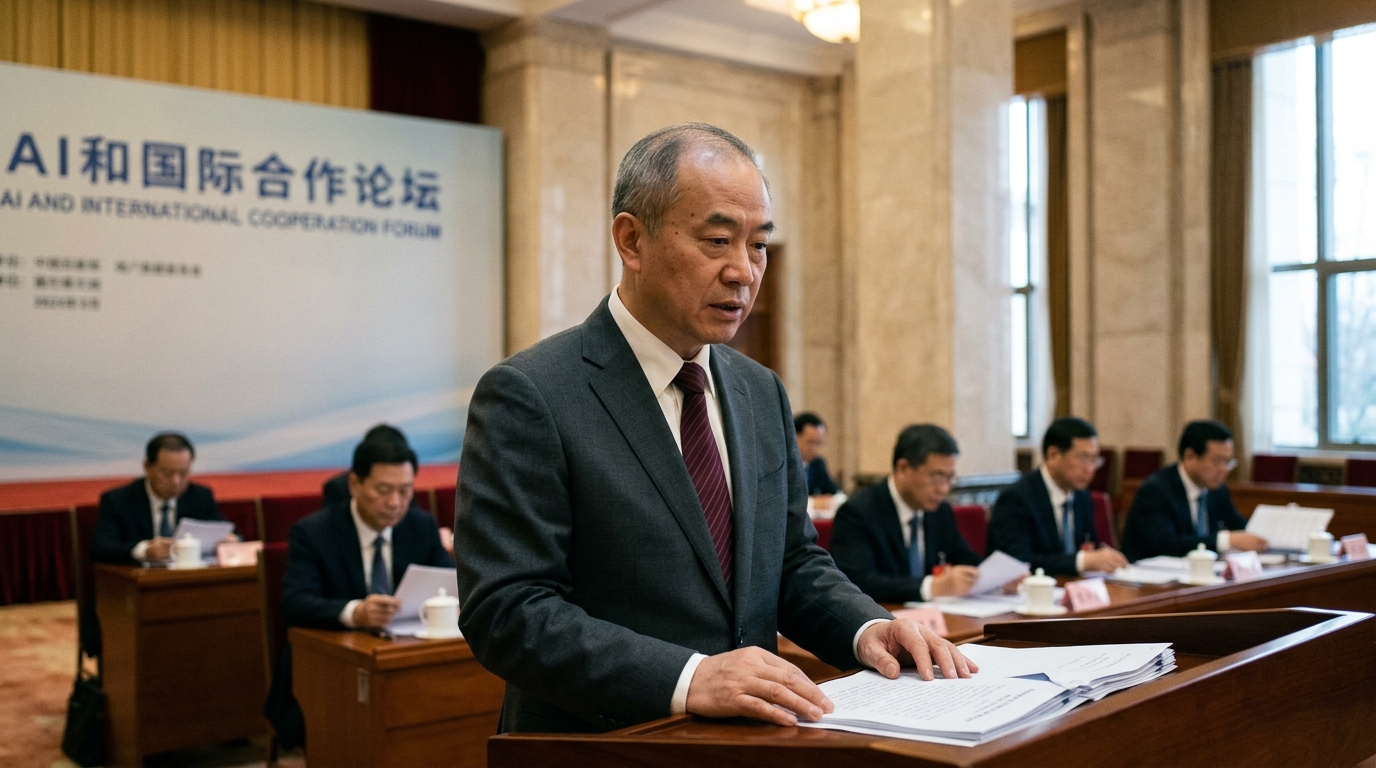
The era of globalized tech entrepreneurship, where Silicon Valley capital flowed freely into China's innovative powerhouses, appears to be reaching an abrupt and definitive end. According to recent market reports and analyses, the Chinese government, through the powerful Cyberspace Administration of China (CAC), has instituted a new, stringent framework requiring tech giants like ByteDance, as well as emerging AI startups, to obtain explicit state approval before accepting funding from US venture capital firms.
This development is not merely a bureaucratic detail; it is a strategic move on the geopolitical chessboard that redefines how technology is developed and funded globally. The move comes in response to Washington's increasing restrictions on investments in Chinese high-tech sectors, creating a 'double siege' environment for Chinese entrepreneurs who find themselves scrutinized by both superpowers.
The Strategy of 'Digital Sovereignty'
Beijing now views Artificial Intelligence not just as a sector for economic growth, but as a critical tool for national security and ideological control. The requirement for foreign capital approval aims to ensure that the algorithms and data generated by companies like ByteDance—the parent company of TikTok—do not fall under the influence or control of foreign powers. The CAC is concerned that American investors, through board seats and fiduciary rights, could gain access to sensitive technological details or influence the developmental direction of AI models.
For the startups dubbed the 'AI Tigers' of China, such as Zhipu AI, Moonshot AI, and MiniMax, the new rules present an existential challenge. These companies have traditionally relied on US dollars from Silicon Valley VCs to cover the astronomical costs of training Large Language Models (LLMs). Now, they find themselves caught between the urgent need for capital and the non-negotiable requirement for political compliance.
ByteDance: The Primary Target of Regulatory Tightening
ByteDance serves as the most prominent example of this new reality. While it faces the prospect of a forced sale or ban of TikTok in the United States, at home it is under the watchful eye of regulators who want to ensure the company remains 'Chinese' at its core. The requirement for funding approval means that any attempt by ByteDance to raise capital for its AI ventures from the international market will pass through the Party's microscope.
This creates a paradoxical situation: American investors want to exit due to pressure from their own government, while Chinese regulators are making any new capital entry nearly impossible without significant political concessions. The result is a gradual 'decoupling' of the financial systems of the two superpowers, leaving tech companies stranded in the middle.
The Rise of RMB Funds
As US dollars become 'toxic' or difficult to access, we are witnessing a decisive shift toward domestic capital. State-backed investment funds and local governments in China are rushing to fill the void, offering funding in Yuan (RMB). However, these funds often come with stricter conditions regarding returns and alignment with national strategic goals. Innovation in China is being transformed from a market-driven process into a state-led endeavor.
In conclusion, Beijing's demand for approval of US capital marks the end of neutrality in tech investment. In the new world of AI, capital has a nationality, and ByteDance is at the forefront of this historic shift. The implications will be felt not just in corporate balance sheets, but in the speed and trajectory of global technological progress. The 'Great Financial Wall' is now as real as its digital counterpart.