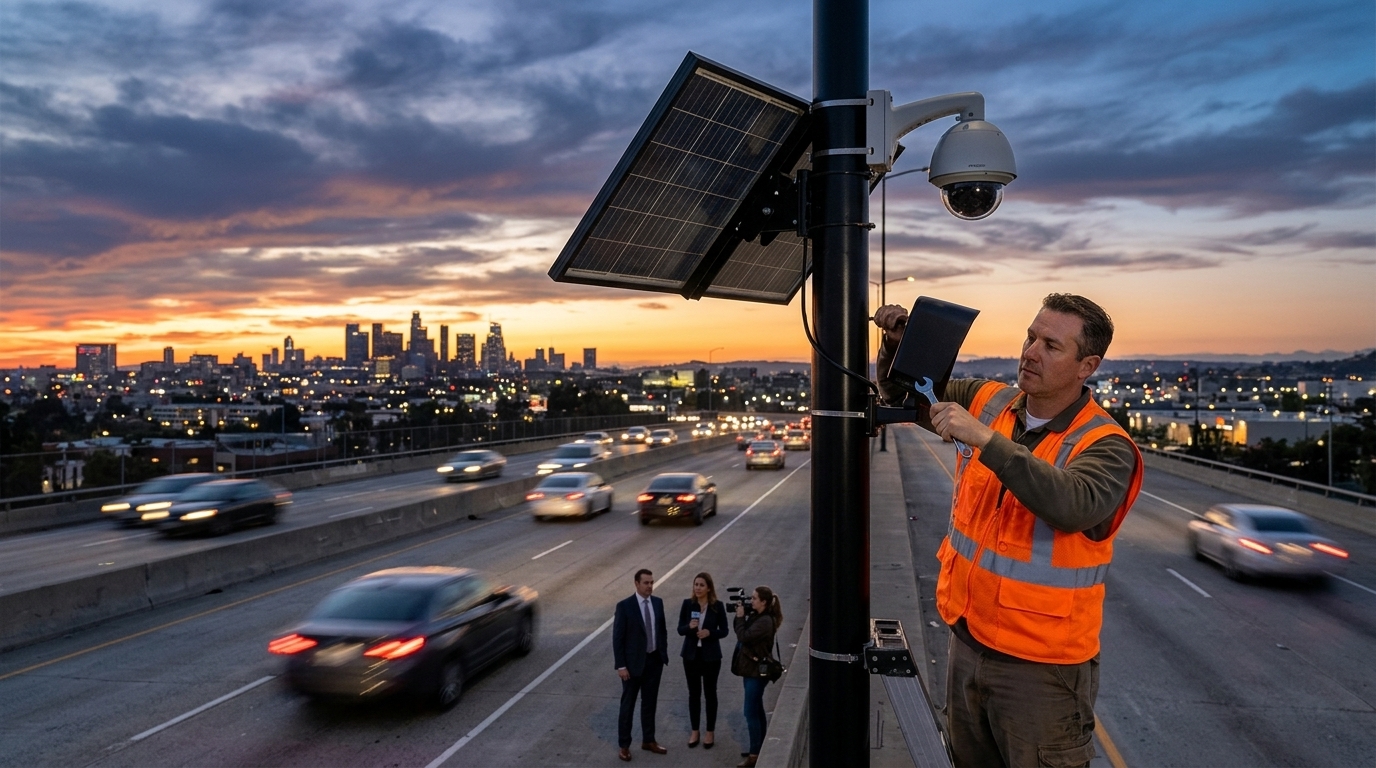
In an era where digital surveillance is often viewed as an irreversible reality, a new legislative initiative in the United States is sending shockwaves through the law enforcement establishment. A bipartisan amendment, tucked deep within the thousands of pages of a federal highway bill, aims to put a definitive end to nationwide police license plate tracking. This move is not merely a regulatory adjustment; it is a declaration of war against the "digital dragnet" that has blanketed American cities over the last decade.
The Lever of Power: Federal Highway Funds
The strategy employed by lawmakers is simple yet devastatingly effective. Rather than attempting to ban the technology through complex judicial channels or direct prohibitions, they are wielding the federal government’s most potent weapon: the power of the purse. The amendment dictates that any state or city wishing to receive federal highway grants must terminate its Automated License Plate Reader (ALPR) programs for law enforcement purposes. The technology would be permitted exclusively for toll collection.
This approach mirrors the tactics used in the 1980s to establish the national minimum drinking age of 21. States that refused to comply faced the loss of millions in highway funding. Today, with U.S. infrastructure in desperate need of repair and modernization, few municipalities would dare risk their funding to maintain surveillance cameras. It is a masterclass in using fiscal federalism to protect civil liberties.
The Silent Spread of ALPR Technology
For those unfamiliar with the technology, ALPR systems consist of high-speed cameras mounted on patrol cars, overpasses, and traffic lights. They don’t just capture lawbreakers; they scan every vehicle that passes, logging the location, time, and date into massive databases. Companies like Flock Safety and Motorola Solutions have built networks that allow police to track a citizen’s movements across the country, often without a warrant or probable cause.
Proponents of the technology argue it is indispensable for locating stolen vehicles and solving high-stakes crimes, such as kidnappings (Amber Alerts). However, privacy advocates point out that 99.9% of the data collected belongs to innocent citizens simply going about their daily lives—driving to work, school, or a doctor's appointment. The amendment addresses these concerns by asserting that public safety cannot be achieved through the elimination of movement anonymity.
An Unusual Bipartisan Alliance
Perhaps the most compelling aspect of this development is the nature of the alliance driving it. At the table sit progressive Democrats, concerned about the disproportionate targeting of minority communities and activists, alongside libertarian-leaning Republicans, who view the technology as the ultimate form of government overreach. This convergence reflects a growing public distrust of the "surveillance state," transcending traditional partisan divides.
Resistance from police unions and law enforcement agencies is expected to be fierce. They contend that removing ALPRs will "blind" authorities and lead to a surge in crime. Yet, the amendment poses a fundamental question: What is the price of freedom? If the price is the permanent recording of every movement of every citizen, then perhaps the cost is too high for a democratic society. It challenges the notion that efficiency in policing should always trump individual privacy.
Global Implications and the Future of Privacy
While this legislation is American in origin, its ripples will be felt globally. The European Union, through the GDPR, already maintains strict rules regarding the collection of personal data, but the use of road cameras remains a legal gray area in many jurisdictions. A successful ban in the U.S. could provide significant momentum for similar movements in Europe and beyond, reinforcing the argument that technological advancement must not come at the expense of fundamental rights.
In conclusion, this amendment represents a historic pivot. It is an attempt to put the surveillance genie back in the bottle, reminding us that technology should serve humanity, not dominate it. The upcoming battle in Congress will be hard-fought, but the message is clear: the privacy of our streets is not for sale. As we move further into the 2020s, the outcome of this legislative push will likely define the boundaries of urban privacy for the next generation.