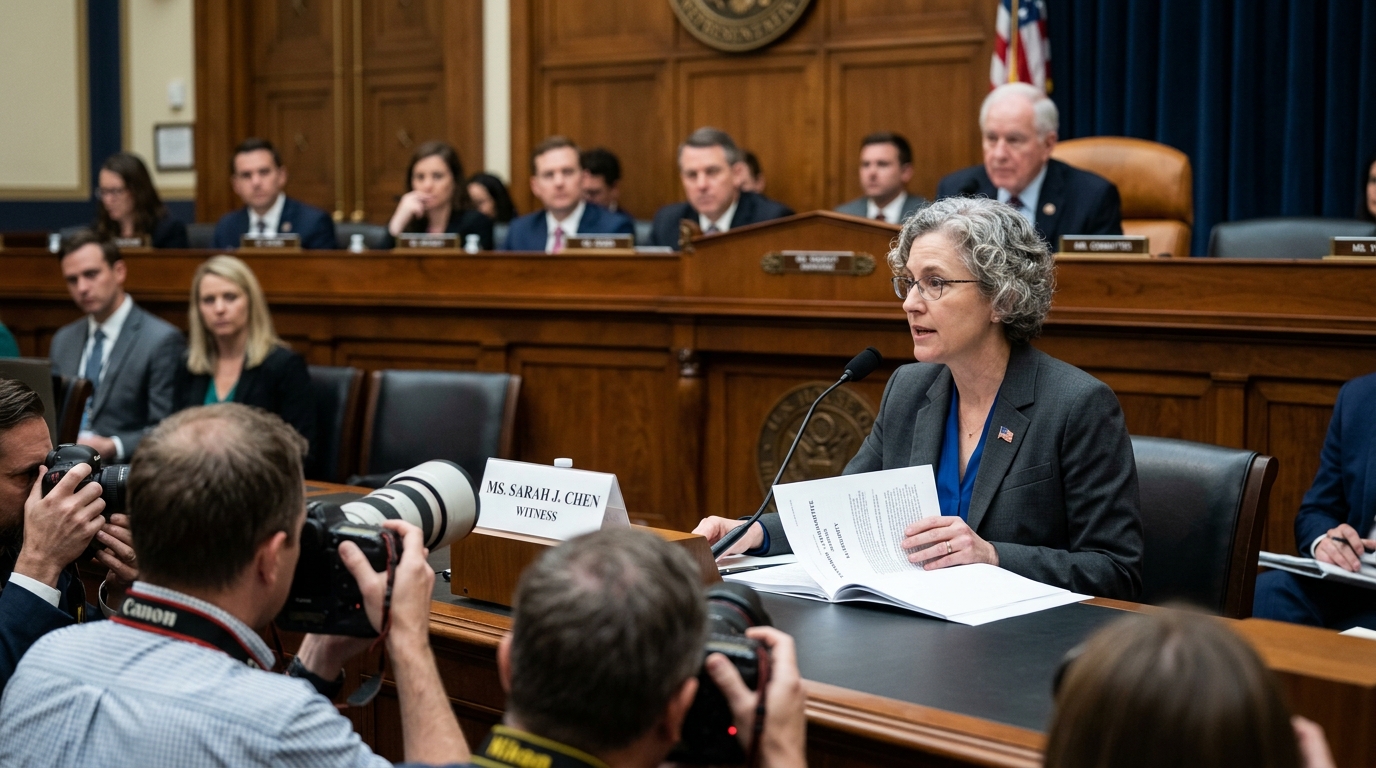
The traditional approach to integrating Artificial Intelligence (AI) into the public sector has always relied on a simple but dangerous assumption: to make the state smarter, it must aggregate vast amounts of citizen data into massive 'data lakes.' However, as we move through 2026, a new philosophy is emerging, challenging the very need for AI to 'touch' sensitive personal data at all. The idea that AI can function effectively without direct access to identifiable information is no longer science fiction, but a necessary policy direction.
The Failure of Centralization and Security Risks
For decades, digital governance has moved toward centralization. The logic was that unifying health, tax, and social security records would allow for better service delivery. But this concentration created 'digital magnets' for cyberattacks. A breach in a central database can expose the lives of millions. Using AI in this environment typically requires decrypting and processing this data, geometrically increasing the risk profile.
The new approach proposes the exact opposite: instead of bringing data to the AI, we bring the AI to the data. Through 'Zero Trust' architectures, AI models can be trained or executed on encrypted datasets without revealing their content to developers or even the system administrators themselves.
Privacy-Preserving Technologies (PPTs): The Tools of Change
Three key pillars define this new era: Federated Learning, Synthetic Data, and Differential Privacy.
- Federated Learning: This allows algorithms to be trained across multiple local devices or servers (e.g., in different hospitals) without exchanging the data itself, only the 'mathematical updates' of the model.
- Synthetic Data: This is AI-generated data that shares the same statistical properties as real data but does not correspond to real individuals. The state can share this data with researchers without any fear of leaking personal information.
- Differential Privacy: A mathematical technique that adds 'noise' to datasets, making it impossible to identify an individual while still allowing for accurate statistical conclusions.
These technologies allow the public sector to analyze trends—such as disease spread or benefit efficacy—without ever knowing who 'Citizen X' is.
Policy Challenges and the Future of Trust
Implementing these solutions is not just a technical challenge, but primarily a political one. Governments must invest in infrastructure that supports decentralized processing. Furthermore, there is the issue of 'explainability.' If an AI model makes a decision about a citizen based on synthetic data or encrypted processes, how can the citizen verify the fairness of that decision?
"Privacy is not an obstacle to innovation; it is the prerequisite for the social acceptance of Artificial Intelligence," say digital rights experts.
In conclusion, the transition to an AI that does not 'touch' data offers a way out of the 'security vs. privacy' dilemma. If the state can prove it can be efficient while remaining 'blind' to the private lives of its citizens, then trust in institutions can be restored in the digital age.