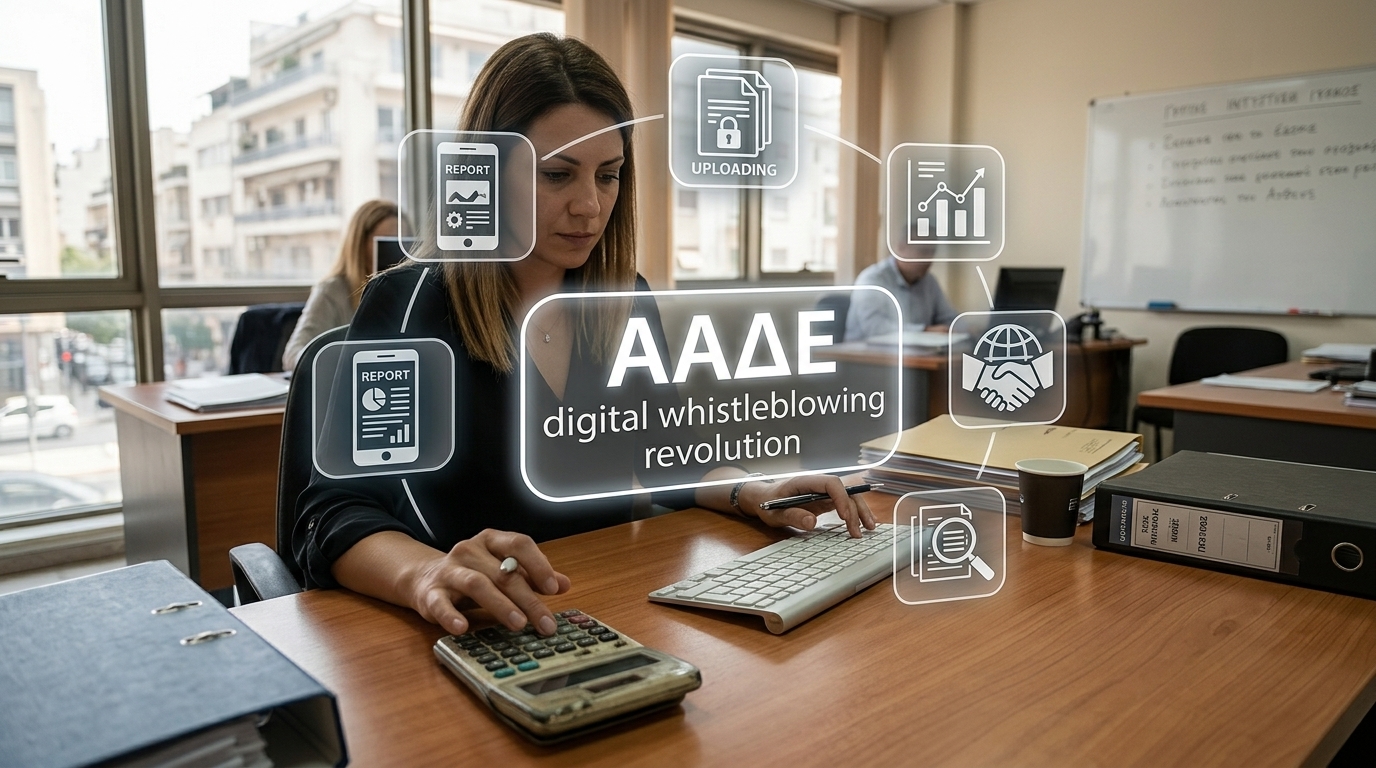
Tax evasion in Greece has long been an "open wound" for public finances, a structural pathology that remained resilient despite decades of efforts. However, recent data from the Independent Authority for Public Revenue (AADE) reveals a spectacular shift: the battle against tax evasion is moving to the digital realm, with citizens themselves assuming the role of auditors. According to official data, over 234,000 complaints have been submitted over the last four years, marking a new era in the state-citizen relationship and tax compliance.
The Digital Transition and the Power of "Appodixi"
The explosive rise in complaints is no accident. It is inextricably linked to the introduction and widespread adoption of digital tools that simplified processes which previously required time and bureaucracy. The "Appodixi" app was the turning point. By allowing consumers to scan receipts via their mobile phones and instantly verify their authenticity, AADE managed to mobilize a vast network of "volunteer auditors."
Of the 234,000 complaints, a significant percentage involves anonymous reports, suggesting that citizens wish to contribute to transparency without personal exposure. Digitalization has removed the fear and stigma of being a "snitch," turning whistleblowing into an act of protecting the public interest. As AADE officials point out, the quality of complaints has improved, allowing audit authorities to focus on cases with a high probability of identifying significant tax material.
The New Unified Complaint Platform
The leadership of AADE, under George Pitsilis, is not resting on these numbers. The operation of a new, unified digital platform is already being planned to integrate all complaint reception channels. This platform will not be limited to tax evasion but will extend to smuggling and corruption phenomena within the services.
- Automated categorization of reports through Artificial Intelligence.
- Ability for users to track the progress of their complaint (where permitted).
- Integration with an incentive system for monetary rewards in cases of confirmed large-scale tax evasion.
This new infrastructure aims to eliminate delays and better evaluate information. The "filtering" of complaints is crucial, as a portion of reports often concerns personal disputes rather than actual tax offenses. The use of algorithms will help prioritize cases based on risk and potential benefit to the state.
Economic and Social Implications
The increase in complaints brings to the fore a deeper social change. Greek society, which traditionally showed tolerance for tax evasion as a form of "resistance" to the state, now seems to realize that revenue loss translates directly into the degradation of health, education, and infrastructure. The economic crisis of the previous decade served as a harsh lesson.
"Tax evasion is not a victimless crime; it is a theft from our children's future," a Ministry of Finance official noted.
On the other hand, there are voices expressing skepticism about encouraging complaints through monetary prizes, fearing the creation of a society of suspicion. However, the government responds that incentives are necessary to break the circuits that circulate millions in "black" money, especially in sectors like catering, fuel, and services.
Conclusions and Outlook
The 234,000 complaints are just the tip of the iceberg. AADE's success will be judged not only by the number of reports but by its ability to convert this information into collectible revenue. The challenge remains the speed of audits and avoiding the statute of limitations for offenses. With the new platform and the use of advanced analytical tools, the Greek state aspires to make tax evasion a "high-risk" activity, permanently changing the country's economic landscape.