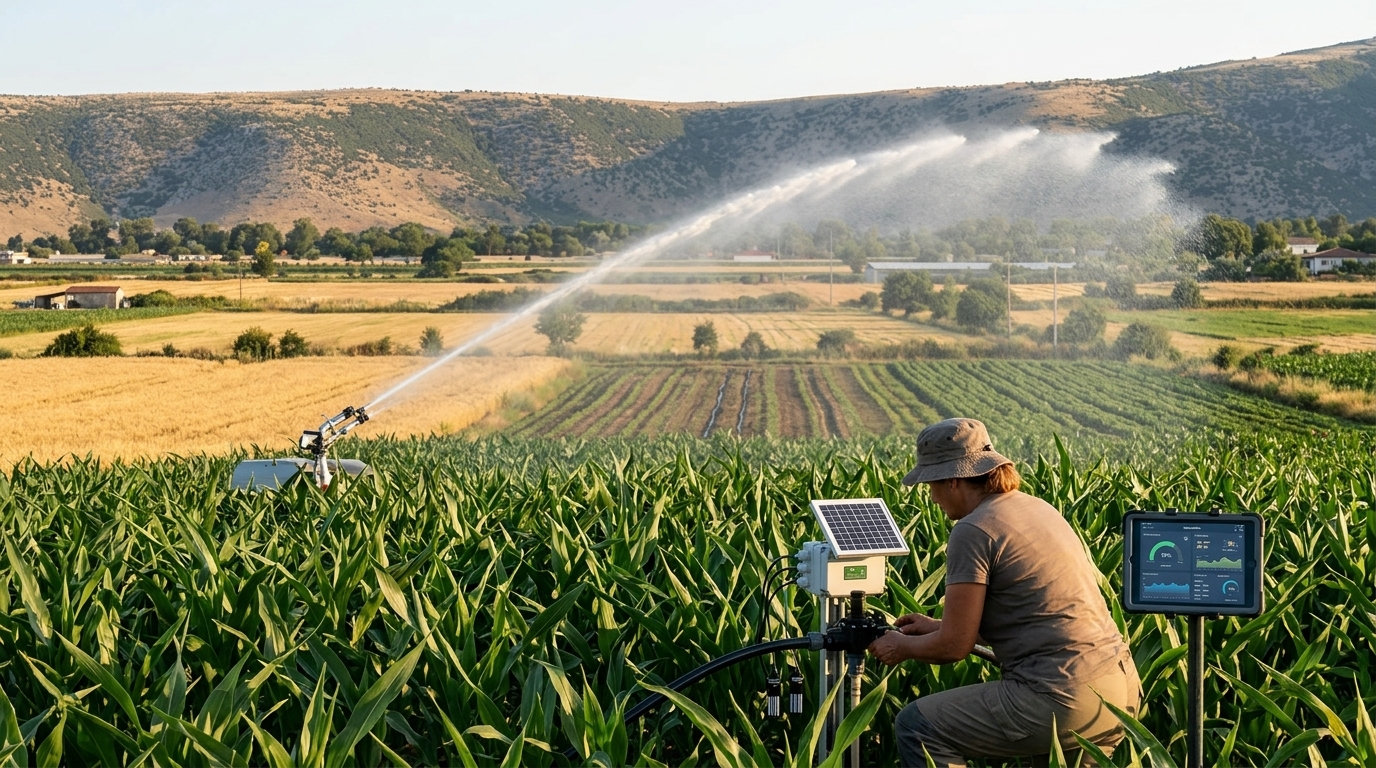
In the heart of the Thessalian plain, where agricultural tradition meets the stark challenges of the climate crisis, Trikala is once again proving why it holds the title of Greece’s premier "smart city." This time, the innovation isn't about autonomous buses or digital municipal services, but rather the very core of the local economy: agriculture. The Municipality of Trikala is implementing a pioneering "smart" irrigation system using specialized electronic cards, a move aimed at rationalizing water management and drastically reducing production costs.
The Technical Infrastructure: Beyond the Simple Card
The system being deployed is far more than just a billing method; it is a comprehensive tele-management and telemetry network. Local farmers will be issued individual RFID cards to activate irrigation systems in their respective zones. This process allows for the precise recording of water consumption in real-time, eliminating the waste that stems from uncontrolled use or undetected leaks in the network.
The project involves installing digital water meters and sensors connected to a central control system (SCADA). Through this, municipal services can monitor water pressure, instantly identify malfunctions, and adjust supply based on the specific needs of each crop. This "surgical" precision in irrigation is critical, as excessive water use not only depletes aquifers but also degrades soil quality through salinization.
Thessaly in the Whirlwind of Climate Change
The significance of this project takes on a new dimension when considering the broader context of Thessaly. Following the catastrophic floods of Storm Daniel and the subsequent national dialogue on the region’s reconstruction, water management has become a matter of national security. Moving from the traditional, often chaotic, irrigation model to a digitally controlled environment is the only way forward for the survival of the primary sector.
The Trikala project serves as a pilot for a much larger investment, totaling 65 million euros, which covers the entire prefecture. This funding, sourced from the Recovery and Resilience Facility (RRF) and national resources, aims to fully modernize irrigation infrastructure, create new reservoirs, and apply cutting-edge technology to every plot of land. Water savings are expected to reach 30-40%, a vital percentage for a region threatened by desertification.
Economic Benefits and Social Fairness
For the average farmer, smart irrigation translates into an immediate reduction in expenses. With precise billing, the injustice of flat-rate cost distribution—where those who were careful with consumption paid the same as those who wasted water—finally ends. Furthermore, reducing energy consumption for pump stations—since they will only operate when and for as long as necessary—lightens both the carbon footprint and the electricity bills for agricultural cooperatives.
- Reduction of water waste through digital monitoring.
- Fair billing based on actual consumption.
- Protection of the aquifer from over-extraction.
- Lower energy costs for network operations.
- Immediate detection and repair of leaks and malfunctions.
In conclusion, Trikala’s initiative is not merely a technical project; it is a strategic choice for the future. It demonstrates that technology can be the tool to keep young people in the countryside, providing them with the means to produce more with fewer resources, while respecting the environment that sustains them.