The climate crisis is no longer a theoretical threat for the future; it is a harsh reality testing the resilience of Mediterranean nations every summer. In Greece, the 2026 fire season begins with a significant technological upgrade: the integration of more than 100 drones (Unmanned Aerial Vehicles) into the operational planning of the Fire Service and Civil Protection. This move marks a fundamental shift from a model of suppression to one of prevention and early warning.
Technological Superiority in the Skies
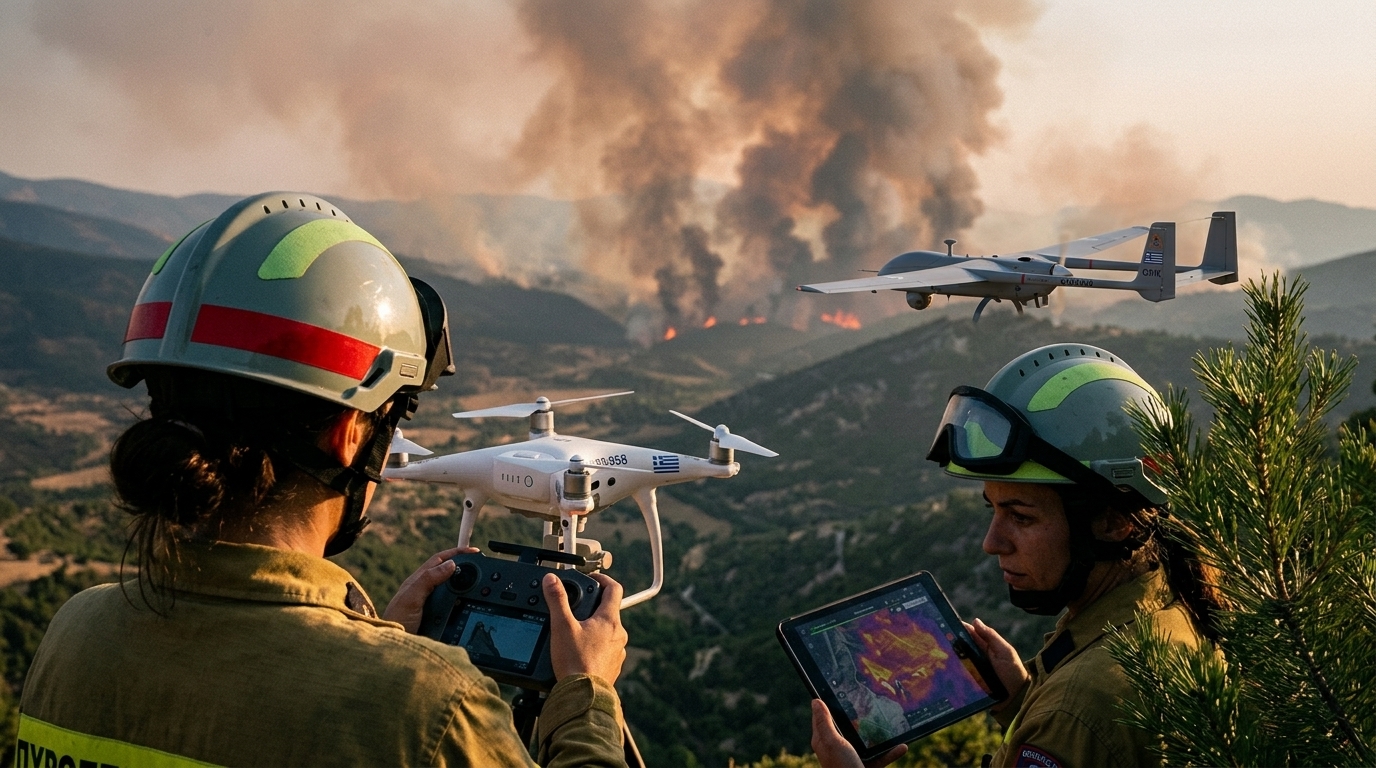
The new fleet of drones is not merely an addition of equipment but a qualitative upgrade of operational capability. These aircraft are equipped with high-definition cameras and, most importantly, latest-generation thermal sensors. This allows operators to detect fire spots at a very early stage, even under dense vegetation or during the night, when traditional aerial assets cannot operate with the same precision.
The ability of drones to remain airborne for extended periods and transmit live imagery to operations centers (ESKEDIK) provides commanders with a holistic view of the fire front. As Civil Protection officials point out, this information is critical for the rational distribution of forces, allowing ground units to be sent exactly where they are needed most, avoiding the wasteful dispersal of resources.
Strategic Deployment and Geographical Coverage
The distribution of the 100+ drones has been designed based on the specificities of each Region. Particular emphasis is placed on the "red" zones of Attica, Evia, and the Peloponnese—areas repeatedly hit by catastrophic fires in recent years. However, the plan provides for a drone presence in every corner of Greece, from Evros to Crete.
This strategy is based on the "proximity of response." With drones stationed at local fire stations, the time from a smoke report to visual confirmation is reduced to a few minutes. Furthermore, drones are used for the surveillance of forest roads and high-risk areas during days with high winds, acting as a deterrent against arson.
"Technology is the force multiplier for our firefighters. With drones, we see the invisible and prevent the fatal," say sources from the Ministry of Climate Crisis.
The Challenge of Integration and Training
Despite the obvious advantages, the success of the project depends on two factors: the technical integration of data and the training of personnel. Civil Protection has invested significantly in creating a unified platform where drone imagery, satellite data, and meteorological forecasts are combined to produce real-time risk assessments.
Simultaneously, hundreds of firefighters have undergone specialized drone pilot certification seminars. Training covers not only flight operations but also the analysis of thermal imaging and coordination with ground units. The challenge lies in transforming the vast volume of data into actionable intelligence for the firefighter on the front lines.
Toward a Digital Future in Forest Protection
The integration of drones is part of the broader "AEGIS" program, which envisions a comprehensive upgrade of the country's civil protection assets. In the future, the use of Artificial Intelligence (AI) is expected for the automatic recognition of smoke from drone cameras, further reducing the likelihood of human error.
In conclusion, these 100 drones are not a panacea that will eliminate wildfires. However, they are an essential, modern tool that gives Greece a chance to face 21st-century challenges with future-oriented terms. Protecting natural heritage and human life now requires not only heroism but also the cutting edge of digital technology.