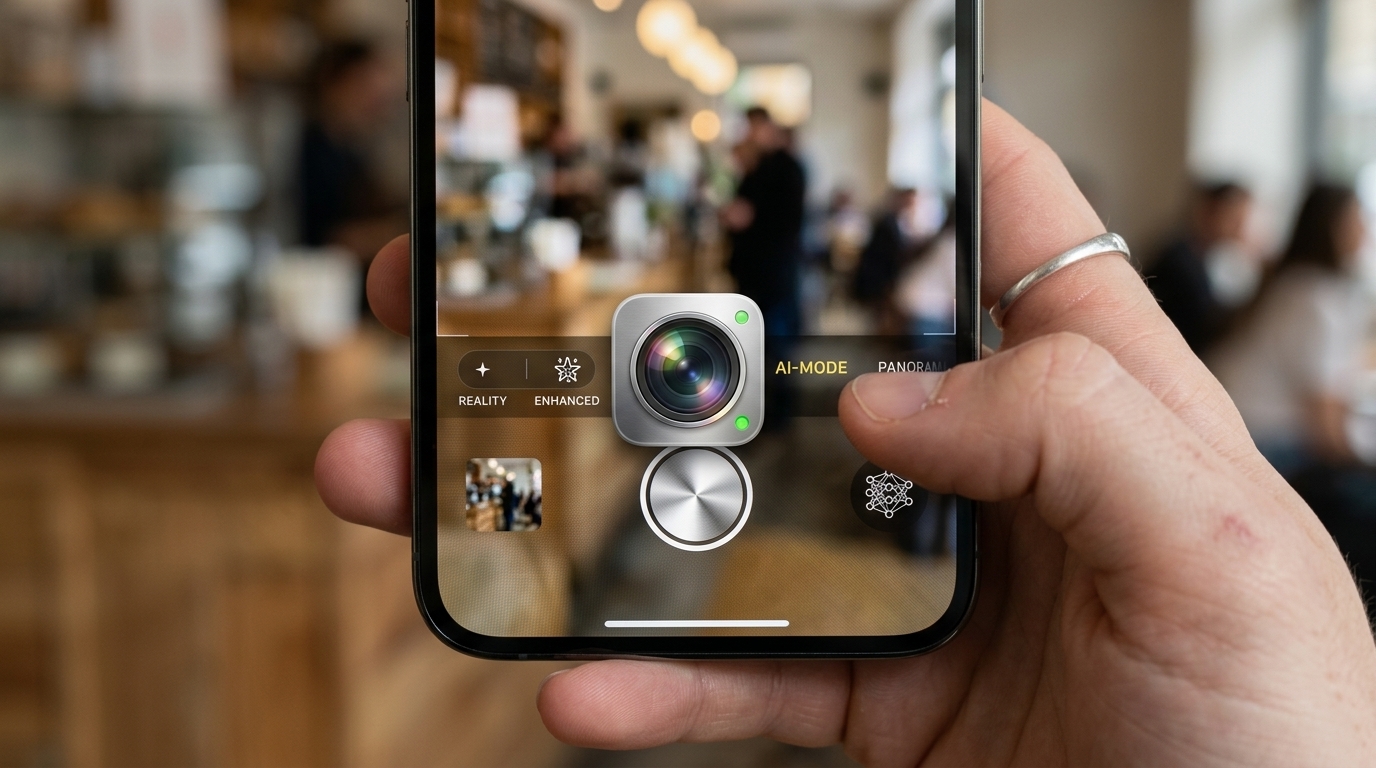
The era when a smartphone camera was merely a lens and a sensor is long gone. With the announcement of iOS 27, Apple is not just upgrading its software; it is fundamentally altering our relationship with visual reality. The new version of the operating system brings Apple Intelligence to the very heart of the Camera app, transforming the iPhone from a recording tool into an active 'director' that understands, interprets, and often reconstructs the world around us.
Siri as a Professional Photography Assistant
The most striking change in iOS 27 is the full integration of Siri within the Camera interface. This is no longer a simple voice command to snap a photo. Siri now 'sees' in real-time through the lens. Using advanced multimodal AI models, Siri can recognize objects, faces, and landscapes, offering dynamic advice. For instance, a user can ask: 'Siri, how can I make this sunset look more dramatic?' and the app will automatically adjust exposure, ISO, and filters, while simultaneously explaining the changes.
This evolution bridges the gap between the amateur and the professional. Siri can now suggest the optimal shooting angle or warn about unwanted objects in the frame before the shutter is even pressed. It is an approach Apple calls 'Contextual Vision,' promising to eliminate failed shots once and for all. However, this raises questions about whether the human artistic eye is being gradually replaced by an algorithm striving for a 'perfect' but perhaps uniform aesthetic.
Generative AI and the Future of Editing
Beyond capture, the Photos app is undergoing a radical overhaul. New Generative AI tools allow users to modify their images in ways that previously required hours in Photoshop. The 'Clean Up' feature has evolved into something much more powerful: users can now add elements that were never there, change the weather in a photo, or even modify a person's body posture.
- Semantic Re-lighting: The ability to change the light direction in a photo after it has been taken, using a digital depth map.
- Object Synthesis: Adding objects via text prompts (prompt-to-image) that integrate organically with the shadows and perspective of the original photo.
- Memory Movies 2.0: AI creates entire short films from your library, writing a script, selecting music, and editing based on a simple description.
Apple insists these changes are made with 'enhancing creativity' in mind. However, the tech industry is at a critical crossroads. When a photo can be edited to the point where it bears no resemblance to the original moment, it ceases to be evidence of truth and becomes a digital construct. Apple attempts to balance this challenge by introducing 'digital watermarks' (metadata) indicating AI usage, but their effectiveness remains a subject of debate.
Privacy and On-Device Processing
Unlike many competitors who rely on the cloud to process heavy AI models, Apple continues to invest in on-device processing. The new A-series processors accompanying iOS 27 feature specialized Neural Engine units capable of performing billions of operations per second without sending data to external servers. This is the company's strongest card in the privacy arena.
"Photography for us is the intersection of technology and the liberal arts. With iOS 27, we are giving users the power to express themselves without the constraints of the physical world, while maintaining the security of their data," an Apple executive stated during the keynote.
In conclusion, the camera upgrade in iOS 27 is not just a feature addition; it is a statement of intent. Apple recognizes that the future of photography is computational and generative. The challenge for users will be learning to use these tools without losing the authenticity of their memories. In the world of iOS 27, the camera no longer captures what you see, but what you wish you had seen.