In a move poised to fundamentally reshape the technological landscape of the United States, the Trump administration has issued a comprehensive memorandum outlining new directives for the development of Artificial Intelligence (AI). The document, obtained by Breaking Defense, is not merely a policy shift but a direct assault on the practices established during the Biden presidency. At the heart of this new strategy is the avoidance of what officials term the 'Anthropic debacle'—a reference to the stringent safety protocols and ethical guardrails that the administration believes are stifling American innovation.
The memo signals the official start of an era where speed and military dominance take precedence over precautionary regulation. The administration argues that previous efforts toward 'responsible AI' have resulted in models that are ideologically biased and technically hampered, providing America’s adversaries, led by China, with a window to close the technological gap.
The Rejection of 'Woke' Algorithms and the Anthropic Model
The term 'Anthropic debacle' is used in the memo as a shorthand for over-regulation. Anthropic, a company founded with a core mission of AI safety, had become the previous administration's gold standard for model development. However, for Trump’s advisors, the company's methods—such as 'Constitutional AI'—are now viewed as tools of ideological enforcement. The memo contends that these constraints prevent models from providing critical national security insights for fear of violating vague 'political correctness' standards.
The new directive requires companies partnering with the Pentagon to demonstrate that their models are 'free from ideological intrusive bias.' This implies that algorithms must be trained with the sole objective of efficiency rather than social compliance. This pivot is expected to send shockwaves through Silicon Valley, where many firms have invested billions into ethics and safety departments that may now be viewed as liabilities to national defense.
Militarizing Innovation: The Pentagon’s Priority
The memorandum issues clear mandates to the Department of Defense (DOD) to accelerate the integration of AI across all levels of the military hierarchy. From autonomous drone navigation to strategic battlefield analysis, AI is now categorized as the 'ultimate weapon.' The Trump administration intends to dismantle much of the bureaucratic red tape that required lengthy safety testing before the deployment of new systems.
- Revocation of the Biden AI Executive Order, which imposed strict reporting protocols on developers.
- Creation of a 'Fast-Track' system for defense contracts involving generative AI.
- Strengthening partnerships with firms that adopt an 'America First' approach to technology development.
The logic is straightforward: if the U.S. pauses to ensure AI is 100% safe, China will be the first to deploy an AI that is 90% effective and win the conflict. The memo emphasizes that 'safety' must be redefined as the protection of American interests rather than the avoidance of public offense.
Geopolitical Implications and the Race Against Beijing
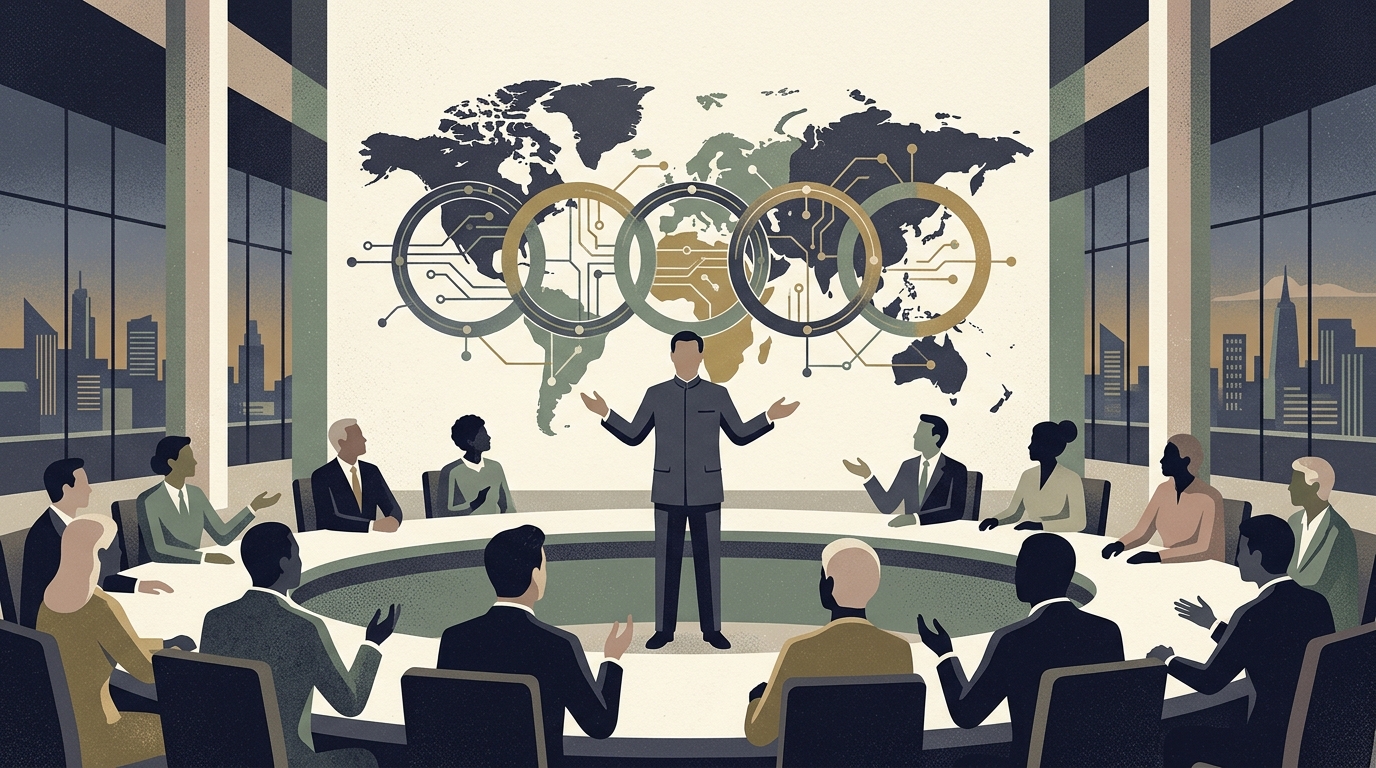
The international community is watching with bated breath. The U.S. shift toward a less regulated and more aggressive AI development cycle is expected to trigger a new arms race. Beijing has already stated that the use of AI for military purposes without international consensus is dangerous, despite their own feverish work in the same direction. The Trump memo makes it clear that the U.S. will not be bound by international treaties limiting autonomous weapon systems unless those treaties are fully verifiable and observed by all parties.
"We cannot afford the luxury of hesitation. Artificial Intelligence is the new Manhattan Project, and the winner will dictate the rules of the 21st century," the document states emphatically.
In conclusion, the new memorandum represents a radical break from the recent past. It promises an America that leads through strength, leaving behind the ethical anxieties that characterized the first decade of the AI boom. Whether this approach leads to a new era of prosperity or an uncontrollable technological race remains the defining question of our time.