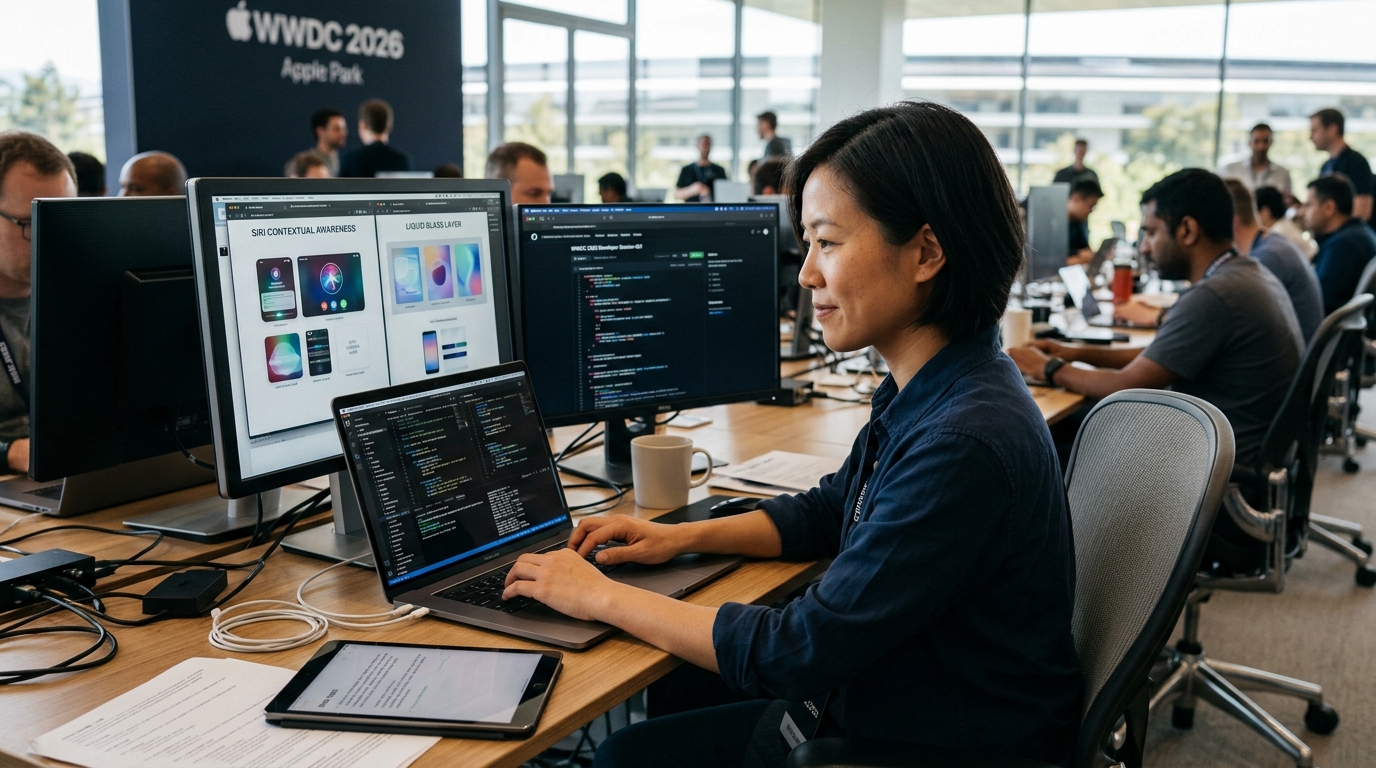
At Apple Park in Cupertino, the atmosphere today was not just celebratory; it was electric. The 2026 Worldwide Developers Conference (WWDC) will go down in history as the moment Apple stopped following AI trends and retook the lead, introducing a Siri that bears no resemblance to the digital assistant of the past. With the introduction of iOS 20 and the new "Apple Intelligence 2.0" architecture, the tech giant promises a user experience where the device doesn't wait for commands but anticipates the owner's needs.
The Siri Metamorphosis: From Assistant to Autonomous Agent
The central announcement of the evening concerned the radical restructuring of Siri. After years of criticism for lagging behind the competition, the new Siri is based on a proprietary Large Multimodal Model (LMM) that runs almost entirely on-device. Apple calls it "Siri Agent." Unlike previous versions, Siri 2026 has the capability to perform complex actions within third-party apps without user intervention.
For example, you can now say: "Siri, find the email with the hotel reservation, compare it with my calendar, and book a table at a nearby Italian restaurant for 8 PM." Siri will navigate through your data, understand the context, and complete the reservation via OpenTable or similar services, updating you only for the confirmation. This "cross-app reasoning" capability is the holy grail of modern computing, and Apple seems to have achieved it while maintaining privacy through the upgraded Private Cloud Compute.
Liquid Glass: A Revolution in Materials
Beyond software, Apple surprised the audience with "Liquid Glass." This is a new display and device body technology set to debut on the upcoming iPhone 18. Liquid Glass is not just more drop-resistant; it features self-healing properties for micro-scratches and, most importantly, alters its transparency based on the screen's content.
According to Apple engineers, this material allows for the complete concealment of FaceID sensors and the front-facing camera beneath the display without any loss in image or capture quality. The screen now appears as a single, uninterrupted piece of crystal extending from edge to edge. Furthermore, Liquid Glass offers a new haptic experience where the screen's texture can change locally, simulating the feel of physical buttons or different materials like paper or metal.
Ecosystem and VisionOS 3
Ecosystem integration has reached new levels with VisionOS 3. The Apple Vision Pro, now in its third generation (including a more affordable "Air" model), works in perfect synergy with the Mac. The "Spatial Workspace" feature now allows for the transfer of any application from the iPhone or iPad into 3D space with a simple movement of the eyes and hands. The Siri Agent plays a crucial role here, acting as the connective tissue that manages content across devices, understanding where the user is and what they are trying to achieve.
Privacy: Apple's Fortress
In an era where trust in Artificial Intelligence is being tested, Tim Cook repeatedly emphasized that "your data belongs to you." Apple introduced the "On-Device Semantic Index," an encrypted database that stores all user interactions locally, allowing the AI to learn preferences without sending personal information to the cloud. Even when more processing power is required, Private Cloud Compute 2.0 guarantees that data is deleted immediately after processing and is inaccessible even to Apple itself.
WWDC 2026 shows that Apple is not interested in merely adding a chatbot to its products. It seeks to create an operating system that thinks alongside the user, using hardware and software as a single entity. The battle for dominance in the AI era has just gained a new benchmark.