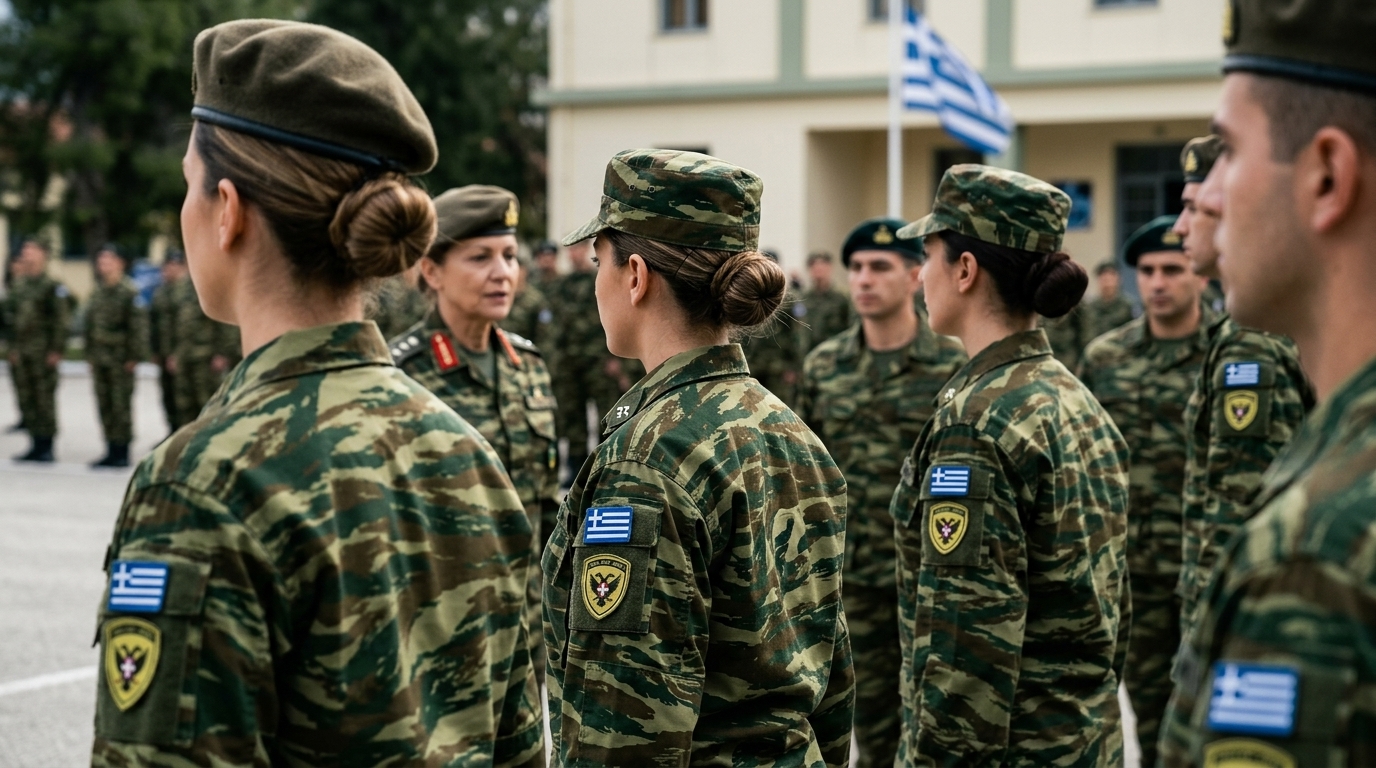
Today, Thursday, June 4, 2026, will be etched into the history of modern Greece not just as a typical enlistment date, but as the starting point of a profound social and military reform. As the first recruitment bell rings at the Basic Training Centers (KEN), the voluntary military service for women in the Hellenic Army is becoming a reality, implementing one of the most discussed pillars of Defense Minister Nikos Dendias's 'Agenda 2030'.
This initiative is far from a mere symbolic gesture. On the contrary, it is part of a broader strategic plan aimed at modernizing the Greek military, addressing the acute demographic crisis, and utilizing the full potential of the country's human capital in an era where threats are rapidly transforming.
From Theory to Practice: The Voluntary Service Model
The voluntary female conscription program was designed based on successful models from other European nations, such as Finland and Denmark, but tailored to the unique needs of the Greek reality. The women enlisting today are not just filling gaps in units; they are being trained in specialized fields that require high technical expertise and analytical thinking.
- Cyber Defense and IT: A large percentage of volunteers are directed toward high-tech support units.
- Unmanned Systems (Drones) Operation: The new Army structure emphasizes drones, where precision and composure are critical.
- Logistics and Supply Chain: Organizing the supply chain is the backbone of any modern military.
- Medical Support: Strengthening military hospitals and first-aid units in the field.
The term of service for volunteers lasts twelve months, with options for extension or transition to the Professional Soldiers (EP.OP.) corps under specific conditions. The motivation is not only service to the nation but also the acquisition of skills highly sought after in the civilian labor market, such as crisis management and team leadership.
The Demographic Trap and National Necessity
It is no secret that Greece faces an existential challenge: an aging population and a declining birth rate. The number of available male conscripts has been steadily decreasing over the past decades, creating pressure on unit manning, particularly in the Army. Integrating women into a voluntary framework is a rational response to this problem.
"We cannot afford to leave 50% of our population out of the effort for national defense," Nikos Dendias stated during the presentation of the bill.
This move breaks old stereotypes that saw women in exclusively supportive or clerical roles within the military. Today, the new recruits will train with the same weapons, follow the same physical education program (with necessary adjustments), and be judged based on their effectiveness.
Infrastructure and Integration Challenges
The transition to a mixed-service model is not without its challenges. The Hellenic Army General Staff (GES) has worked feverishly over the past 18 months to upgrade infrastructure at military bases. Creating separate living quarters, adapting uniforms and equipment to female body types, and training personnel on inclusion and harassment prevention were top priorities.
However, the greatest challenge is the shift in mindset. The Greek military, a traditionally male-dominated institution, must prove it can integrate women not as a "foreign body" but as equal members of the defense machine. The success of this first recruitment class (ESSO) will determine the future of the institution and its potential expansion on a mandatory basis in the future—though the government maintains that, for now, the voluntary nature remains unchanged.
Conclusions for the Future
The entry of women into military service is part of a broader "revolution" in the Armed Forces. With the introduction of AI in decision-making, the strengthening of deterrent power with new weapon systems, and the reorganization of the reserves, Greece seeks to become a modern military power in the Eastern Mediterranean. The women donning the khaki today are not just soldiers; they are the pioneers of a new social contract between the citizen and the state.