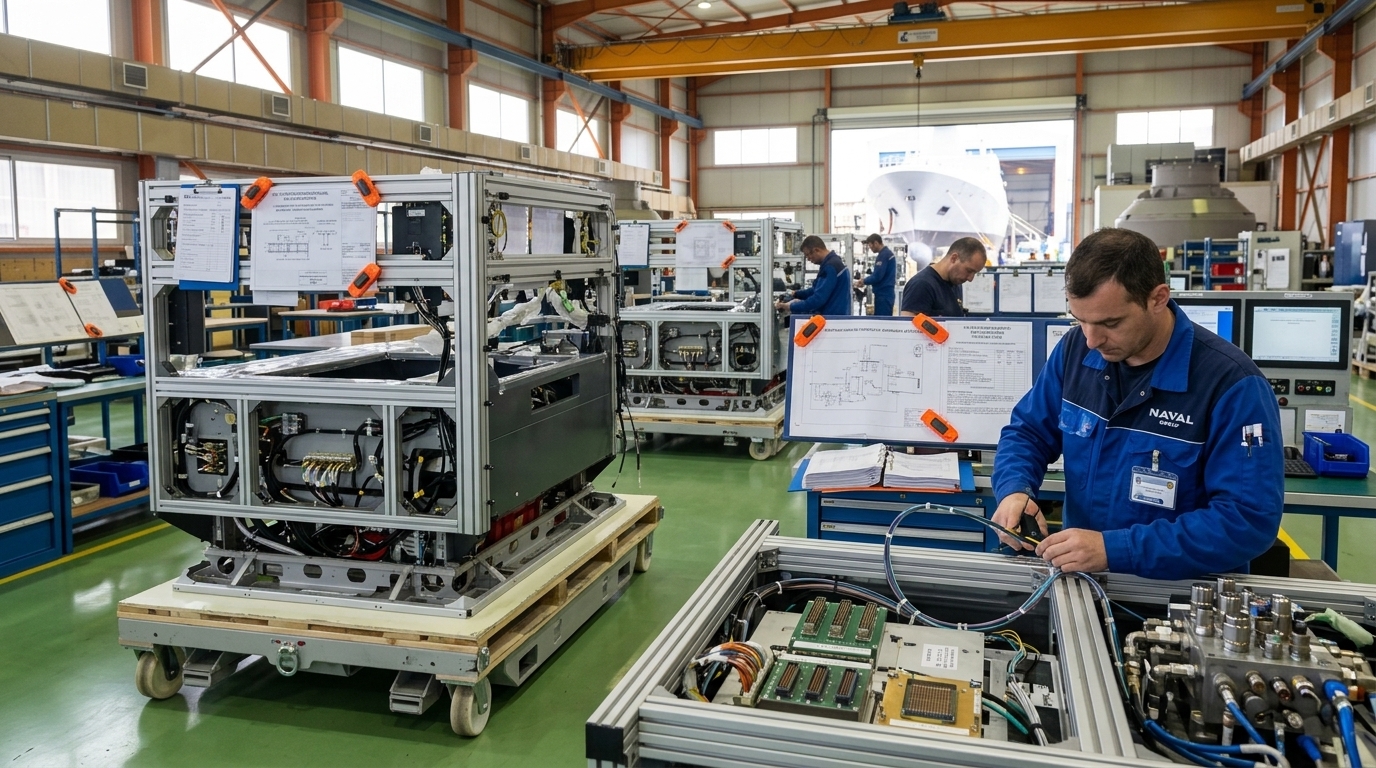
The announcement by Naval Group regarding the signing of two new contracts with Greek companies within the framework of the FDI (Frégate de Défense et d'Intervention) frigate program for the Hellenic Navy is more than just business news. It represents the culmination of a strategic choice aimed at revitalizing the Greek defense industry and deepening the Franco-Greek defense partnership. In a period where geopolitical instability in the Eastern Mediterranean demands not only modern assets but also domestic support, this move carries significant weight.
The new agreements are part of the broader Hellenic Industrial Participation (HIP) plan, which the French company has committed to implementing. Through this plan, dozens of Greek enterprises have already been integrated into Naval Group's supply chain, undertaking projects related not only to the three Greek frigates ('Kimon', 'Nearchos', 'Formion') but also to the entire FDI program for the French Navy.
The Significance of Domestic Participation
The participation of the Greek industry in programs of this magnitude is vital. It is not merely about capital inflow but primarily about the transfer of technology. Greek companies collaborating with Naval Group gain access to advanced production methods, strict quality standards, and cutting-edge technologies involving digital shipbuilding and combat systems.
The two new contracts concern specialized segments of the construction and support of the vessels. Specifically, the involvement covers areas such as the manufacturing of mechanical parts, electrical installations, and software development for combat management systems. This means that Greece is no longer a mere 'buyer' of weapon systems but an active partner in their production. This model enhances security of supply, ensuring that the Hellenic Navy will be able to maintain and upgrade its ships with domestic resources during times of crisis.
Geopolitical and Strategic Context
Athens' choice of the FDI frigates was a move that shifted the balance in the region. These ships, equipped with the SeaFire radar and Aster 30 missiles, offer area air defense capabilities that the Hellenic Navy had lacked for decades. However, the strategic relationship with France transcends the technical specifications of the ships. The mutual defense assistance clause accompanying the agreement forms the basis of a new security architecture in Europe.
Naval Group, recognizing the need for a strong local base, has invested in creating an ecosystem in Greece. From Salamis Shipyards to high-tech companies in Attica and the provinces, the footprint is visible. This integration acts as a 'power multiplier' for the Greek economy, creating high-skill jobs and stemming the brain drain in the fields of engineering and information technology.
Towards a Digital Navy
The FDI frigates are the world's first 'digital' frigates. They feature advanced cybersecurity systems and an architecture based on on-board data centers. This opens new horizons for the Greek defense industry, particularly in the fields of software and artificial intelligence. The new contracts suggest that Naval Group trusts Greek innovation to support these digital infrastructures.
In conclusion, the expansion of Naval Group's partnerships with Greek companies is a positive development that must be sustained. The challenge now for the Greek side is to leverage this opportunity to become competitive in the international defense market, exporting expertise and products to other FDI frigate users worldwide. The wager for the next decade is the transition from assembly to co-design and full autonomy in supporting national defense needs.