In the world of the ultra-wealthy, overt displays of riches like gold-plated fixtures and marble palaces are increasingly viewed as outdated, if not gauche. The new frontier in billionaire residential architecture is moving toward a different paradigm: "invisible" luxury, absolute privacy, and, above all, scientifically-backed wellness. The home is no longer just a living space or a status symbol; it is an advanced tool for optimizing human biology and an impenetrable digital and physical fortress.
Wellness as the Ultimate Status Symbol
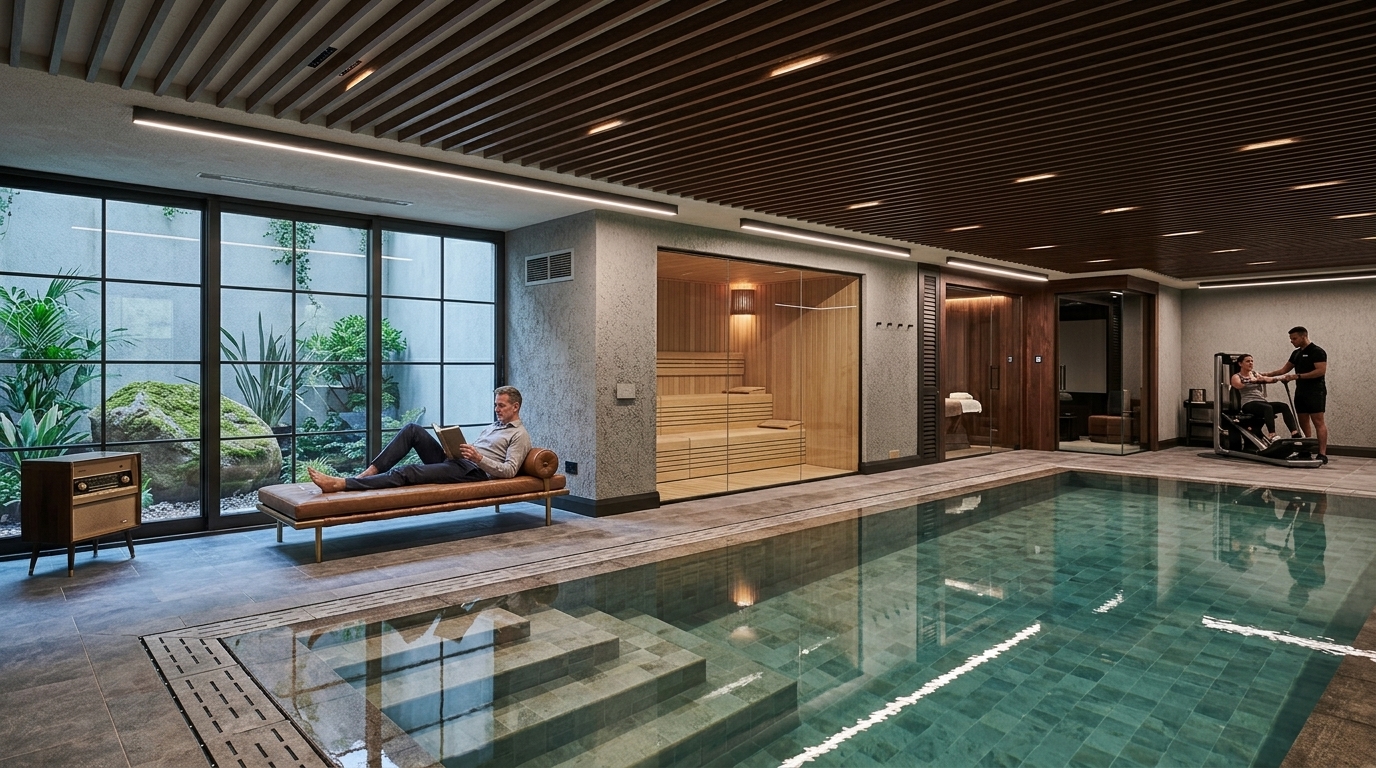
If the pinnacle of luxury was once an Olympic-sized indoor pool, today it is a "wellness suite" that would rival the world's leading medical facilities. Modern tycoons, influenced by the longevity movement, are integrating cryotherapy chambers, photobiomodulation (red light therapy) devices, and hyperbaric oxygen chambers into their private residences. This isn't just a home gym; it is a comprehensive biohacking center.
According to architects specializing in ultra-high-net-worth (UHNW) clients, demand for medical-grade air filtration systems and water purification that eliminates every trace of microplastics has skyrocketed. The goal is to create a controlled environment where the inhabitant is shielded from every external environmental threat, allowing the body to recover at optimal rates. Cold plunges and infrared saunas are now standard equipment, often set within biophilic designs that seamlessly bring nature indoors.
Technology that Listens but Stays Unseen
The era of bulky gadgets and visible control panels is over. Billionaires now demand "invisible" technology. This translates to speakers hidden behind wall plaster, screens that emerge from floors or transform into fine art when not in use, and AI systems that adjust lighting based on the user's circadian rhythm without requiring human input.
The Smart Home of 2026 is no longer about turning off lights with your voice; it's about the home anticipating your needs. Acoustic engineering has also become a primary focus. Materials that absorb every frequency are used to create "zones of absolute silence," where the noise of the city—or even other household members—is completely neutralized. This pursuit of silence is the new form of luxury isolation.
The Double Kitchen and the Service Split
An interesting sociological and architectural trend is the return of the "double kitchen." There is the "show kitchen," an aesthetically perfect, minimalist space where owners entertain guests, and the "prep kitchen" (or "dirty kitchen"), hidden behind secret doors. In the latter, staff prepare meals away from view, ensuring that the process of production does not disturb the aesthetic serenity of the home.
This separation extends to the entire structure of the residence. Staff circulation paths are often entirely separate, allowing housekeepers, chefs, and security personnel to move "invisibly." Privacy is not just about shielding from neighbors; it's about minimizing the perceived presence of others within one's personal sanctuary.
Security: From Panic Rooms to Cyber-Defense
In a world of increasing geopolitical instability, security remains a top priority, but it has evolved significantly. Traditional panic rooms have morphed into luxury suites capable of sustaining a family for weeks, featuring autonomous power supplies and air filtration for chemical threats. However, the most significant threat today is digital.
Modern mansions are being equipped with Faraday cages in specific rooms to prevent electronic eavesdropping and private servers that isolate the home's network from the public internet. Cybersecurity is baked into the home's foundations, as every smart device represents a potential entry point for hackers. For the billionaire of 2026, the home is the final fortress for both data and physical safety.