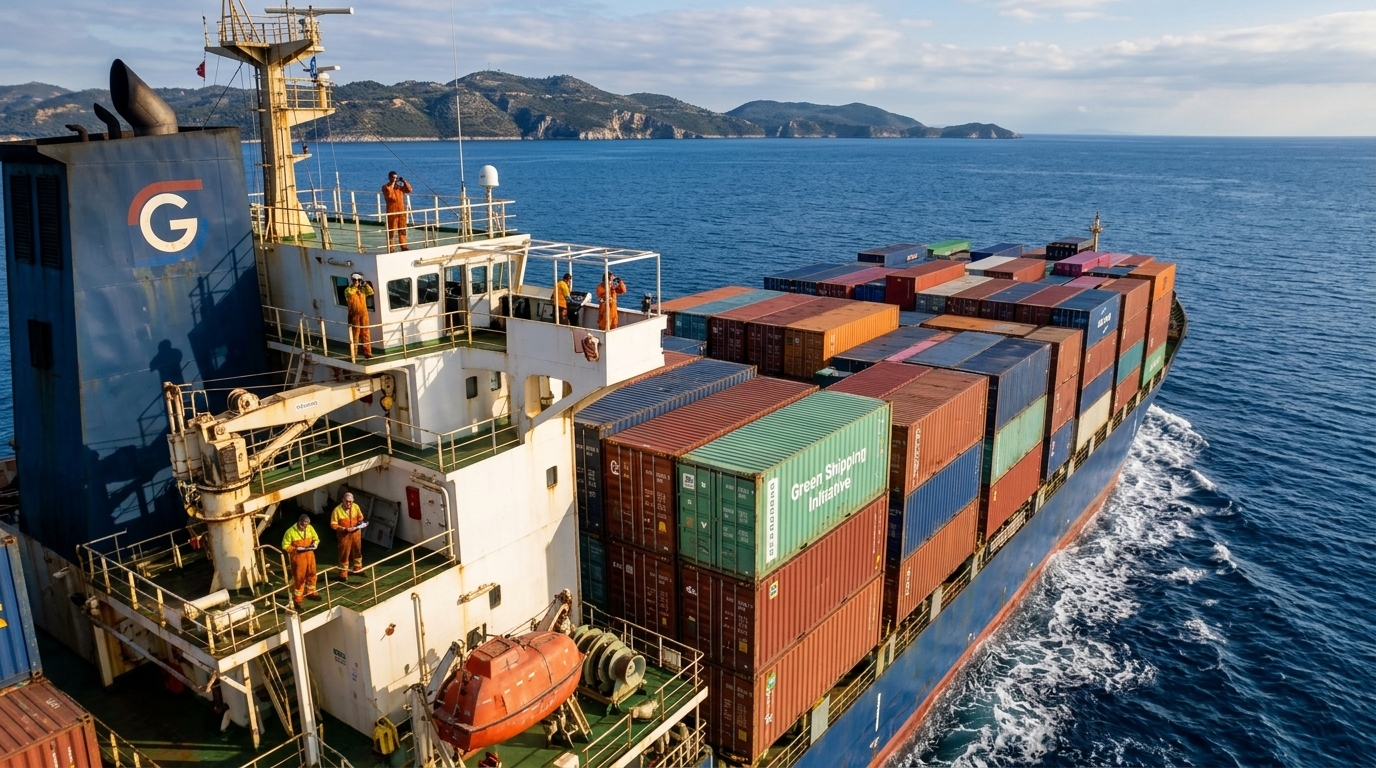
As the global maritime community converges on Athens for the Poseidonia 2026 exhibition, data from Clarksons and VesselsValue confirm a perennial truth: Greek shipping is not merely a sector of the economy, but the undisputed sovereign of the seas. With the Greek-owned fleet now valued at a staggering $204 billion, Greece remains the world's leading maritime power, outpacing traditional rivals like China and Japan in terms of both asset value and strategic importance.
This ascent is no accident. It is the result of an aggressive investment policy pursued by Greek shipowners in recent years, focusing on fleet renewal with next-generation vessels that offer higher efficiency and lower emissions. Today, Greek shipping controls approximately 20% of global carrying capacity (dwt) and over 50% of the European Union's fleet, granting it immense geopolitical leverage at a time when global supply chains are being tested by successive crises.
The Strategic Shift to LNG and Eco-Ships
An analysis of the $204 billion valuation reveals a significant qualitative shift. While the strength of the Greeks has traditionally lain in bulk carriers and tankers, the current valuation reflects a massive entry into the Liquefied Natural Gas (LNG) carrier sector. These vessels, acting as "floating pipelines" for Europe's energy security, have sent the value of the Greek portfolio skyrocketing. Greek owners moved early with newbuild orders, capitalizing on the surge in natural gas demand following the reconfiguration of the energy map due to the conflict in Ukraine.
Simultaneously, investment in eco-ships—vessels incorporating fuel-saving technologies—has made the Greek fleet one of the most modern globally. This is not just a matter of environmental consciousness but of economic survival. With new regulations from the International Maritime Organization (IMO) and the inclusion of shipping in the EU Emissions Trading System (EU ETS), older, more polluting vessels are becoming financially unviable. The Greeks, with their proverbial ability to read market trends, have already positioned themselves for the future.
Poseidonia 2026: The Showcase of Innovation
This year's Poseidonia is expected to be the largest in the event's history. It is more than a trade fair; it is the decision-making hub for the future of global shipping. The focus will be on the "twin transition": decarbonization and digitalization. The use of Artificial Intelligence for route optimization, the adoption of alternative fuels such as ammonia and methanol, and the development of autonomous navigation systems are the themes that will dominate the discourse.
The challenge for Greek shipping is to maintain its leadership in an environment where technology is rewriting the rules of the game. Traditional "seamanship" must now be wedded to high technology. Greek companies are increasingly investing in R&D departments and collaborating with tech start-ups to develop solutions that reduce their environmental footprint, proving that adaptability remains their most potent weapon.
Geopolitical Volatility and the Role of the Greek Fleet
In a world characterized by trade fragmentation and geopolitical tensions in the Red Sea and the Suez Canal, the Greek fleet acts as a guarantor of global stability. The ability of Greek managers to navigate "troubled waters," both literally and figuratively, is unparalleled. However, this dominance comes with increased responsibilities and risks. The pressure to comply with sanctions and the need to protect crews in conflict zones are daily challenges.
In conclusion, the $204 billion figure is impressive, but the true value of Greek shipping lies in its resilience. As we move toward 2030, the bet is whether Greek shipowners can lead the green revolution as successfully as they led the oil era. Based on the industry's historical trajectory, the answer appears to be positive, provided there is the necessary support from national and European regulatory frameworks.