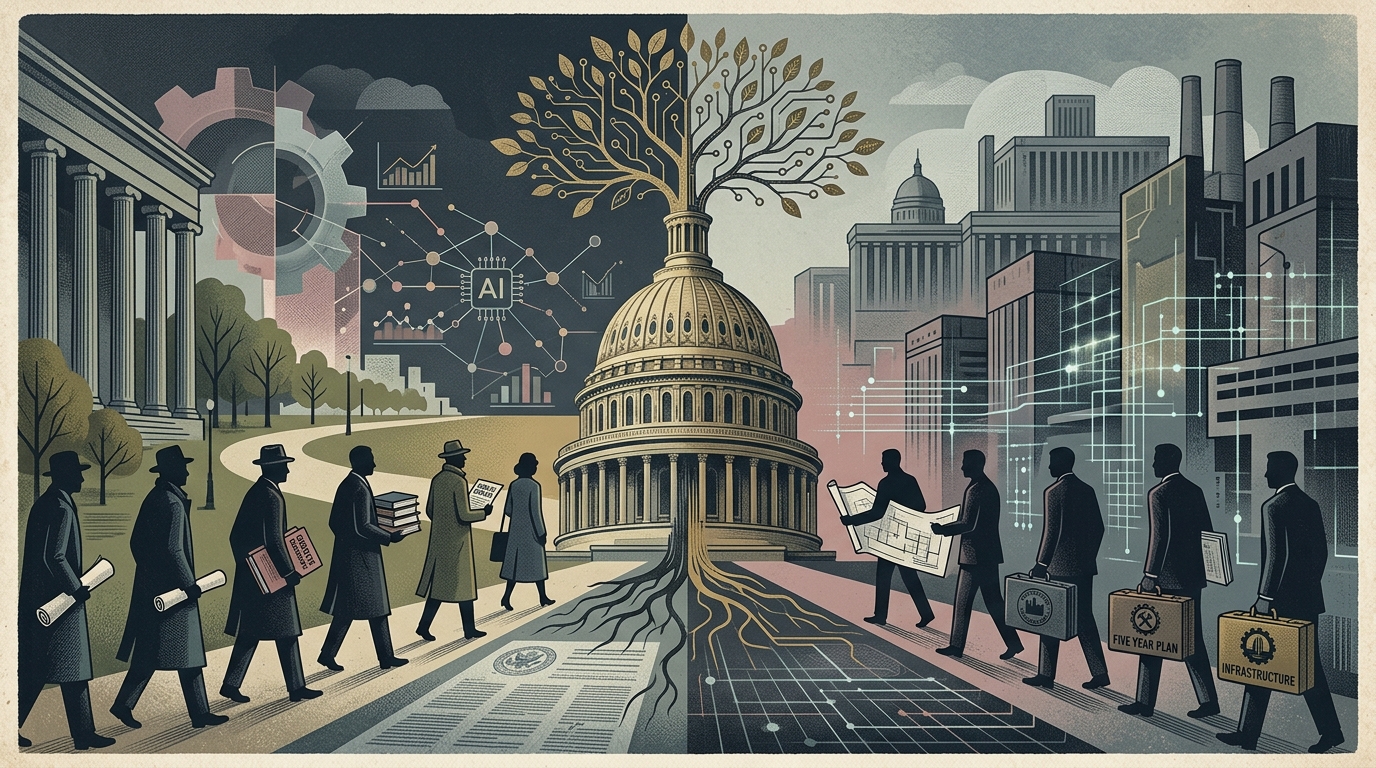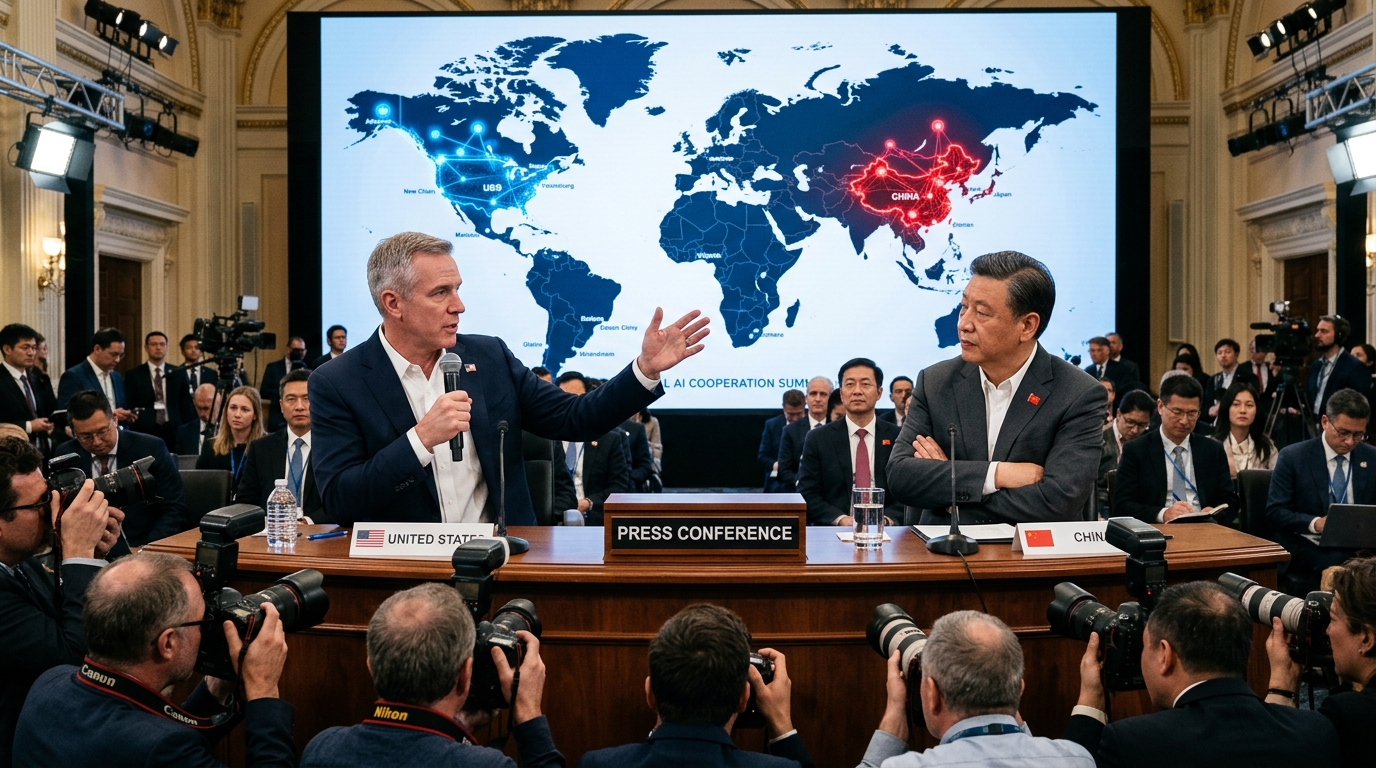
The history of technology has witnessed many periods of intense rivalry, but the current standoff between the United States and China over Artificial Intelligence (AI) supremacy is unlike anything we have seen before. This is not merely an arms race for the fastest processor or the cleverest chatbot. It is a fundamental, ontological divergence regarding what AI is, who owns it, and what purpose it serves. As 2026 unfolds, it is becoming clear that the world is not heading toward a unified digital reality, but toward a "technological bipolarity" that will define the 21st century.
Ideology in the Code: Liberty vs. Stability
In the United States, AI development is driven primarily by the private sector. Companies like OpenAI, Google, and Anthropic operate in an environment that, despite growing calls for regulation, still prioritizes "permissionless innovation." The American model is built on the belief that AI is a tool for economic growth and individual empowerment. The constraints being debated mostly revolve around safety and the avoidance of catastrophic scenarios, leaving vast room for experimentation and commercialization.
Conversely, China has adopted a radically different approach. For the Chinese Communist Party (CCP), AI is a tool for governance and social stability. Regulations recently enacted in Beijing require Large Language Models (LLMs) to "reflect core socialist values" and refrain from challenging state authority. This means that code in China is "censored" by design. While the US worries about whether AI will become too smart for us to control, China worries about whether AI will say something it shouldn't.
Regulatory Walls and Digital Sovereignty
The divergence is even more pronounced in the realm of regulation. Washington is hesitant to impose strict laws that might stifle innovation in the face of Chinese competition. The US approach is largely reactive: waiting for problems to manifest before legislating. On the other side of the Pacific, China is proactive. It has already instituted some of the world's strictest rules for recommendation algorithms and generative AI, requiring companies to register their models with state registries and undergo security assessments before public release.
This rigor comes at a cost. Many analysts point out that Chinese developers are forced to dedicate massive resources to the "political alignment" of their models, a factor that slows their technical progress. However, Beijing seems willing to sacrifice absolute superiority in speed to ensure that technology does not undermine social control. This creates a "splinternet" of intelligence where the answers you get depend entirely on which side of the firewall you stand.
The Chip War and Infrastructure
We cannot discuss divergence without mentioning the physical backbone of AI: semiconductors. US export restrictions on advanced GPUs, particularly from Nvidia, have forced China to pivot toward domestic production. This is creating two distinct hardware ecosystems. The West is building on Nvidia’s architecture and the CUDA software stack, while China is desperately trying to build an alternative around Huawei and other domestic players.
- United States: Focus on cutting-edge cloud infrastructure and access to the world's leading processors.
- China: Focus on "Sovereign AI" and vertical integration, from the chip to the end-user application.
- Global South: A new arena of competition where both powers offer their own AI "stacks" to developing nations.
"We are not just in a tech cold war; we are in the process of creating two different kinds of intelligence: one that seeks to expand the boundaries of human knowledge and one that seeks to maintain the boundaries of state order."
Conclusion: One World, Two Intelligences
The divergence between the US and China in AI is not a temporary political disagreement but a permanent structural shift. For businesses and citizens, this means that choosing a platform will soon be a choice of a political and ethical system. The globalization of technology, as we knew it over the last twenty years, has ended. In its place, a world is emerging where machine intelligence will have a nationality, a set of values, and, ultimately, borders.