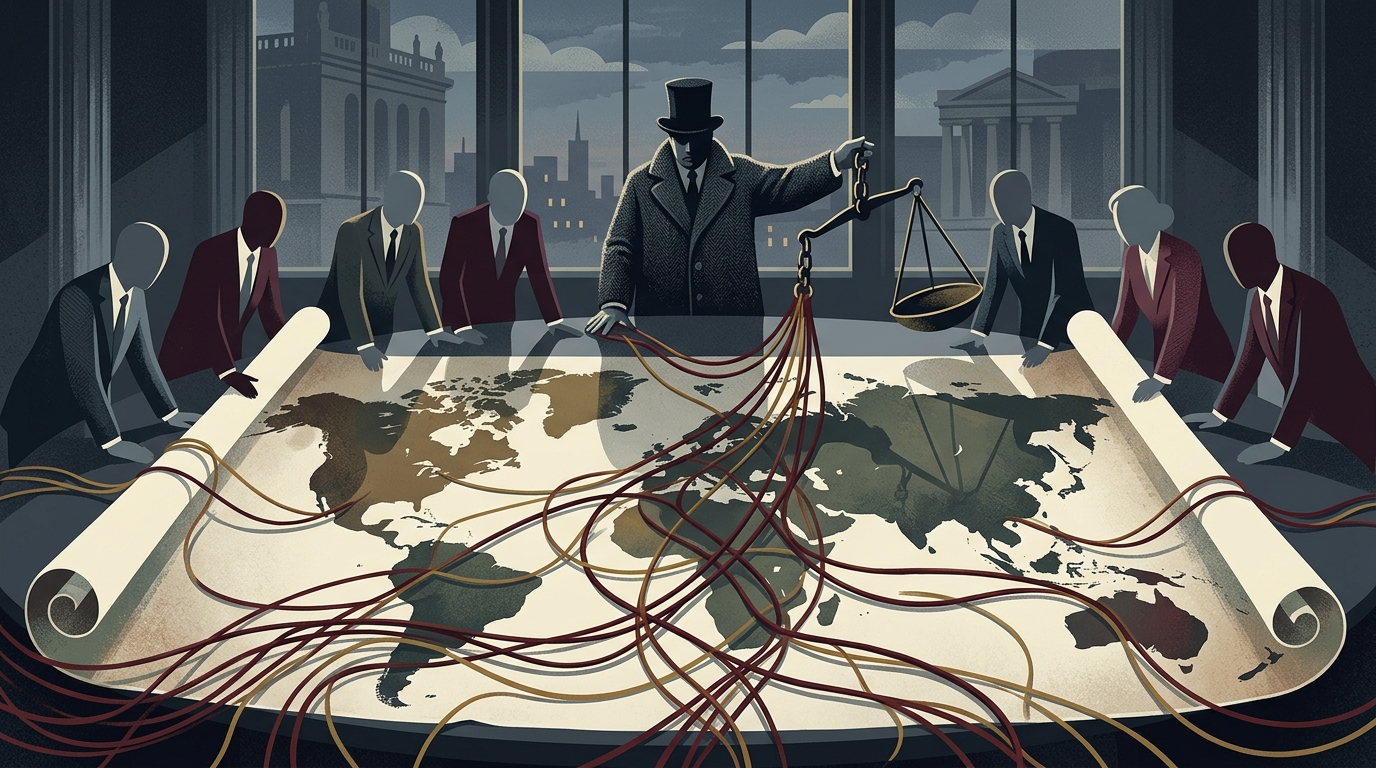
The history of technological progress has repeatedly taught us that invention is only half the battle. The other half—and often the most critical—is adoption. As we move through 2026, the conversation surrounding Artificial Intelligence (AI) is shifting from the laboratories of Silicon Valley and the theoretical capabilities of Large Language Models (LLMs) to the raw reality of industrial and state application. The recent example of Vietnam, which is emerging as a regional leader in AI adoption, underscores a fundamental truth: the advantage belongs to those who can turn code into productivity.
The Shift from Innovation to Implementation
For years, global attention was fixed on the arms race between OpenAI, Google, and Anthropic. However, geopolitical power no longer stems solely from possessing the algorithm, but from a state's ability to apply it within the supply chain, agriculture, healthcare, and public administration. Just as electricity didn't change the world when the lightbulb was invented, but when factories were reorganized around it, AI requires a structural restructuring of national economies.
Vietnam presents an intriguing case study. Instead of attempting to compete with the US in high-end chip manufacturing or training trillion-parameter models, it is focusing on "vertical" application. By using AI to optimize manufacturing and automate its ports, the nation is gaining market share on the global stage, proving that "Sovereign AI" is primarily a matter of practical implementation.
The Geopolitics of "Applied Intelligence"
In the past, geopolitical power was measured in barrels of oil or steel production. Today, it is measured by a nation's "absorptive capacity" for technology. Nations that manage to overcome bureaucratic hurdles and train their workforce in the use of AI tools will be the ones defining the terms of international trade. This creates a new divide: on one side, we have the "creators" of foundational models, and on the other, the "implementers" who convert this technology into economic value.
- Democratization of Access: With the rise of Open Source models, access to powerful AI is no longer the exclusive privilege of a few corporations.
- Localized Data: The advantage is shifting to those who possess high-quality, local data to train specialized applications.
- Infrastructure: The need for national data centers and energy autonomy is becoming imperative.
The Challenge for the West and Emerging Economies
While the US and China dominate the infrastructure, Europe and many emerging economies find themselves at a crossroads. The emphasis on regulation (like the EU AI Act) is necessary for protecting rights, but it must not act as a brake on application. For a country to gain an edge, it must identify niches—such as tourism, maritime logistics, or specialized agriculture—where AI can provide an immediate ROI. Maritime shipping, for instance, offers a massive field for route optimization and emission reduction through predictive models.
"Artificial Intelligence is not a product you buy; it is a capability you cultivate. The nation that learns to 'speak' the language of AI in its daily production will be the master of the 21st century."
In conclusion, the era of theoretical supremacy is ending. Real power is shifting to those states that can bridge the gap between digital vision and physical execution. Vietnam's strategy highlights a broader trend: AI is not a distant goal, but a tool that must be picked up today to shape the world of tomorrow. The winners of the next decade won't necessarily be those who write the best papers, but those who build the most efficient systems.