History is not only written in grand diplomatic halls or on battlefields; it is also etched in the courtyards of homes, on mountain slopes, and in the everyday conversations of people who lived through the great upheavals of the 20th century. The testimony of Nikolaos Balkidis, born in the settlement of Misailanton in Trebizond, serves as a poignant document of a world lost forever—a time when fanaticism and political ideology eroded centuries-old bonds between neighbors.
The Era of 'Kindness': A Vanished Everyday Reality
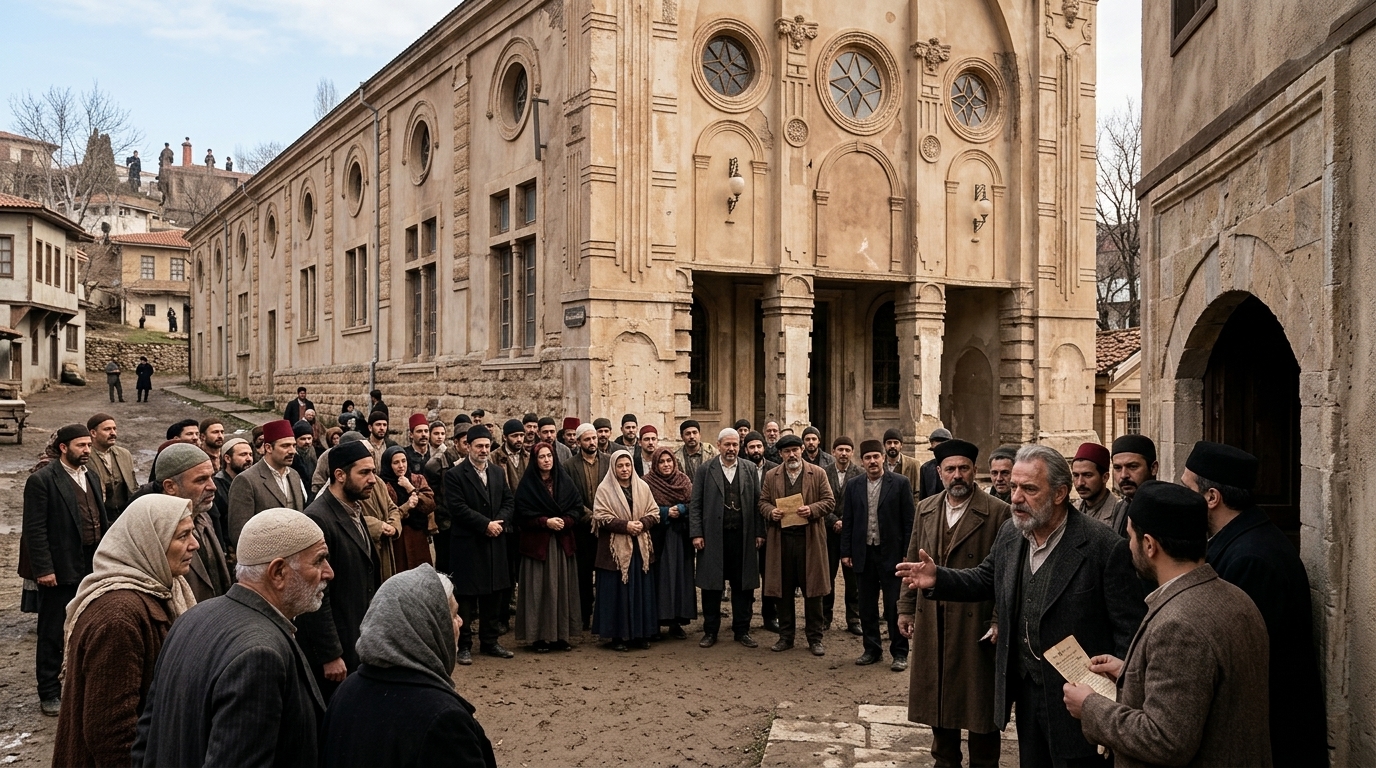
According to Balkidis, life in the Kaliandere valley, a few kilometers south of Trebizond, was characterized by a deep, almost organic coexistence between Christian and Muslim populations. "Before the Young Turks took power, the Turk was all kindness towards us," he notes emphatically. This phrase is not merely a nostalgic reminiscence but a sociological observation of how the Ottoman Empire functioned before the rise of virulent nationalism.
In Pontus, communities were linked by economic and social ties that transcended religion. People shared the same anxieties over harvests, the same joys at local festivals, and a common language of survival. The "kindness" Balkidis refers to was the result of an unwritten code of honor and neighborliness that allowed different identities to coexist under the umbrella of locality. Religion was certainly a dividing line, but it was not necessarily a cause for conflict in daily practice.
The 1908 Turning Point and the Rise of the Young Turks
The great upheaval came with the Young Turk Revolution of 1908. While the "Committee of Union and Progress" (İttihat ve Terakki) initially promised equality, freedom, and brotherhood for all peoples of the empire, it rapidly transformed into a harsh, exclusionary nationalism. Balkidis' testimony identifies this exact moment as the beginning of the end.
The Young Turks introduced the concept of the "internal enemy." The Christian populations, who until then were considered "rayas" (subjects) but an integral part of the social fabric, began to be treated as alien bodies threatening the unity of the Turkish state. The policy of "Turkification" was not limited to administration; it was gradually transferred to the masses through propaganda. Neighbors began to see neighbors not as fellow humans with whom they shared bread, but as political adversaries or obstacles to national purity.
The Erosion of Human Relationships
The most tragic element of the testimony is the description of gradual alienation. Balkidis describes how the state line began to poison personal relationships. The violence that followed—the deportations, the labor battalions (Amele Taburlari), and ultimately the Genocide—was not a random outburst but the result of a systematic deconstruction of the previous "kindness."
- The transformation of religious difference into national enmity.
- The use of local administration to intimidate Christians.
- The economic strangulation of Pontian Greeks through boycotts.
This process led to the uprooting of thousands of people from their homes. The settlement of Misailanton, like hundreds of others in Pontus, was emptied of its Greek element, leaving behind only memories and ruins. The testimony serves as a warning of how ideology can turn peaceful coexistence into a slaughterhouse in a very short time.
The Importance of Oral History in the Digital Age
Today, with the help of technology and Artificial Intelligence, such testimonies are given new life. The digitization of oral tradition archives allows researchers to reconstruct the social mosaic of the past with precision. The case of Nikolaos Balkidis reminds us that history is not just about dates, but about emotions and lived experiences.
"Memory is the only weapon against oblivion and the only bridge to understanding the mistakes of the past."
As we analyze this data with modern tools, we see that patterns of nationalism and polarization remain dangerously relevant. Studying the history of Pontus is not just about the past of Hellenism; it is a global lesson on how multicultural societies can collapse when politics chooses division over synthesis.