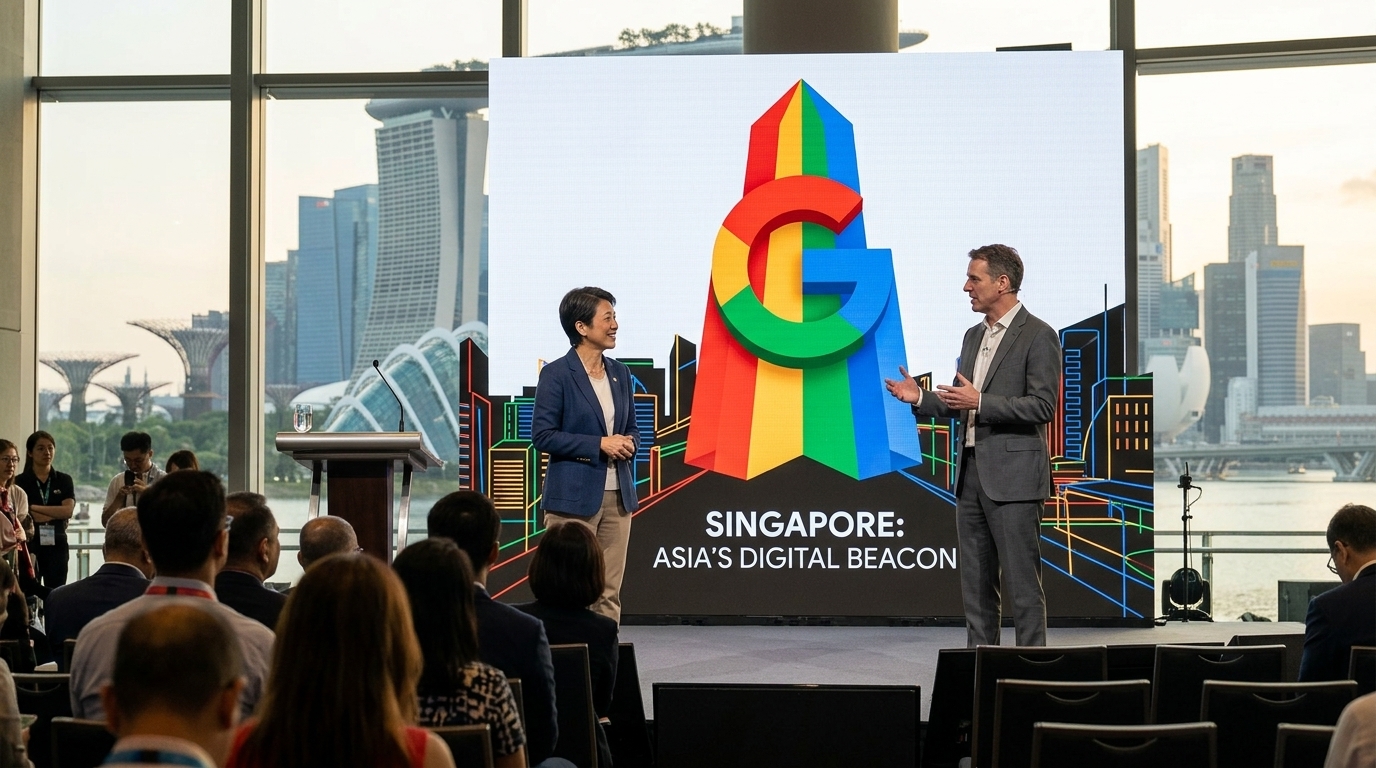
In the heart of Southeast Asia, the "Little Red Dot," as Singapore is often called, is transforming into a gargantuan AI hub. Google's recent announcement to deepen its investments in the city-state is not merely a business move; it is a geopolitical statement of intent. In an era where dominance in Artificial Intelligence (AI) equates to national power, the partnership between the tech giant and the Singaporean government lays the groundwork for a new model of digital governance and economic growth.
The Infrastructure Backbone: Billions in Investment
Google has already invested a total of $5 billion in Singapore, an investment reflected in the completion of its fourth data center in the country. These data centers are not just buildings filled with servers; they are the "engines" powering Google's ecosystem in Asia, from Search and Maps to YouTube and Cloud services. Singapore's geographical location, combined with its political stability and exceptional subsea cable network, makes it the ideal partner for Google.
The new phase of the partnership focuses on accelerating AI Impact, aligned with Singapore's National AI Strategy 2.0 (NAIS 2.0). The country's government has made it clear that AI is not a luxury, but a necessity for maintaining global competitiveness. Through the partnership with Google Cloud, Singapore aims to democratize access to Generative AI tools for both the public and private sectors.
Governance and Safety: The Singapore Model
One of the most critical pillars of the partnership is the focus on AI safety and ethics. Google is working closely with the Ministry of Digital Development and Information (MDDI) to create frameworks that ensure technology is developed responsibly. The establishment of the AI Safety Institute in Singapore is a milestone, as the country seeks to become a global regulator and a model for how a government can collaborate with the private sector without stifling innovation.
"Artificial Intelligence is not just a productivity tool; it is the catalyst for rewriting the social contract in the digital age," Singaporean government circles suggest.
The collaboration also includes the "AI Trailblazers" program, which has already helped over 100 organizations develop AI solutions. The second phase, AI Trailblazers 2.0, aims to expand this success by providing access to advanced models like Google’s Gemini and specialized support from the company's engineers.
Human Capital: The Battle for Skills
Technology without the right people is devoid of meaning. Google and Singapore are investing heavily in education. Through the "Skills Ignition SG" program, thousands of Singaporeans have already been trained in digital skills. The new commitment involves training an additional 10,000 professionals in AI, ensuring that the country's workforce is not left behind by rapid developments.
This investment in human capital is perhaps the most significant in the long run. In a region where the competition for talent is fierce, Singapore is creating an environment where workers can experiment, fail, and ultimately innovate using the latest technology. This creates a self-sustaining cycle of innovation that attracts further investment.
Geopolitical Implications: Between Two Worlds
From a geopolitical perspective, Google's move in Singapore is highly strategic. As relations between the US and China remain strained, especially in the tech sector, Singapore serves as a high-tech "neutral zone." Google's presence there strengthens American influence in the region, while simultaneously allowing Singapore to maintain its role as a global mediator.
In conclusion, the Google-Singapore partnership is not just about data centers or algorithms. It is about the vision of a country that refuses to remain stagnant and a company seeking the ideal laboratory for the future of AI. The outcome of this partnership will largely determine the digital architecture of the entire Asian continent for decades to come.