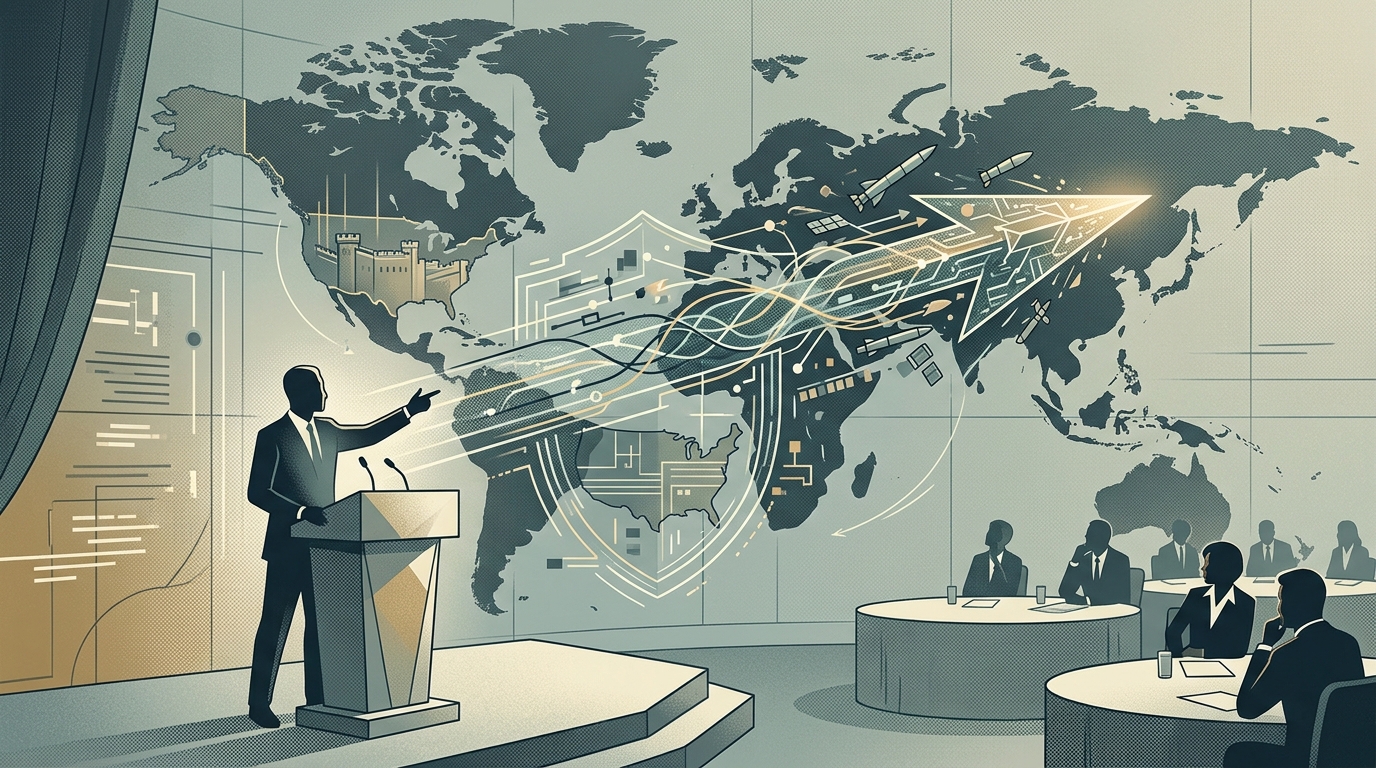
At a critical juncture for the European security architecture, NATO leadership, under Secretary General Mark Rutte, is exerting unprecedented pressure on the continent's defense industry giants. The message from Brussels is clear: the era of the peace dividend has passed, and Europe must rapidly transition to a "deterrence economy" model. At the heart of this strategic shift are air defense systems and precision missiles—areas where Alliance stockpiles have been dangerously depleted due to ongoing support for Ukraine and the urgent need to fortify the eastern flank.
The Challenge of Production Capacity
For decades, the European defense industry operated on a "just-in-time" logic, tailored to limited orders for peacekeeping missions or low-intensity local conflicts. The Russian invasion of Ukraine has completely overturned this paradigm. Today, the demand for 155mm artillery shells, Patriot systems, and IRIS-T missiles far exceeds the current production capacity of European factories. Mark Rutte, in recent meetings with CEOs from companies such as Rheinmetall, BAE Systems, and Leonardo, emphasized that industry can no longer wait for "guaranteed orders" before investing in new production lines.
The challenge is twofold: a shortage of skilled labor and persistent disruptions in global supply chains. Raw materials and critical components for missile electronics face lead times of up to 24 months. NATO is pushing for a more aggressive investment policy, arguing that continental security is the ultimate prerequisite for economic stability. The transition requires a shift from boutique manufacturing to mass industrial production, a feat not seen in Europe since the mid-20th century.
Financing and the ESG Hurdle
One of the most significant obstacles defense companies face in scaling production is access to capital. Many European financial institutions, bound by strict ESG (Environment, Social, Governance) criteria, hesitate to finance the production of weapon systems, categorizing them as "unethical" investments. This paradox has drawn sharp criticism from the Alliance. NATO argues that there is nothing more "socially responsible" than defending democracy and territorial integrity.
The debate over redefining ESG criteria has now reached the highest political levels in the EU. NATO's pressure aims to unlock billions of euros from the private sector to complement rising state budgets. The creation of common European defense bonds remains a controversial but increasingly likely scenario, as the need for massive, sustained investment becomes undeniable. Without a change in how the financial sector views defense, the industrial ramp-up risks stalling due to a lack of liquidity.
Standardization and Interoperability: Ending National Protectionism?
Another crucial aspect of NATO's pressure concerns standardization. Currently, Europe produces dozens of different types of armored vehicles and artillery systems, complicating logistics and driving up costs. Rutte is calling on member states to set aside national industrial protectionism and adopt common NATO standards. This would enable economies of scale, reducing unit costs and accelerating the delivery of vital air defense systems.
Resistance, however, remains potent, as each nation seeks to protect its own national champions and the jobs they provide. The friction between the need for speed (centralized NATO planning) and national sovereignty (European capitals) is the defining geopolitical gamble of the coming years. The success of this effort will determine whether Europe can stand on its own military feet, regardless of political shifts in Washington.
Conclusion: A New Industrial Map
NATO's pressure on the European defense industry is not merely a demand for more hardware; it is an attempt to redraw Europe's industrial map. The transition from an economy oriented toward services and consumption to one that recognizes hard power as an essential component of survival is painful and expensive. However, as analysts in Brussels point out, the cost of inaction will be far greater if Europe finds itself unprepared in the face of an escalating threat. The "deterrence economy" is no longer a choice, but a necessity for the decade ahead.