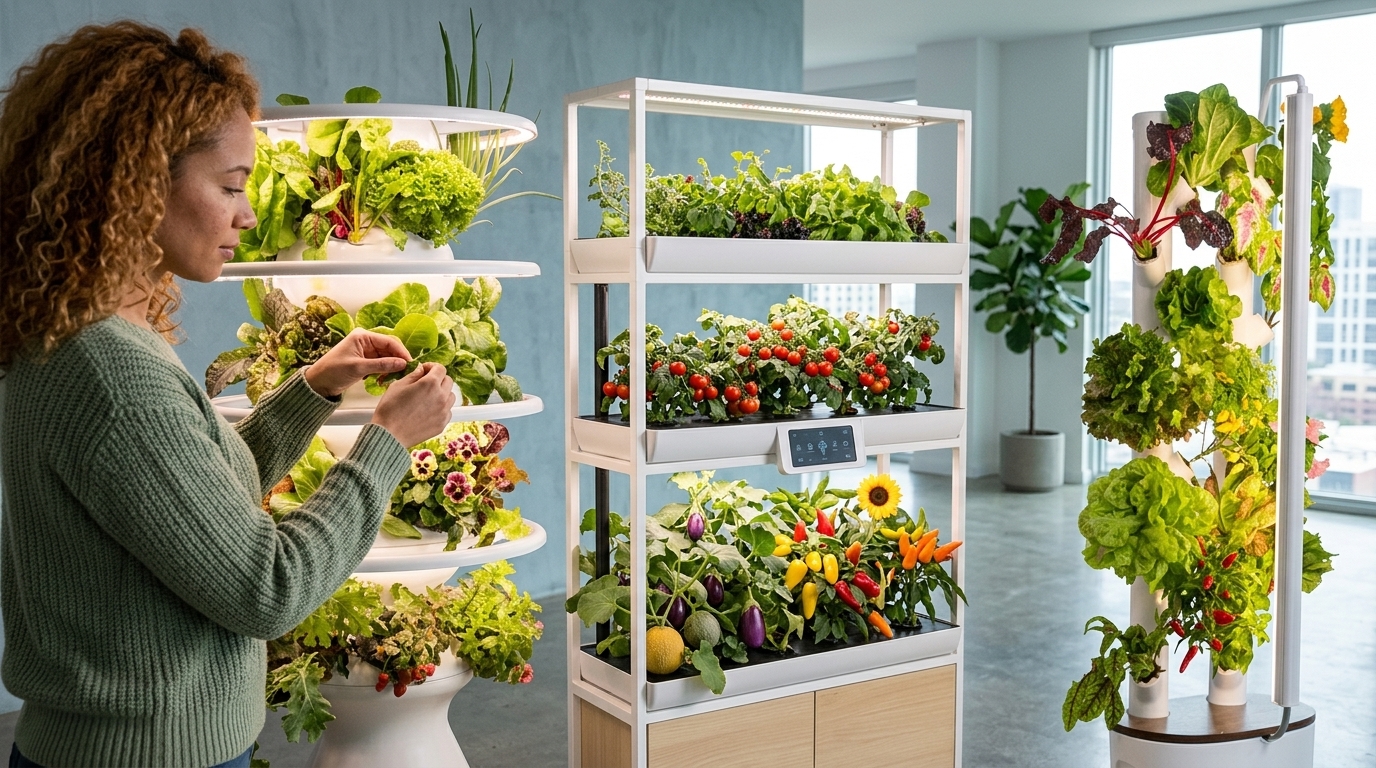
The concept of the "garden" has undergone a radical transformation in recent years. As we move through 2026, indoor gardening is no longer just a hobby for tech enthusiasts or apartment dwellers; it is a serious response to supply chain challenges and food quality concerns. The days when a wilted basil pot on a windowsill was considered an "indoor garden" are long gone. Today, we are talking about fully automated, hydroponic, and aeroponic systems that integrate into home aesthetics like high-end designer furniture.
The Rise of AI in the Soil (or lack thereof)
The most significant development we observed in our testing this year is the full integration of Artificial Intelligence. Systems like the Gardyn 4.0 and the revamped Rise Garden no longer feature simple light timers. They utilize high-resolution cameras and moisture/nutrient sensors that analyze the growth of every leaf in real-time. If your arugula shows a nitrogen deficiency, the system alerts your phone or, in certain high-end models, automatically adjusts the nutrient dosage in the water reservoir.
This "democratized agronomy" allows even the most novice user to produce harvests that previously required years of experience. During our testing, we found that the productivity of these systems has increased by 30% compared to 2024 models, primarily due to optimized LED light spectrums that mimic sunrise and sunset with absolute precision.
Vertical Farming: The Solution for Urban Environments
The biggest obstacle to indoor cultivation has always been space. Vertical systems have solved this problem by occupying minimal floor square footage while extending upwards. The Lettuce Grow Farmstand Nook, for example, allows the cultivation of up to 20 plants in a corner no larger than a floor lamp. The hydroponic method used by these systems consumes up to 95% less water compared to traditional soil gardening, making them an extremely sustainable choice in an era where water resource management is critical.
- Gardyn Home 4.0: The king of aesthetics and automation. Ideal for those who want "a garden that thinks for itself."
- Rise Gardens: The best choice for families wanting to grow larger vegetables like tomatoes and peppers, thanks to adjustable tier heights.
- Click and Grow Wall 1000: A minimalist approach that looks more like a living bookshelf than a farm.
The Cost of Autonomy and the Subscription Model
Despite the impressive benefits, there is a darker side: the cost. The initial investment for a quality system ranges from $500 to $1,500. However, the real issue is consumer "lock-in." Many companies utilize a capsule model (similar to coffee machines), where the user is forced to buy specific seed pods and nutrients from the manufacturer. In our research, we gave significant weight to systems that allow the use of one's own seeds and generic fertilizers, as this ensures long-term economic viability and variety.
"Indoor gardening is no longer about whether you can grow something, but about how efficiently you can integrate it into your daily diet without becoming a slave to system maintenance."
In conclusion, the indoor gardens of 2026 are mature products. They are no longer toys, but tools of resilience. In a world where food prices remain volatile and the quality of supermarket produce declines, the ability to harvest fresh salad directly from your living room wall is not a luxury—it is a logical investment in health and autonomy.