The geopolitical architecture of Southeast Europe is at a critical juncture as Turkey has officially submitted an ambitious $1.2 billion proposal for the construction of a military fuel pipeline connecting its territory directly to Romania. This move, coming at a time of intense instability in the Black Sea region due to the ongoing war in Ukraine, is not merely a technical infrastructure project but a high-stakes strategic maneuver aimed at establishing Ankara as the undisputed guarantor of security on NATO's southeastern flank.
The Strategic Importance of the Pipeline and the Black Sea
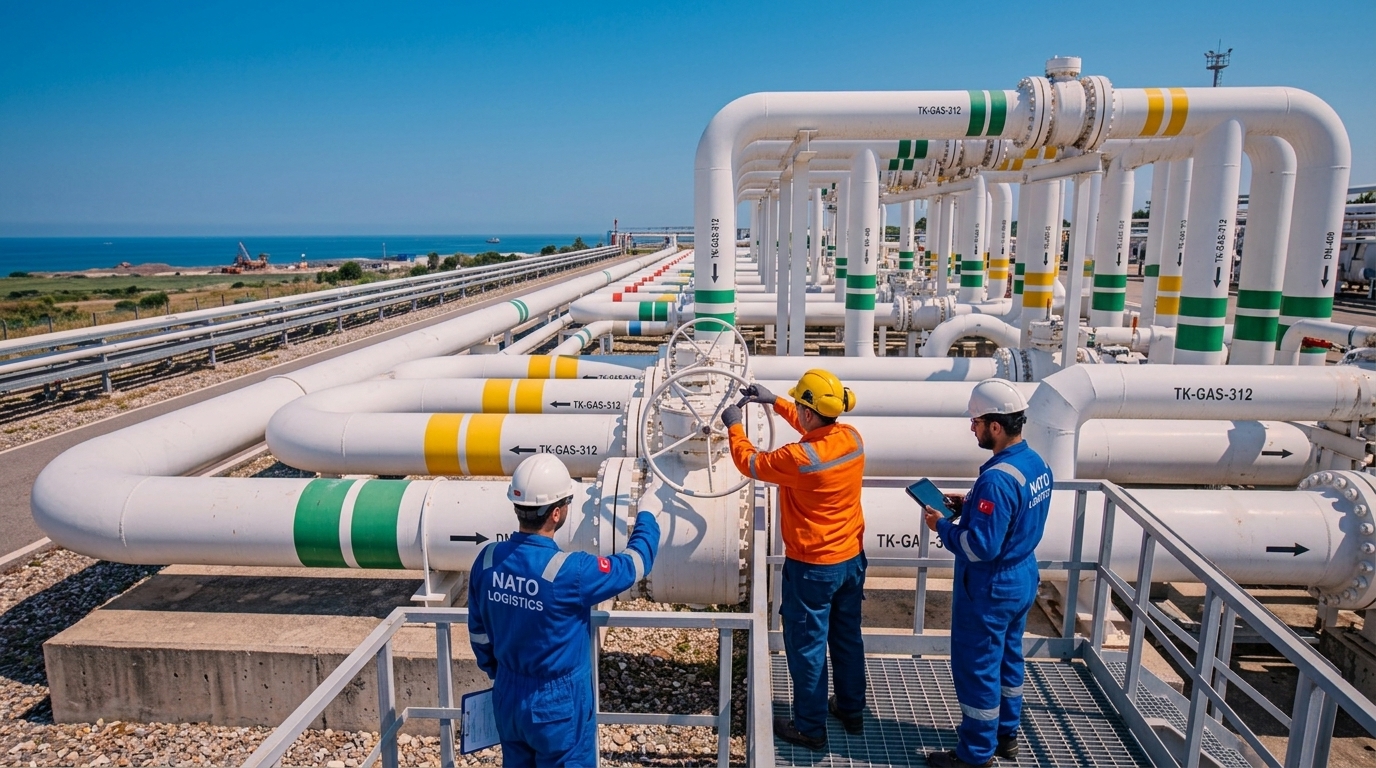
The proposed pipeline aims to solve one of the most significant logistics challenges facing the Alliance: the rapid and secure supply of fuel to military forces based in Romania and the broader Eastern European region. Currently, fuel transportation relies heavily on sea routes or rail networks that are vulnerable to delays and potential sabotage. Turkey's proposal envisions a closed system that would drastically reduce response times and increase the operational readiness of NATO forces.
However, the timing of the proposal is anything but coincidental. With the Black Sea transformed into a combat zone, Turkey seeks to leverage its geographical position and control over the Straits (under the Montreux Convention) to make itself indispensable to the Alliance. This pipeline would become part of the broader NATO Pipeline System (NPS), which already spans much of Europe but features gaps at its eastern edge.
Competition with Greece and the 'Alexandroupoli Bypass'
One of the most intriguing, and politically sensitive, aspects of the Turkish proposal is the choice of route. Ankara is proposing a path that completely bypasses the Greek alternative. In recent years, Greece, and specifically the port of Alexandroupoli, has emerged as a central hub for NATO transfers to the Balkans and Eastern Europe via the Greece-Bulgaria-Romania axis.
The Turkish proposal appears to be a direct response to this Greek upgrade. By proposing a pipeline that originates on Turkish soil, Ankara is attempting to regain lost ground in military logistics and demonstrate that its route is shorter and more cost-effective. This move fits into a broader context of regional hegemony competition, where energy and infrastructure are used as tools of foreign policy. Athens is closely monitoring developments, as such an infrastructure could diminish the strategic value of the 'vertical' interconnection promoted by Greece.
Technical Challenges and Financing
The $1.2 billion price tag is substantial, and financing is expected to be a point of contention. Turkey expects a large portion of the cost to be covered by NATO common funds, arguing that the project benefits collective security. However, there are technical difficulties, such as the need to protect the pipeline from underwater threats in the Black Sea, which is currently littered with mines from the Ukraine conflict.
- Integration into the existing NATO pipeline network (CEPS/NEPS).
- Need for bilateral agreements between Turkey, Bulgaria, and Romania.
- Ensuring infrastructure resilience against cyberattacks and physical sabotage.
Romania, for its part, appears positive about strengthening its infrastructure as it hosts an increasing number of allied troops. However, Bulgaria finds itself in a more complex position, trying to balance its NATO commitments with its historical and energy ties to Russia. Implementing the project will require an unprecedented diplomatic convergence among these three nations.
Conclusion: A New Balance of Power?
Turkey's proposal for the military pipeline is not just about fuel. It is a statement of power. At a time when NATO is looking for ways to fortify its eastern flank, Ankara is offering a solution that places it at the heart of developments. The remaining question is whether the Alliance will prefer to invest in a route controlled by a player that often pursues an autonomous and unpredictable foreign policy, or if it will insist on strengthening existing routes through Greece, which are considered more politically stable.
In any case, the battle for logistics in the Black Sea has only just begun. The outcome of this proposal will determine not only the speed at which tanks and aircraft move but also who will hold the 'keys' to security in the region for decades to come.