In an era where geopolitical tectonic plates are shifting at an unprecedented pace, Ray Dalio, founder of Bridgewater Associates and one of the most astute observers of global economic cycles, has delivered a provocative analysis. During a recent summit in Beijing, Dalio argued that the international community is not just witnessing the rise of a new superpower, but the revival of an ancient governance model: the 'Tribute System.'
According to Dalio, the flocking of global leaders to the Chinese capital to meet with Xi Jinping—especially following recent developments in Washington-Beijing relations—is not mere diplomatic courtesy. Instead, it reflects a tacit acknowledgment of the new power hierarchy. "You’re seeing a number of leaders go up to China," Dalio noted. "It’s like the tribute system that existed throughout history to come and recognize the differences in power and negotiate your position within that framework."
Historical Context: From the Ming Dynasty to the 21st Century
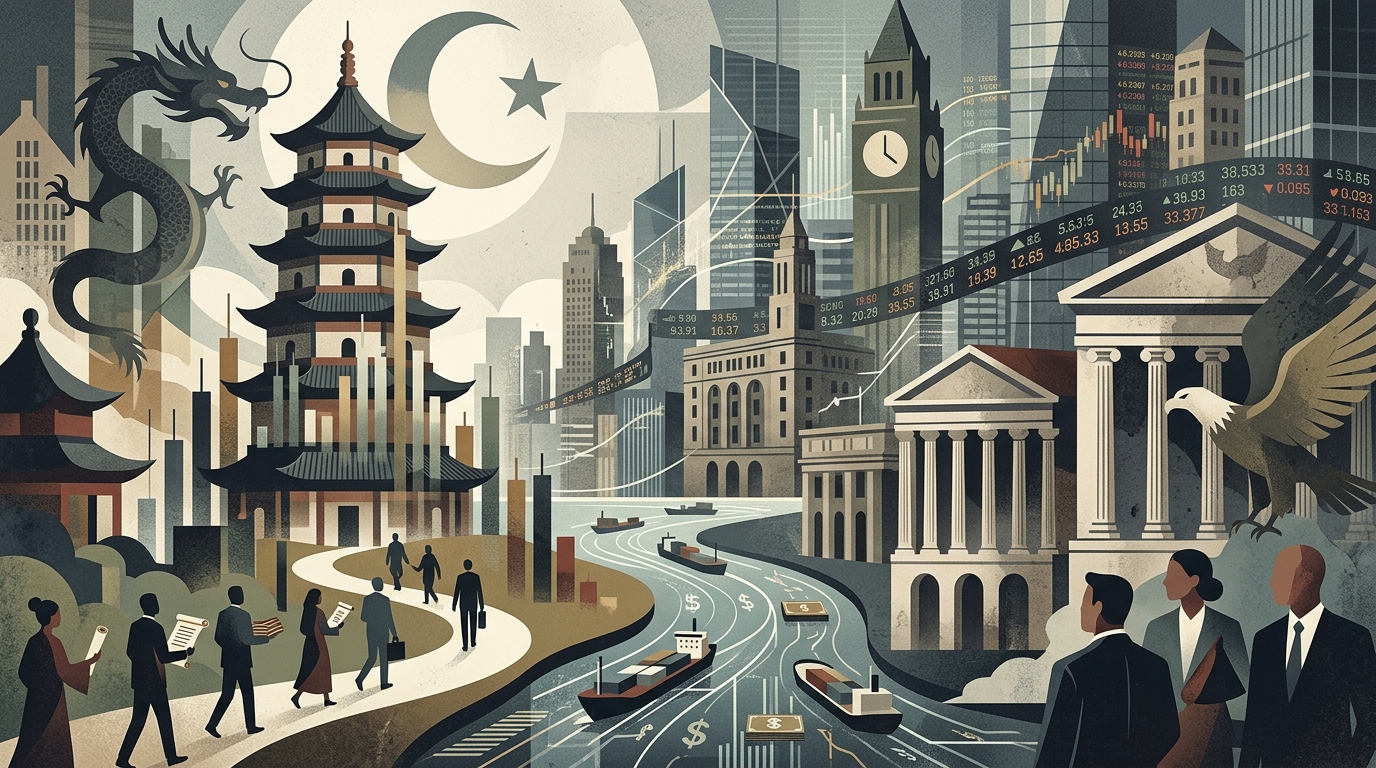
To understand the depth of Dalio's thought, one must look back at East Asian history. The traditional Chinese tribute system was not based on direct military occupation but on a hierarchical relationship. Neighboring states recognized China's cultural and economic superiority, offering symbolic gifts ("tributes") in exchange for trade access and protection. In the 21st century, this "tribute" is not silk or gold, but the adoption of Chinese technological standards, participation in the Belt and Road Initiative (BRI), and the use of the digital yuan.
Dalio argues that China does not seek to become an "America 2.0" that imposes its values by force worldwide. Instead, it seeks to create a sphere of influence where its dominance is unquestioned and other players adapt accordingly. This "Sinocentric" approach directly clashes with the Westphalian system of state equality, which the West has (theoretically) promoted since 1648.
Economic Pragmatism and the Thucydides Trap
Dalio's analysis is not just political, but deeply economic. He points out that China now holds the reins in critical sectors of the Fourth Industrial Revolution, from artificial intelligence to green energy. When European or Asian leaders visit Beijing, they do so because their countries' economic survival depends on access to the Chinese market and supply chains. This dependence is the modern mechanism of the tribute system.
However, this transition is not without friction. Washington watches with suspicion, attempting to stall China's progress through tariffs and technological blockades. Dalio warns that we are on the edge of the "Thucydides Trap," where a rising power threatens to displace the ruling one, often leading to conflict. The difference today is that the conflict is primarily economic and technological, although military tension in the South China Sea remains at a boiling point.
Investor Sentiment and the Future of the Dollar
As a financier, Dalio also addresses the investment community. The rise of the Chinese tribute system means the US dollar may lose its absolute dominance as a reserve currency. If more countries begin trading with China using the yuan to "appease" the superpower, the US's ability to fund its deficits will be drastically curtailed. Dalio advises investors to diversify their portfolios, recognizing that geopolitical power always follows economic power.
In conclusion, the "era of the tribute system" described by Ray Dalio is a wake-up call. It requires the West to rethink its strategy, not just in terms of competition, but in terms of understanding a different worldview returning to the forefront after centuries of dormancy. History doesn't repeat itself, but it often rhymes, and right now, the rhyme sounds distinctly Chinese.