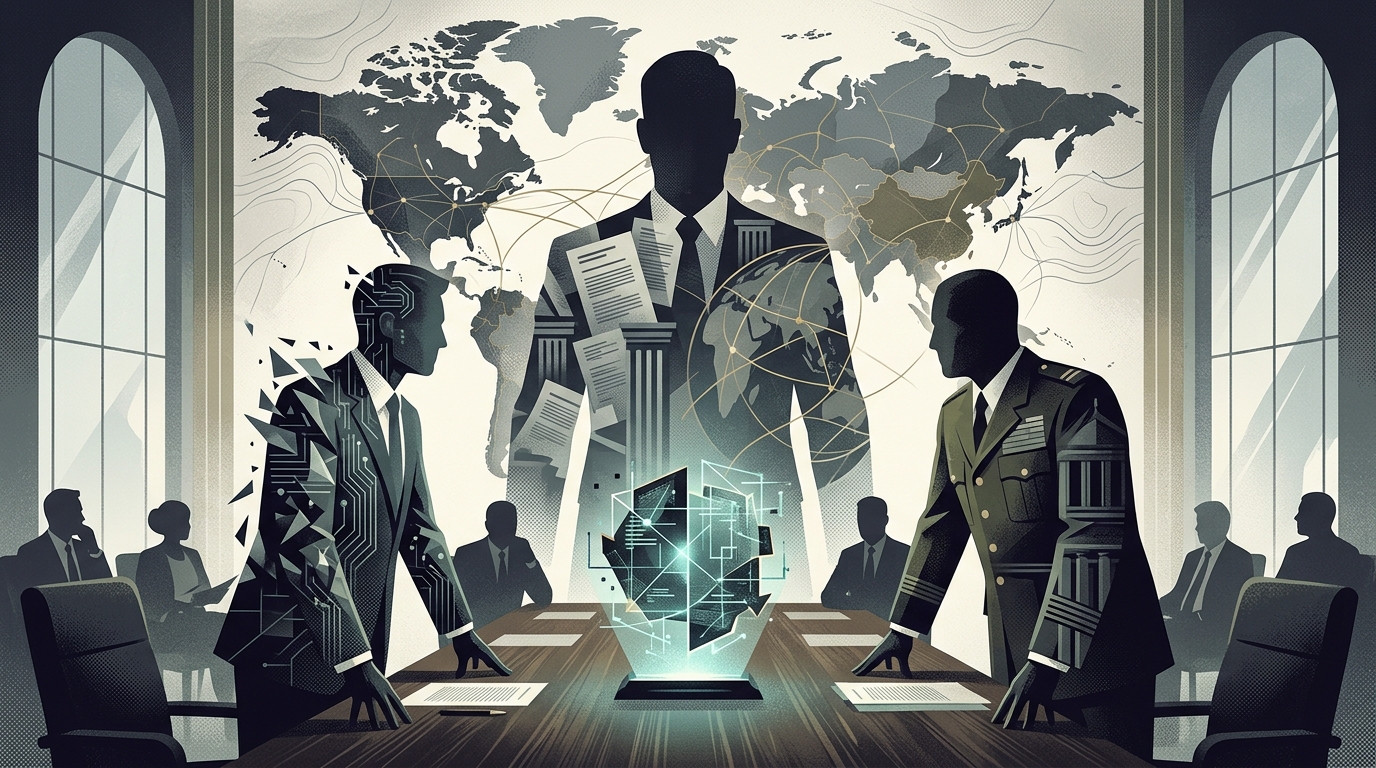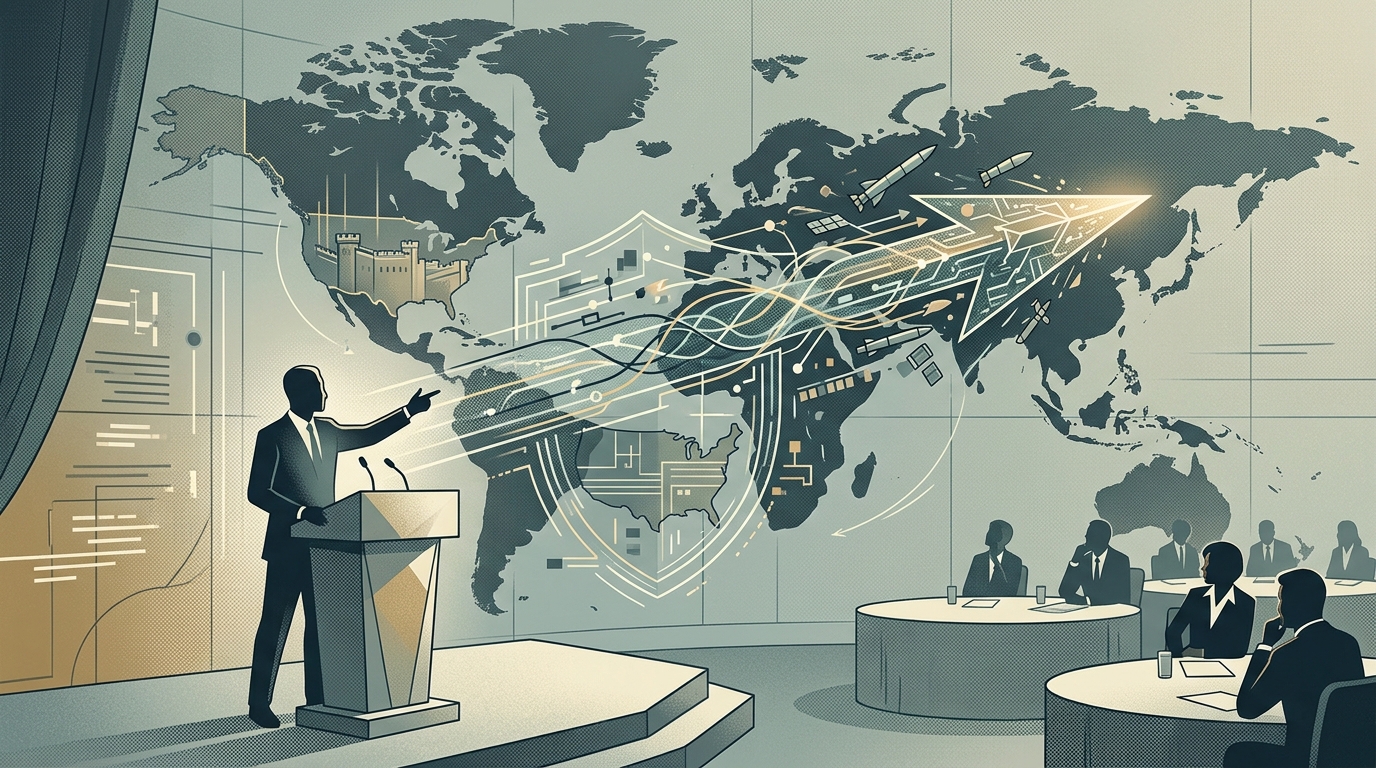
The dawn of 2026 finds the global defense industry in a state of radical transformation. The era where military power was measured solely by the number of tanks, aircraft carriers, or nuclear warheads is giving way to a new, more invisible, but equally lethal reality: Algorithmic Warfare. Recent analysis by Eurasia Review highlights the urgent need for a detailed mapping of the Military Artificial Intelligence (AI) industry—a sector no longer inhabited only by traditional Pentagon contractors, but by a new generation of tech companies that treat the battlefield as a data management problem.
From Hardware to Software-Defined Defense: The Rise of Defense-Tech
For decades, the so-called "Military-Industrial Complex" was dominated by the "Big Five" (Lockheed Martin, Raytheon, Northrop Grumman, Boeing, and General Dynamics). However, the integration of AI has allowed the entry of new players operating with Silicon Valley logic. Companies like Anduril Industries and Palantir Technologies have disrupted the traditional procurement model. Instead of just building hardware, they are creating the "operating system" of modern warfare.
Anduril, for instance, with its Lattice system, uses computer vision and sensors to create an autonomous picture of the battlefield, allowing a single operator to control dozens of drones. This shift toward a "software-first" defense doctrine means that innovation now happens at the pace of weeks, not decades. A nation's ability to upgrade its algorithms mid-conflict is emerging as a critical survival factor, as seen on the fronts of Ukraine, where continuous adaptation of electronic warfare systems became the norm.
Proving Grounds: Ukraine and Gaza as Laboratories of the Future
It is no exaggeration to say that current conflicts are serving as live laboratories for military AI. In Ukraine, the use of facial recognition to identify fallen soldiers and the use of AI-processed satellite data for target designation have fundamentally changed operational dynamics. Real-time data analysis allows artillery to strike targets within seconds of detection.
In the Middle East, reports of systems like "Gospel" (Habsora) highlight an even more controversial aspect: the use of AI for the mass production of targets. When an algorithm can suggest hundreds of targets per day, human oversight (human-in-the-loop) risks becoming a mere formality. The question is no longer whether AI can kill, but whether humans can keep up with the speed at which AI decides who should die.
Geopolitical Competition and the Semiconductor Clash
Mapping the military AI industry inevitably leads to the semiconductor supply chain. The geopolitics of power in 2026 are inextricably linked to access to high-performance computing chips, such as those from Nvidia. The United States, through strict export controls, is attempting to limit China's access to technology that could accelerate the development of Chinese autonomous weapons systems.
For its part, China is investing billions into its doctrine of "Intelligentized Warfare." Beijing aims to surpass the West not through traditional power, but through dominance in drone swarms and AI-enhanced cyber warfare. This competition is creating a new "arms race" where victory is not determined by who has the most weapons, but by who possesses the best data and the fastest processing capabilities.
The Ethical and Legal Vacuum: Who Blames the "Black Box"?
The greatest problem in the military use of AI remains the lack of transparency and accountability. Deep learning algorithms often function as "black boxes"—even their creators cannot fully explain why the system made a specific decision. In a scenario where an autonomous weapon commits a war crime, assigning responsibility becomes a legal nightmare.
There is growing international pressure for a treaty to ban Lethal Autonomous Weapons Systems (LAWS) without human control. However, major powers are hesitant to commit, fearing that such a move would deprive them of a critical strategic advantage. The industry, meanwhile, continues to grow faster than legislation, leaving the world in a dangerous gray zone where technology dictates the ethics of war.
Conclusion: The Necessity of a New Deterrence
Military AI is no longer a promise of the future but a present reality reshaping borders and alliances. Mapping this industry reveals that security in the 21st century requires more than a strong military; it requires robust digital infrastructure, ethical safeguards, and a new understanding of human responsibility. As algorithms become the new generals, humanity is called upon to decide whether it will remain the master of the game or become a mere observer of its own destruction.