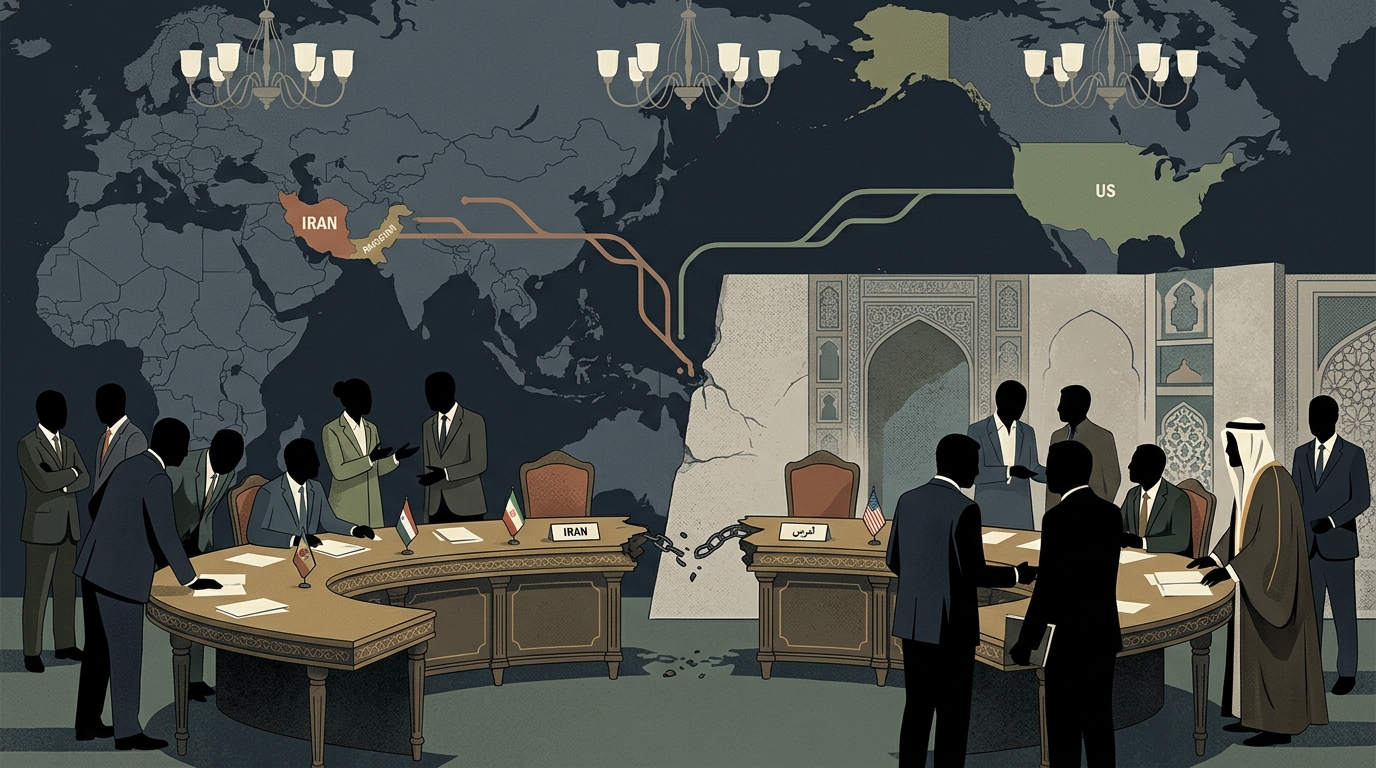
The recent report by the official IRNA news agency regarding Iran's rejection of an invitation for a second round of direct talks with the United States in Pakistan is far from a routine diplomatic update. It represents a critical juncture in the long-standing and volatile relationship between Tehran and Washington, occurring at a time when the Middle East teeters on the brink of a wider conflagration.
The Context of Rejection and Pakistan's Role
The choice of Pakistan as a potential meeting ground is particularly intriguing. Historically, Oman and Qatar have served as the primary mediators and 'messengers' between the two adversaries. Shifting the focus toward Islamabad suggests an attempt to broaden diplomatic channels, which appears to have hit a wall of Iranian intransigence. According to analysts, this refusal is not merely about the 'where' or 'when,' but the 'why' and 'under what conditions.'
Iran, under the presidency of Masoud Pezeshkian, is attempting a delicate balancing act between promises of economic relief through sanction removal and the pressures exerted by hardline elements within the Islamic Revolutionary Guard Corps (IRGC). The timing of the proposal, amid ongoing conflicts in Gaza and Lebanon, makes any direct contact with the U.S. politically 'toxic' for internal consumption within Iran.
The Sanctions Chessboard and the Nuclear Program
A primary driver of Iranian grievance remains the perceived failure to uphold commitments stemming from the 2015 nuclear deal (JCPOA), which the U.S. unilaterally exited under the Trump administration in 2018. Tehran contends that the Biden administration, despite its rhetoric of returning to diplomacy, has largely maintained the 'maximum pressure' campaign, continuing to stifle the Iranian economy.
- The collapse of the rial and skyrocketing inflation within Iran.
- The continued escalation of uranium enrichment as a leverage tool.
- Deep-seated mistrust of American guarantees for future agreements.
- The influence of Iran's regional allies (the Axis of Resistance).
Tehran appears to be adopting a 'wait-and-see' approach, evaluating political developments in the United States. With U.S. elections on the horizon, the Iranian leadership fears that any agreement made with the current administration could be swiftly dismantled by a successor, rendering negotiations futile and dangerous for the regime's domestic standing.
Geopolitical Implications and the Western Stance
Iran's refusal sends a clear message to the West: Tehran will not back down under the weight of threats. Its 'Look to the East' strategy, involving strengthened ties with Russia and China, provides Iran with a sense of security and alternative economic outlets that blunt the effectiveness of Western sanctions.
"Diplomacy requires two sides that trust the process, even if they do not trust each other. Currently, trust in the process has evaporated," notes a senior diplomat in Brussels.
In conclusion, the IRNA report underscores the stalemate that has come to define U.S.-Iran relations. Without a fundamental shift in strategic approach or a significant gesture of goodwill, the likelihood of a diplomatic breakthrough remains low, increasing the risk of further regional escalation.