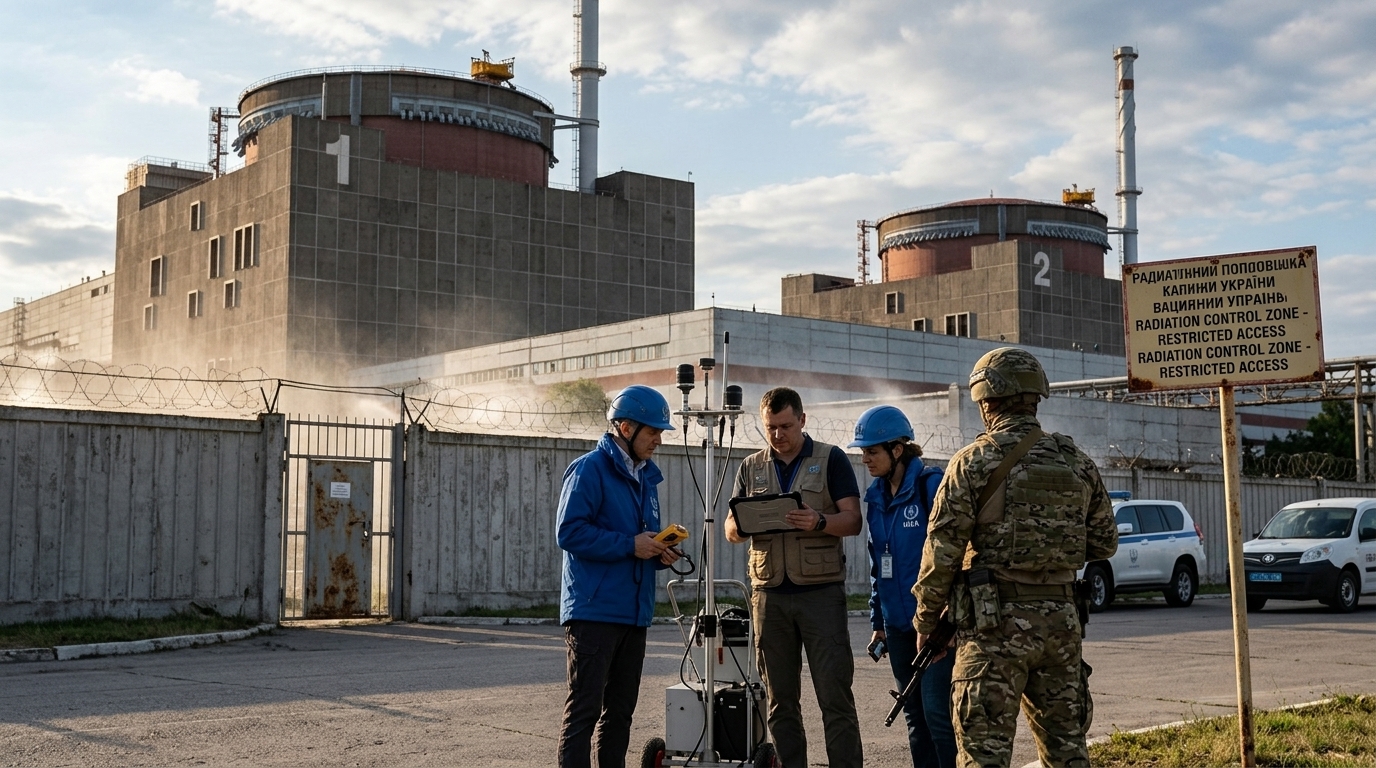
The history of nuclear energy has always been a balance of terror between the promise of limitless power and the nightmare of total annihilation. Today, in the heart of Europe, the Zaporizhzhia Nuclear Power Plant (ZNPP) has been transformed from an energy hub into a geopolitical time bomb. Recent warnings from the International Atomic Energy Agency (IAEA) are not merely routine diplomatic statements; they are cries of distress regarding a situation spiraling out of control, as drones and projectiles strike the continent's largest nuclear facility.
The Theater of the Absurd and the Strategy of Risk
The situation in Zaporizhzhia represents an unprecedented challenge to international law. For the first time in history, an operational nuclear power plant is on the front lines of a full-scale war. Reports of drone strikes on reactor containment buildings are not just military actions but a form of "nuclear gambling." Rafael Grossi, Director General of the IAEA, was explicit: "Anyone attacking nuclear facilities is playing with fire." However, this rhetoric seems to clash with the reality of a war where truth is the first casualty.
Russia and Ukraine constantly exchange accusations over who is responsible for the attacks. This "blame game" creates a veil of opacity that makes it impossible to objectively assess damage in real-time. IAEA inspectors, though present on-site, often face obstacles in accessing critical areas, undermining their ability to guarantee the seven pillars of nuclear safety established by the organization.
The Technical Dimension of the Threat: Beyond the Reactors
While public attention often focuses on the possibility of a direct reactor explosion, experts are concerned about more "silent" risks. The VVER-1000 reactors at Zaporizhzhia are robust structures, designed to withstand even aircraft crashes. However, the vulnerability lies in the support systems.
- The disruption of external power for cooling fuel rods is the greatest fear. Without power, diesel generators are the last line of defense.
- Staff fatigue, with employees working under occupation and constant psychological pressure, geometrically increases the probability of human error.
- The storage of spent nuclear fuel in open areas within the plant constitutes an extremely vulnerable target for conventional weaponry.
Every strike, even if it does not cause an immediate radioactive leak, weakens the structural integrity and safety systems of the plant. The international community watches with bated breath, knowing that a radioactive cloud will not respect borders, affecting not only Ukraine and Russia but the entire Black Sea region and Central Europe.
Diplomatic Inertia and the Future of Nuclear Safety
The crisis in Zaporizhzhia reveals the naked truth about international institutions: the IAEA possesses technical expertise but lacks executive power. UN Security Council resolutions remain a dead letter due to veto rights, while calls for a "demilitarized zone" around the plant have fallen on deaf ears. This precedent is dangerous. If the international community accepts that nuclear plants can be legitimate military targets or tools of blackmail, then the entire global framework of nuclear safety collapses.
"We cannot sit back and watch while nuclear safety is sacrificed on the altar of military expediency," a senior EU official stated, echoing the sense of stalemate prevailing in Brussels.
In the long term, this situation redefines the debate over nuclear energy as a "green" solution. Safety is no longer just about reactor design but also about their geopolitical shielding. The case of Zaporizhzhia will be taught in the future as the ultimate example of how technological progress can be held hostage by human madness. The need for a new, binding international treaty that strictly criminalizes any military action against nuclear infrastructure is now imperative, before the "fire" being played with consumes the continent.