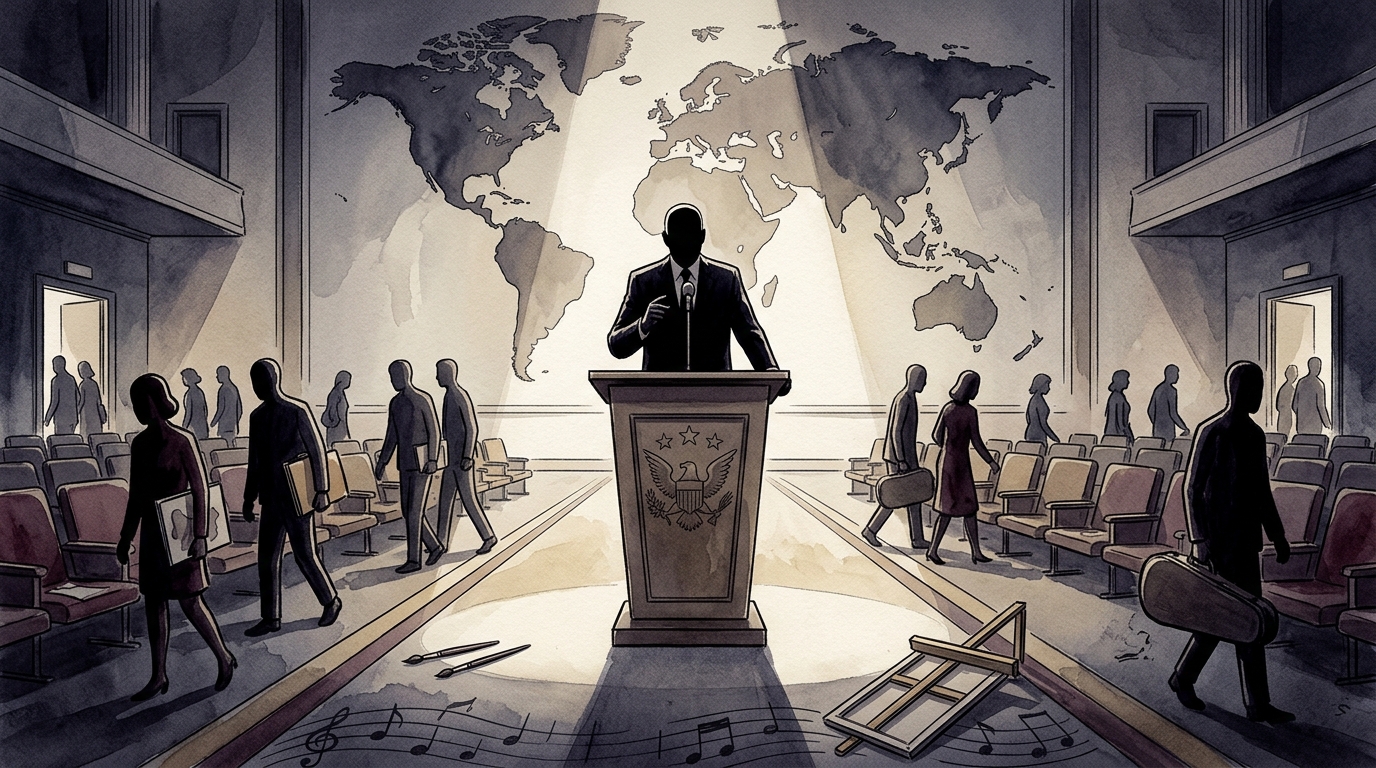
The news that the 'Great American State Fair,' an event marketed as a non-partisan celebration of the American spirit, is effectively morphing into a Donald Trump political rally has sent shockwaves through the American entertainment industry. Within a matter of days, the event's lineup collapsed as iconic musical figures from country to hip-hop announced their withdrawal, citing 'misleading practices' by the organizers.
A Mass Exodus of Talent
The list of artists who have turned their backs on the fair includes household names such as Bret Michaels, The Commodores, Martina McBride, Vanilla Ice, and Flo Rida. The common thread in their statements was the feeling that their participation was used as 'bait' to provide a veneer of neutrality to an event that, as it turned out, was heavily politically charged. According to sources close to Martina McBride, the artist had received assurances that the fair would focus on agricultural heritage and family entertainment, with no mention of political figures.
The case of Flo Rida is particularly telling. Known for performing at large commercial events that steer clear of political controversy, the artist was reportedly incensed when he discovered that promotional materials began featuring Donald Trump as the 'main host.' His departure, alongside that of The Commodores, sends a clear message: in today’s polarized America, an artist's brand risks irreparable damage if associated—even indirectly—with a specific political faction against their will.
Trump as the Main Act: Filling the Vacuum
Following the exodus of music stars, Donald Trump wasted no time. In a move characteristic of his communication strategy, he announced he would step in as the primary headliner, turning a logistical loss into a political opportunity. For Trump, the 'Great American State Fair' is no longer a music festival but a platform to project his agenda at a critical juncture in the 2026 political cycle.
The fair's organizers are now scrambling to reframe the narrative. They argue that the invitation to Trump was always part of a plan to celebrate 'American values' and that the departing artists succumbed to pressure from 'woke' cancel culture. However, leaked legal documents and contracts suggest that the terms regarding political participation were at best vague, if not intentionally obscured behind generic references to 'honored guests.'
The Politicization of Popular Culture
This incident highlights a deeper crisis in American society: the death of the 'common ground.' Historically, state fairs were spaces where political differences were set aside in favor of community, agriculture, and amusement. The transformation of such an event into a battlefield for political influence shows that no segment of public life remains untouched by division.
Analysts point out that this development could set a precedent for the future of entertainment. As politicians begin to 'occupy' spaces traditionally reserved for culture, artists will become increasingly wary. This leads to a 'cultural ghettoization,' where citizens only attend events that align with their own ideological beliefs, reinforcing the echo chambers that already plague modern democracy.
Conclusion: A Risk for the Future
The 2026 Great American State Fair will likely be remembered not for its exhibits, but as the tipping point where spectacle and politics merged in the crudest possible way. For Donald Trump, the success of the event will be measured by the turnout of his base. For the entertainment industry, however, the cost is already visible: the loss of trust and the confirmation that 'unity' is now a hollow word in the American vocabulary. The fallout will likely continue in courtrooms, as contract clauses and allegations of misleading marketing become the next chapter of this dystopian celebration.