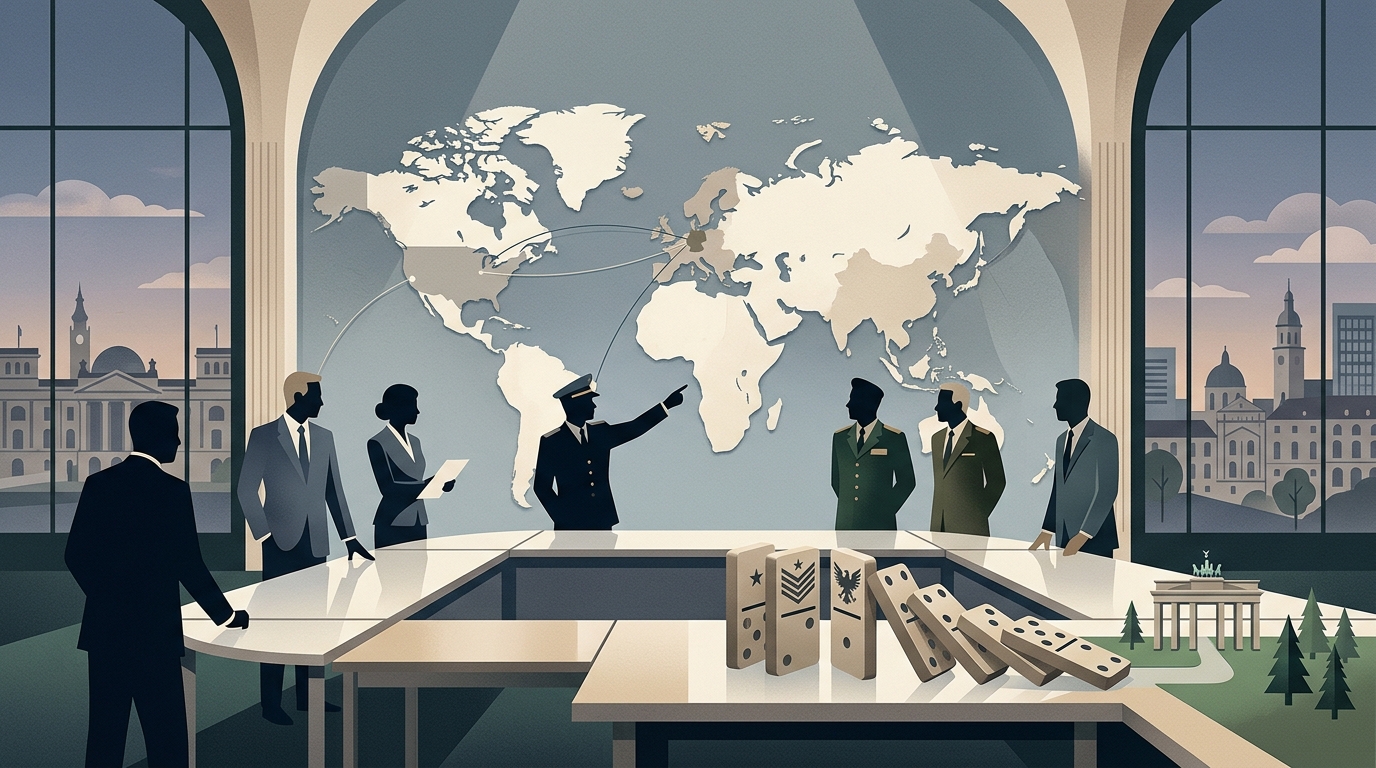
The announcement of the withdrawal of 5,000 U.S. troops from German soil did not strike Berlin as a bolt from the blue, but rather as a confirmation of a long-standing trend reshaping the global security map. German Defense Minister Boris Pistorius characterized this development as 'predictable,' a phrasing intended more to soothe domestic anxieties than to downplay the gravity of the event. In reality, this move is the latest episode in a long-running realignment of U.S.-Europe relations, where Washington increasingly demands that its allies shoulder the burden of their own protection.
Predictability as a Political Strategy
Why does Pistorius choose the term 'predictable'? Since the first Trump administration, the presence of American forces in Germany has been a subject of transactional politics. Despite the temporary respite during the Biden era, the strategic direction of the United States remains firmly oriented toward the Indo-Pacific and the containment of China. In Washington's eyes, Europe is no longer the central front but a secondary theater of operations that must become self-sustaining.
The German government, facing its own fiscal challenges and the rise of Eurosceptic voices, is attempting to frame the withdrawal as part of a coordinated redeployment plan. However, the reality is more complex. The removal of 5,000 personnel, who served in critical bases such as Ramstein and Stuttgart, weakens not only the local economies of these regions but also the sense of security at a time when Russian aggression remains the number one threat to the continent.
The 'Zeitenwende' and Berlin's Responsibility
This withdrawal acts as a harsh accelerator for the so-called 'Zeitenwende' (historical turning point), declared by Chancellor Olaf Scholz in 2022. Germany, which for decades rested under the American nuclear and conventional umbrella, now faces the prospect of a Europe where U.S. hegemony is no longer a given. The need to modernize the Bundeswehr (the German armed forces) has become a matter of survival rather than just a NATO obligation.
- Investing in advanced weaponry and AI on the battlefield.
- Strengthening military cooperation with Poland and the Baltic states.
- Increasing defense spending above the 2% GDP threshold on a permanent basis.
- Developing autonomous European command and control capabilities.
Pistorius knows that the 'predictability' he refers to hides a bitter truth: the U.S. no longer views Germany as the indispensable hub for its operations in Europe. The shift of American interest toward Poland, which shows a greater willingness to arm itself and host troops, creates a new geopolitical balance within the EU, with Berlin risking the loss of its leadership in security decision-making.
The Domestic Political Chessboard
Within Germany, this news fuels political controversy. The opposition Christian Democrats (CDU) accuse the government of weakness in foreign policy, while the AfD and the Sahra Wagenknecht Alliance use the withdrawal as an argument for a more neutral German stance, away from Washington's dictates. The challenge for Pistorius is to convince the German public that the reduction of the American presence does not mean abandonment, but an opportunity for Germany to emerge as a true pillar of European defense.
"Our security cannot depend on the electoral whims of voters in Ohio or Pennsylvania. Europe must learn to speak the language of power," a senior official from the German Ministry of Defense recently stated, echoing the sentiment in the corridors of power.
In conclusion, the withdrawal of 5,000 troops is a symptom, not the disease. The disease is Europe's chronic failure to build a credible defense architecture. This 'predictable' move is the final wake-up call before the Old Continent finds itself in a geopolitical vacuum that no diplomatic maneuver will be able to fill unless accompanied by real military might.