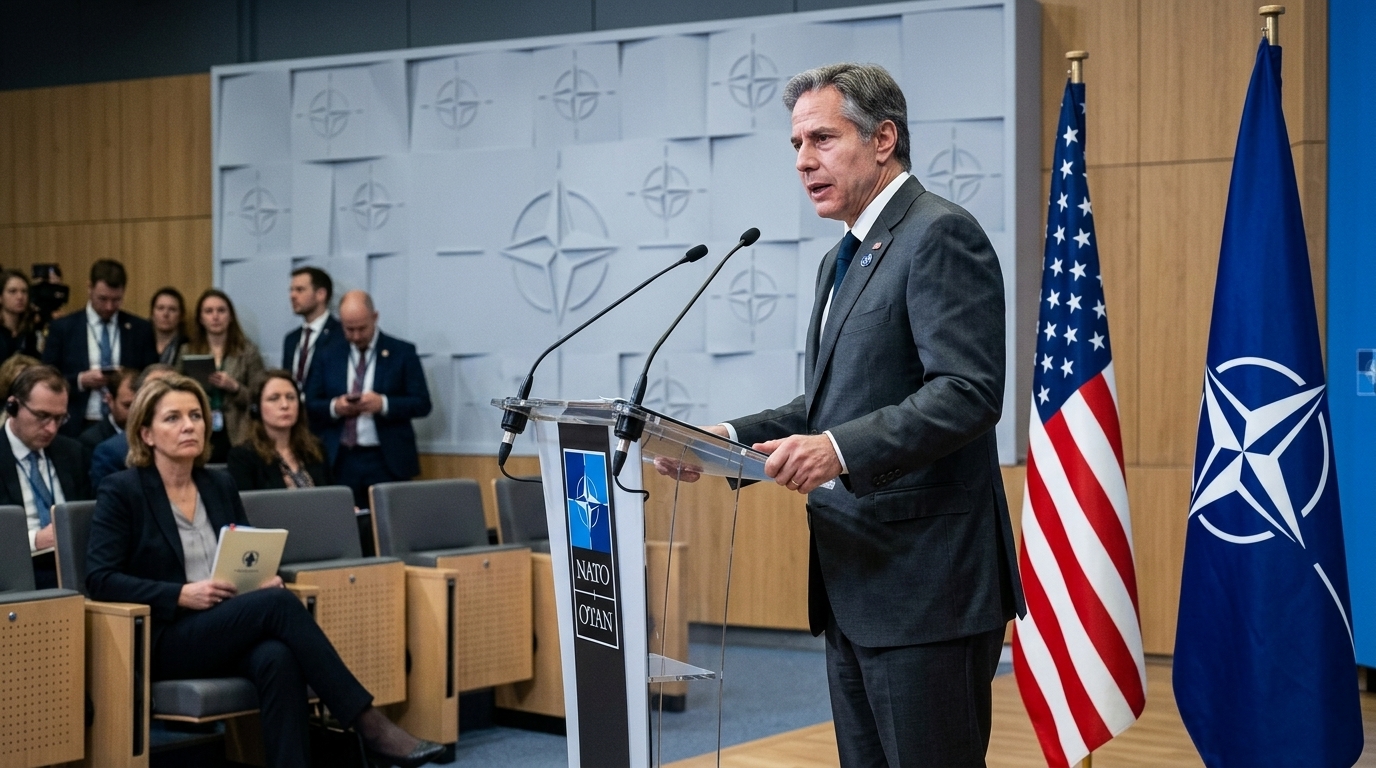
Washington's announcement regarding the withdrawal of 5,000 U.S. troops from German soil is not merely a routine administrative restructuring; it is a geopolitical seismic shift that threatens to upend decades of established balance within NATO. As we progress through the first half of 2026, this move is being interpreted as a clear signal to Berlin and Brussels: the era when Europe could blindly rely on the American 'security umbrella' without bearing its fair share of the cost is coming to a definitive end.
The Strategic Void and Berlin's Reaction
Germany, which hosts the largest number of U.S. forces in Europe, is in a state of high alert. The 5,000 troops slated for departure are not just figures on a spreadsheet; they are integral to critical support, logistics, and command infrastructures that bridge American power with the Alliance's eastern flank. Their removal could significantly degrade NATO's reaction speed in the event of a crisis on the borders with Russia.
The German government, despite its efforts toward the so-called 'Zeitenwende' (historic turning point) in its defense policy, appears caught off guard. Critics within the country argue that the delay in modernizing the Bundeswehr has left Germany vulnerable to pressure from Washington. This withdrawal is viewed by many as 'punitive,' or at the very least, a leverage tactic to force defense spending above the 2% of GDP threshold, which remains a persistent point of contention.
The Shift to Poland and the Indo-Pacific Pivot
One of the most compelling scenarios under consideration is the potential redeployment of a portion of these forces to Poland. Warsaw has repeatedly requested a permanent U.S. presence, even offering to fund the establishment of bases. Such a move would signify a shift in the center of gravity of European security toward the East, further marginalizing Germany in strategic defense planning.
However, the greater threat to Europe is the strategic U.S. pivot toward the Indo-Pacific. With tensions in Taiwan and the South China Sea escalating, Washington believes its resources in Europe could be better utilized to contain China. This 'distancing' from Europe is no longer a theoretical possibility but a reality that European leaders are now forced to manage immediately.
The Challenge of European Strategic Autonomy
The question looming over NATO headquarters in Brussels is whether Europe is truly ready for the 'strategic autonomy' championed by Emmanuel Macron. Building a European pillar within NATO, or even an autonomous European army, requires massive investment and, more importantly, a level of political will that currently seems lacking.
- The lack of standardization in weapon systems among European member states.
- Heavy reliance on U.S. information technology and satellite surveillance.
- Public reluctance in many nations to accept cuts to the welfare state in favor of military spending.
The withdrawal of these 5,000 troops acts as a catalyst. If Europe fails to fill the resulting gap, it risks becoming a geopolitical bystander, incapable of protecting its own borders without Washington's consent. This crisis represents the ultimate test of Alliance cohesion in 2026.
"Security is not a free service; it is an investment in sovereignty. Those who cannot protect themselves end up depending on the whims of others," commented a senior NATO official under the condition of anonymity.
In conclusion, the U.S. move forces Germany and the rest of Europe to face reality. The world of 2026 is multipolar and volatile, and the old order—where America was the permanent guarantor of European peace—is firmly in the past. The next two years will determine whether the European Union can transform into a genuine defense union or if it will remain an economic giant with feet of clay in the realm of security.