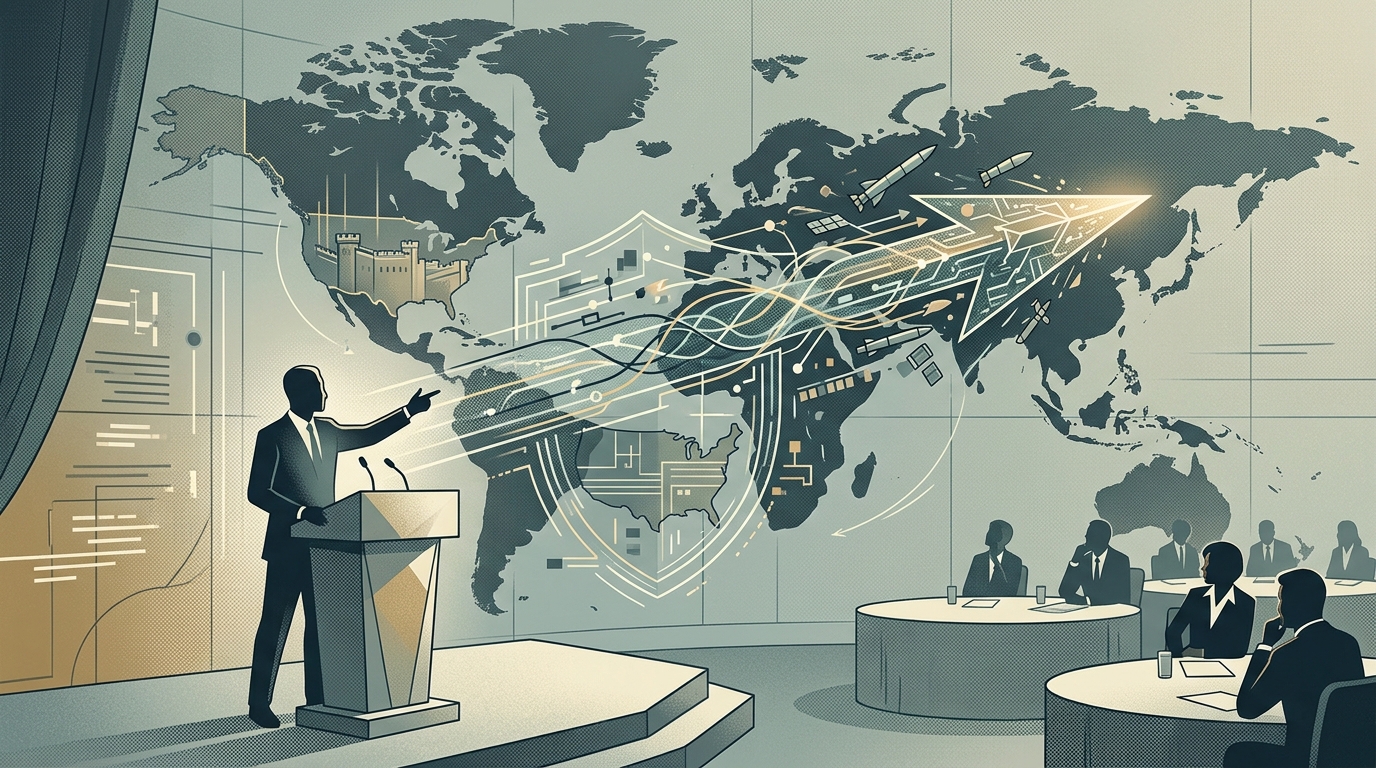
In an era where the boundaries between the digital and physical realms are increasingly blurred, Anne Keast-Butler, the first female Director of the UK’s signals intelligence agency GCHQ, has delivered a pivotal assessment of the global security landscape. Speaking at the CYBERUK conference, she characterized Artificial Intelligence (AI) as an "unstoppable force" that is fundamentally reshaping national security and global espionage. Her analysis transcended technical capabilities, focusing instead on the profound geopolitical implications, with a specific warning regarding threats from Russia and China.
The Russian Threat in Cyberspace
According to Keast-Butler, Russia remains the most immediate and acute threat to Western cybersecurity. Moscow has integrated AI into its "grey zone" warfare strategies, utilizing the technology to amplify disinformation campaigns and automate attacks on critical national infrastructure. The GCHQ chief emphasized that AI allows state actors to conduct operations with a speed and scale previously unimaginable. The use of Large Language Models (LLMs) to craft convincing phishing campaigns and the deployment of deepfakes to undermine political stability are no longer theoretical risks but daily realities.
A primary concern for GCHQ is how AI lowers the "barrier to entry" for less sophisticated hackers. With AI-powered tools, Russia can equip proxy groups with advanced digital weaponry, making attribution and accountability exceptionally difficult. This "democratization" of high-end cyber capabilities is shifting the calculus of deterrence, forcing intelligence agencies to rethink their defensive postures.
China as the Epoch-Defining Challenge
While Russia represents the immediate danger, Keast-Butler was clear: China is the challenge that will define our era. Beijing’s strategy for AI dominance is not merely about economic prowess; it is about reshaping global technology standards and governance models. GCHQ is closely monitoring China's efforts to integrate AI into its pervasive surveillance apparatus and its military modernization programs.
- China is investing billions to outpace the West in AI research and development.
- There is a significant risk of intellectual property theft through AI-enhanced cyberspying.
- China's influence in international standard-setting bodies could lead to a fragmented or "closed" digital ecosystem.
GCHQ’s Response: Offensive and Defensive AI
Keast-Butler did not just outline threats; she presented a vision for how GCHQ is harnessing AI for national defense. The agency is already utilizing the technology to sift through vast oceans of data, identifying patterns that would be impossible for human analysts to detect. This includes tracking child abuse networks, preventing terrorist plots, and intercepting cyberattacks in real-time.
"We don't get to choose whether to engage with this revolution. AI is here, and it is unstoppable," she stated. The challenge for democratic nations is to develop these tools in a manner that respects human rights and privacy while maintaining a tactical edge over autocratic regimes. GCHQ has committed to the "transparent and responsible" use of AI, a move aimed at building public trust despite the inherently secretive nature of intelligence work.
Conclusions and Future Challenges
Keast-Butler’s address marks a new phase in the global geopolitical chess game. AI is no longer just a tool; it is the battlefield itself. The need for international cooperation among allies is more urgent than ever. The UK, through GCHQ, seeks to lead in the field of "AI safety," promoting frameworks that ensure the technology remains a force for good. However, as Russia and China continue to push the boundaries of digital warfare, the balance between security and liberty will remain the central dilemma of the coming decades.