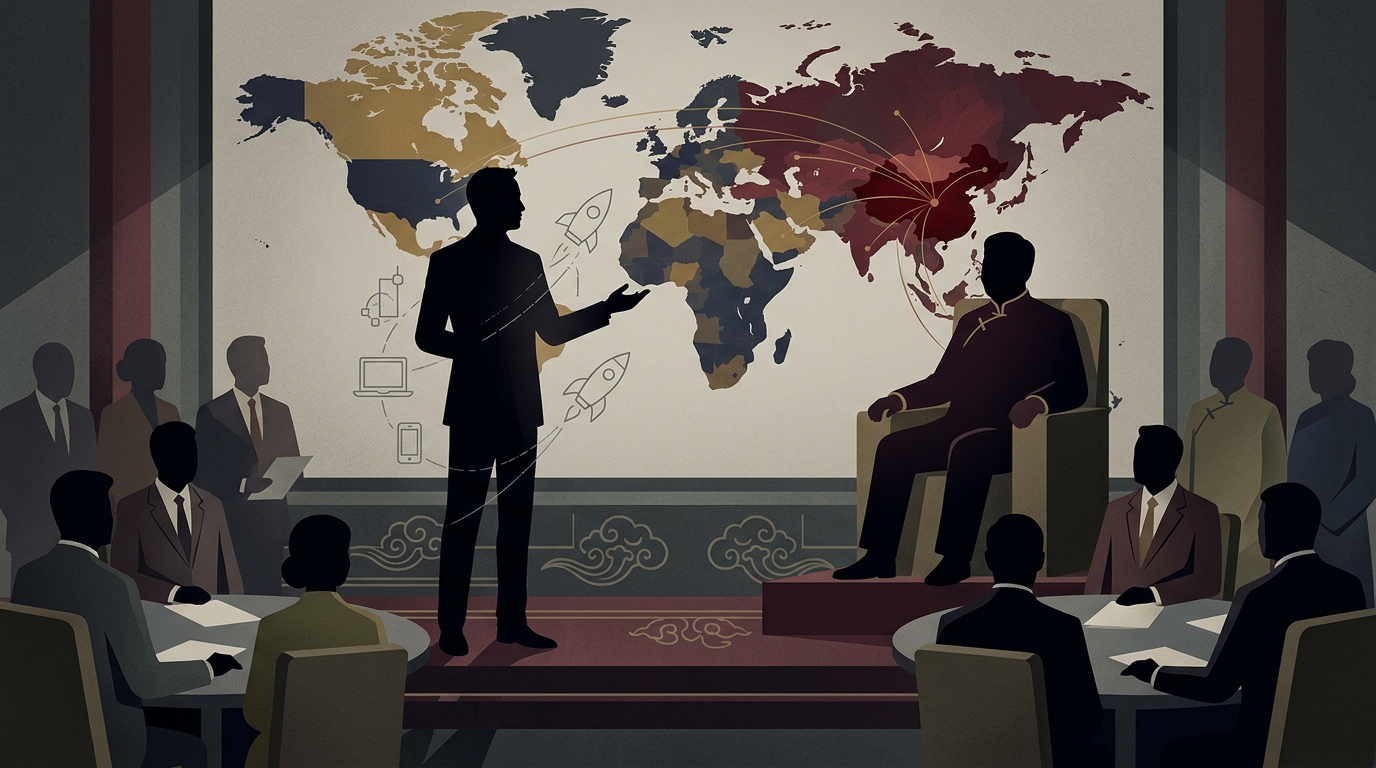
In the heart of Beijing, where geopolitical power intersects with technological supremacy, the recent state dinner hosted by Xi Jinping for the U.S. business delegation was far from a routine diplomatic affair. It was a carefully choreographed performance of influence, where Elon Musk, the undisputed protagonist of the modern industrial stage, once again managed to steal the spotlight—not just through business maneuvers, but through his very presence.
The Diplomacy of Selfies and the Tech Chessboard
The image of Elon Musk exchanging smiles and selfies with Apple’s Tim Cook and Xiaomi’s Lei Jun serves as a potent reminder that, despite the rhetoric of 'decoupling' between the U.S. and China, the ties binding Silicon Valley to the Chinese market remain resilient. For Musk, China is not merely a market; it is the backbone of Tesla’s manufacturing prowess and the ultimate testing ground for the future of Full Self-Driving (FSD) technology.
His attendance at Xi Jinping’s dinner signals a strategic choice: maintaining direct lines of communication with the top of the Chinese hierarchy, often bypassing traditional diplomatic channels in Washington. Xiaomi, which recently made a high-profile entry into the electric vehicle market with the SU7, found itself at the same table as the man who essentially defined the category. This coexistence of rivals under the auspices of the Chinese Communist Party highlights Beijing’s role as the 'referee' in the global technological arena.
The Young Protagonist and Soft Power
Perhaps the most discussed moment of the visit was the presence of Musk’s 6-year-old son. In a culture like China’s, where family and lineage are central to social and political values, Musk’s decision to bring his son was no accident. It functioned as a form of 'soft power,' humanizing the eccentric billionaire in the eyes of Chinese officials and the public alike.
Young 'X' (as he is widely known) became a focal point for the cameras, creating an atmosphere of intimacy that no official press release could ever achieve. This tactic demonstrates Musk’s deep understanding of Chinese psychology: business is not just about numbers and contracts; it is about building relationships of trust that span generations. By introducing his heir to the leadership in Beijing, Musk is subtly signaling a long-term commitment to the region.
Tesla in the Competitive Vice
Despite the celebratory atmosphere, the reality for Tesla in China is increasingly challenging. Local competition from giants like BYD and newcomers like Xiaomi is squeezing profit margins and market share. Musk’s visit was partly aimed at securing critical approvals for cross-border data transfers—a necessity for training Tesla’s neural networks and deploying FSD at scale.
Beijing utilizes access to its massive market as leverage, demanding technological cooperation and localized investment in return. Musk appears willing to play this game, knowing that Tesla’s global success is inextricably linked to its dominance in China. This 'CEO diplomacy' represents a new model of international relations, where multinational corporations act almost as sovereign entities with their own foreign policies, independent of their home countries' agendas.
Conclusion and Future Outlook
Musk’s 'show' in Beijing was more than a public appearance; it was a statement of intent. In an increasingly polarized world, Musk chooses to remain a globalist player, capable of maneuvering between rival superpowers. The question remains whether this balancing act can be sustained as pressure from Washington to curb ties with China intensifies.
For now, Musk enjoys the status of an 'Old Friend' of China—a title Beijing bestows sparingly and with great deliberation. The image of his young son wandering the halls of the Great Hall of the People will remain a symbol of an era where technology and personal branding transcend the traditional boundaries of international diplomacy.