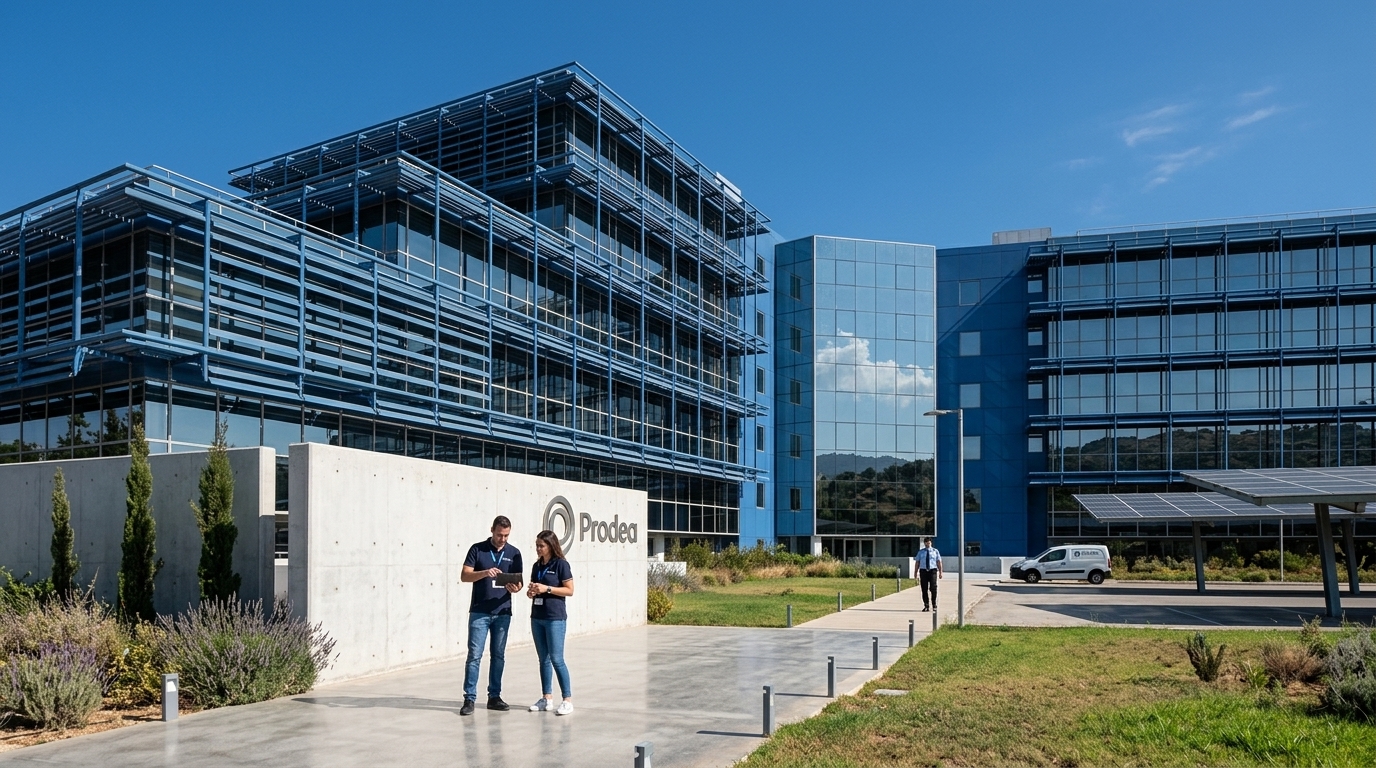
The transition from traditional real estate to the digital economy is no longer a theoretical forecast but a tangible reality for the Greek business landscape. Prodea Investments, the largest Real Estate Investment Company (REIC) in Greece, has announced its entry into the digital infrastructure market, marking a historic shift in its long-term strategy. The investment involves the development of a state-of-the-art interconnection data center in Chania, Crete—a move that places the company at the heart of Southeast Europe's burgeoning telecommunications ecosystem.
Crete as a Geopolitical and Digital Crossroads
The choice of Chania is far from accidental. Crete is rapidly evolving into one of the most significant landing hubs for subsea fiber optic cables in the Mediterranean. As data traffic between Europe, Asia, and Africa surges, the demand for infrastructure that can host this data and facilitate its interconnection has become imperative. Prodea’s project aims to fill a critical gap, offering not just physical space but the necessary technological environment to support global digital flows.
Market analysts suggest that Greece's geographical position makes it a natural gateway for data originating from the Middle East and the Far East. This investment strengthens Greece’s narrative as a "digital bridge," reducing reliance on traditional hubs like Marseille or Palermo. Recognizing this dynamic, Prodea seeks to capitalize on the steady demand for colocation and interconnection services, which typically offer higher profit margins and greater resilience compared to traditional office real estate.
From Bricks to Bits: The Strategy of Diversification
For Prodea, this move is part of a broader portfolio restructuring plan. While commercial properties and logistics remain the core of its operations, the shift toward "alternative" asset classes is evident. Data centers are now considered the "new real estate," as demand for computing power and data storage skyrockets due to the widespread adoption of Artificial Intelligence (AI) and cloud computing.
- Stable Cash Flows: Data center contracts are usually long-term and often include energy price adjustment clauses, providing significant security to investors.
- High Value-Added: Unlike a simple office building, a data center requires specialized management and provides mission-critical services that make it indispensable to tenants.
- Green Transition: Prodea aims to build high-energy-efficiency infrastructure, aligned with the ESG (Environmental, Social, and Governance) criteria now demanded by international institutional investors.
The company’s participation in the development of the Chania data center is not just about building a shell; it involves operational involvement through strategic partnerships. This allows Prodea to gain expertise in a sector expected to dominate the investment landscape over the next decade.
Market Challenges and Future Outlook
Despite the positive outlook, entering the data center market presents challenges. Power availability and grid connectivity remain the primary obstacles to infrastructure development globally. In the case of Crete, the island's electrical interconnection with mainland Greece plays a decisive role in ensuring the energy adequacy of the new facility.
"Investing in digital infrastructure is a natural evolution for a company that wants to be at the forefront of development. Data is the oil of the 21st century, and the infrastructure hosting it represents the new highways of the economy," sources close to the company state.
At a national level, this move bolsters Greece's efforts to attract high-tech investments. Following the lead of giants like Microsoft, Google, and Amazon Web Services, the activation of major domestic players like Prodea indicates that Greek capital is ready to support the digital transition. The Chania data center is expected to act as a magnet for further regional investment, creating high-skill jobs and boosting the local economy.
In conclusion, Prodea Investments is not merely investing in a property; it is investing in a critical infrastructure that will serve as a pillar of tomorrow's economy. Chania is becoming a vital link in the global data chain, and Greece is solidifying its position on the global digital map. As we move further into 2026, the success of such projects will define the country's competitiveness in the era of the Fourth Industrial Revolution.