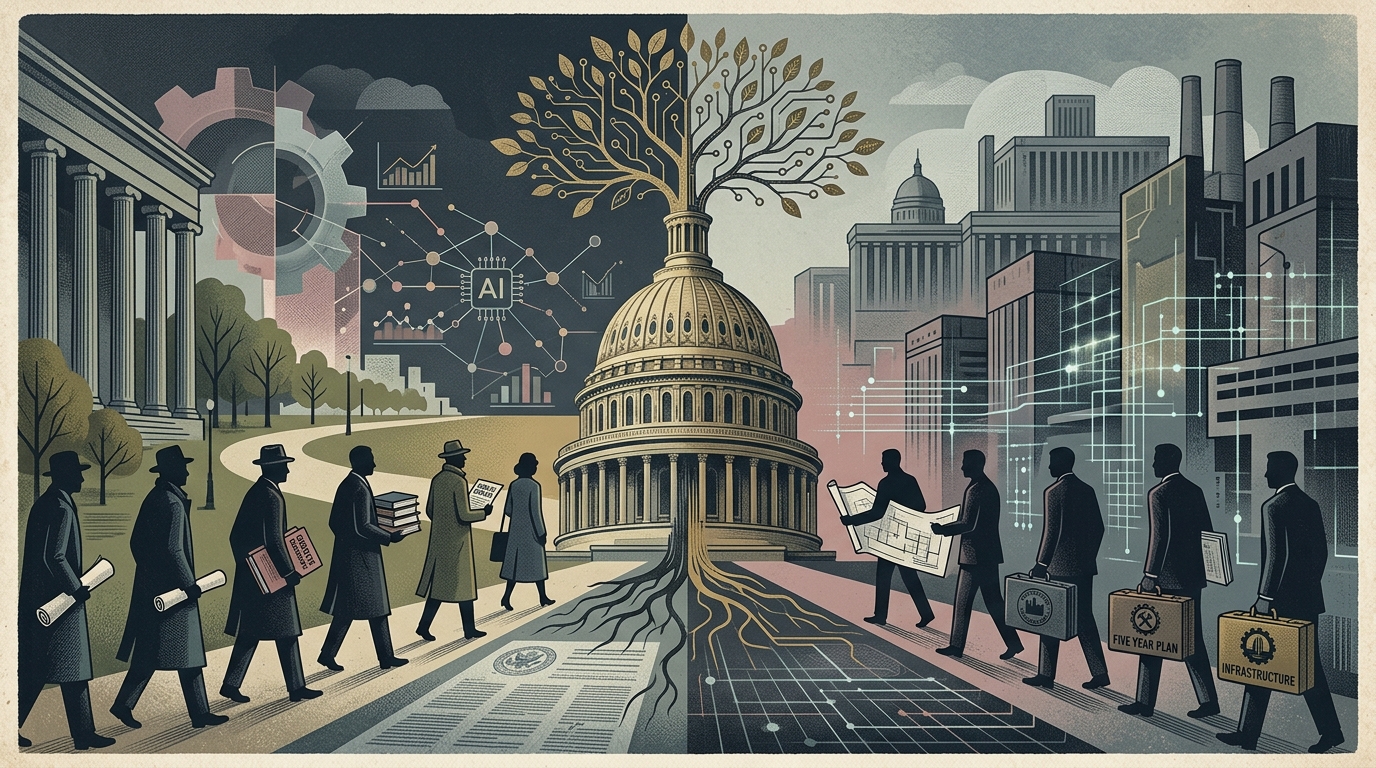
In an era where information is the world's most valuable currency, the U.S. Central Intelligence Agency (CIA) is facing an existential challenge that transcends traditional espionage methods. The recent remarks by Lakshmi Raman, the CIA’s Director of Artificial Intelligence, at the AI Summit in Washington, were more than just a technical update. They were an admission that the U.S. government has reached a "reflection point," where the velocity of technological evolution threatens to outpace the ability of institutions to govern it.
Raman emphasized that Large Language Models (LLMs) and Generative AI are no longer experimental novelties but central pillars of a new intelligence architecture. However, this transition brings a host of ethical, operational, and geopolitical dilemmas that will define the balance of power in the 21st century.
The Digital Metamorphosis of the Analyst
For decades, the work of the CIA relied on the ability of human analysts to connect seemingly disparate data points. Today, the sheer volume of data—from satellite imagery and signals intelligence to open-source intelligence (OSINT) on social media—is humanly impossible to manage. AI offers the solution, acting as a "super-analyst" capable of processing petabytes of information in seconds.
According to Raman, the CIA is focusing on integrating models that can summarize reports, identify patterns in foreign broadcasts, and assist in real-time decision-making. "It’s not about replacing the human; it’s about augmenting them," she noted. However, the challenge lies in trust. How can a field agent or a White House official rely on a recommendation derived from a "black box" algorithm?
The Specter of Hallucination and National Security
One of the most thorny issues discussed is the phenomenon of AI "hallucinations." In the tech world, a wrong answer from a chatbot is a mere glitch. In the world of intelligence, a flawed assessment regarding the movement of nuclear warheads or the intentions of a hostile state could trigger a global catastrophe.
Raman admitted that ensuring accuracy is the top priority. The CIA is developing specialized, closed environments where AI models are trained on classified data, isolated from the public internet. This "firewalling" is necessary not only to prevent leaks but also to protect against "data poisoning" by foreign actors, such as Russia and China, who might attempt to inject misleading information into AI training pipelines.
Geopolitical Competition: The New Arms Race
The "reflection point" Raman referred to also has a sharp geopolitical dimension. Artificial Intelligence is the new battlefield of Cold War 2.0. China has openly declared its goal to become the global leader in AI by 2030, investing billions into the military and intelligence applications of the technology.
The CIA recognizes that lagging in the adoption of these technologies constitutes a strategic risk. If U.S. adversaries manage to develop more effective crisis-prediction models, the American advantage on the global stage could vanish. The challenge for Washington is to move swiftly while maintaining democratic values and transparency—a difficult balance for an agency that, by definition, operates in the shadows.
The Ethics of Surveillance and the Path Ahead
Finally, the discussion of AI in government cannot ignore the implications for civil liberties. Using AI to monitor threats raises questions about citizen privacy, even when the goal is national security. Raman maintained that the CIA is bound by strict legal frameworks, but technology often moves faster than legislation.
As we move toward 2027, this "reflection point" will require American leadership to redefine what "intelligence" actually means. AI is not just a tool; it is a new way of perceiving reality. The CIA’s success or failure in this transition will determine whether artificial intelligence becomes the guardian of global stability or a catalyst for unpredictable conflict.