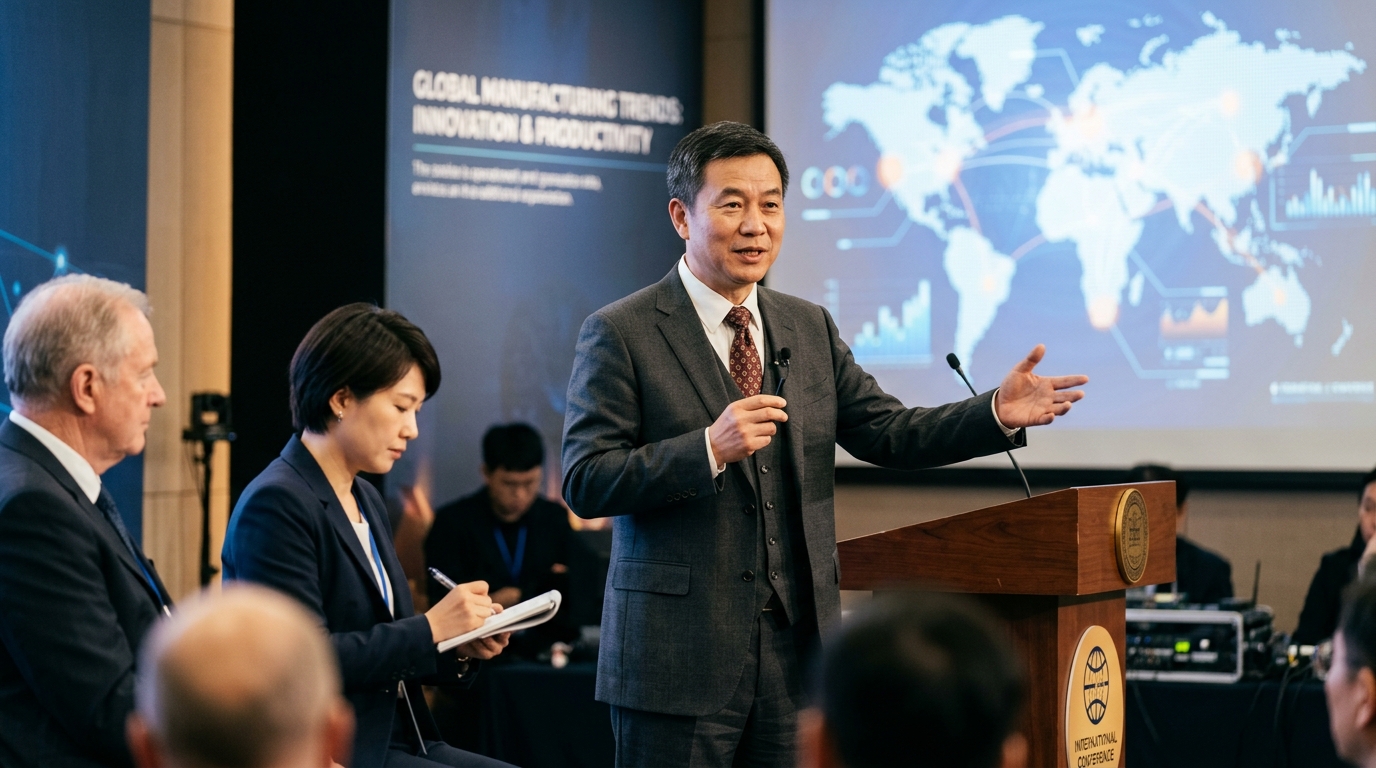
At the heart of global economic geopolitics, China is no longer content with being merely the "world's factory." In a strategic move that is redefining the landscape, Beijing is integrating Artificial Intelligence (AI) into the core of its heavy and light industries, signaling a new era that the country’s leadership terms "New Quality Productive Forces." Recent analysis from Vietnam.vn highlights how China is utilizing AI not just to automate production, but to redefine the very nature of industrial efficiency.
The "AI Plus" Strategy and Industrial Transformation
The Chinese government, under the guidance of the Ministry of Industry and Information Technology (MIIT), has launched the "AI Plus" initiative. The goal is clear: the full integration of Large Language Models (LLMs) and generative AI into production lines. From steel manufacturing and the automotive sector to electronics, AI is being deployed for predictive maintenance, supply chain optimization, and real-time product design.
This transition is not merely technological; it is deeply political. At a time when the United States and its allies are imposing strict restrictions on the export of advanced chips (such as those from Nvidia), China is responding by developing domestic solutions. Companies like Huawei and Baidu are creating specialized industrial AI models that require less computational power but offer high expertise in specific fields, such as chemical engineering and precision robotics.
Overcoming the Obstacles of Western Sanctions
One of the most striking aspects of this development is China's ability to innovate under pressure. Despite being blocked from cutting-edge 3nm and 5nm technology, Chinese industries are focusing on "intelligent optimization." By using AI to make existing machinery and older-generation chips operate with 30% greater efficiency, Beijing is partially neutralizing the impact of sanctions. The use of digital twins — virtual representations of factories that run AI simulations — allows Chinese firms to test new production methods without halting physical assembly lines.
- Automated Design: Reducing the development time for new products from months to weeks.
- Predictive Maintenance: AI predicts when a component will fail, reducing downtime by 25%.
- Energy Efficiency: Smart energy management systems that lower the carbon footprint of factories.
Geopolitical Implications: The New Silk Road is Digital
The integration of AI into industry is not just about domestic consumption. China is now exporting this "smart model" to Southeast Asian nations like Vietnam and across Africa. By offering turnkey "Smart Factory" solutions at a lower cost than Western competitors, China is fostering a new form of technological dependency. This "AI diplomacy" strengthens its influence in the Global South, establishing Chinese standards as the dominant language of tomorrow’s industry.
However, challenges remain. China's demographic crisis and aging population make automation a necessity rather than a choice. If AI fails to fill the gap left by a shrinking workforce, the Chinese economy risks stagnation. Furthermore, strict state oversight of data may limit algorithmic creativity, as AI must always align with the Party's political guidelines.
Conclusion: A New Industrial World Order
China is betting its future on Artificial Intelligence. This is not a simple software upgrade; it is a structural reorganization of its productive base. While the West focuses on AI for entertainment and services, the East is building the AI that forges steel and manufactures semiconductors. The outcome of this competition will determine who holds the reins of the global economy in the mid-21st century.