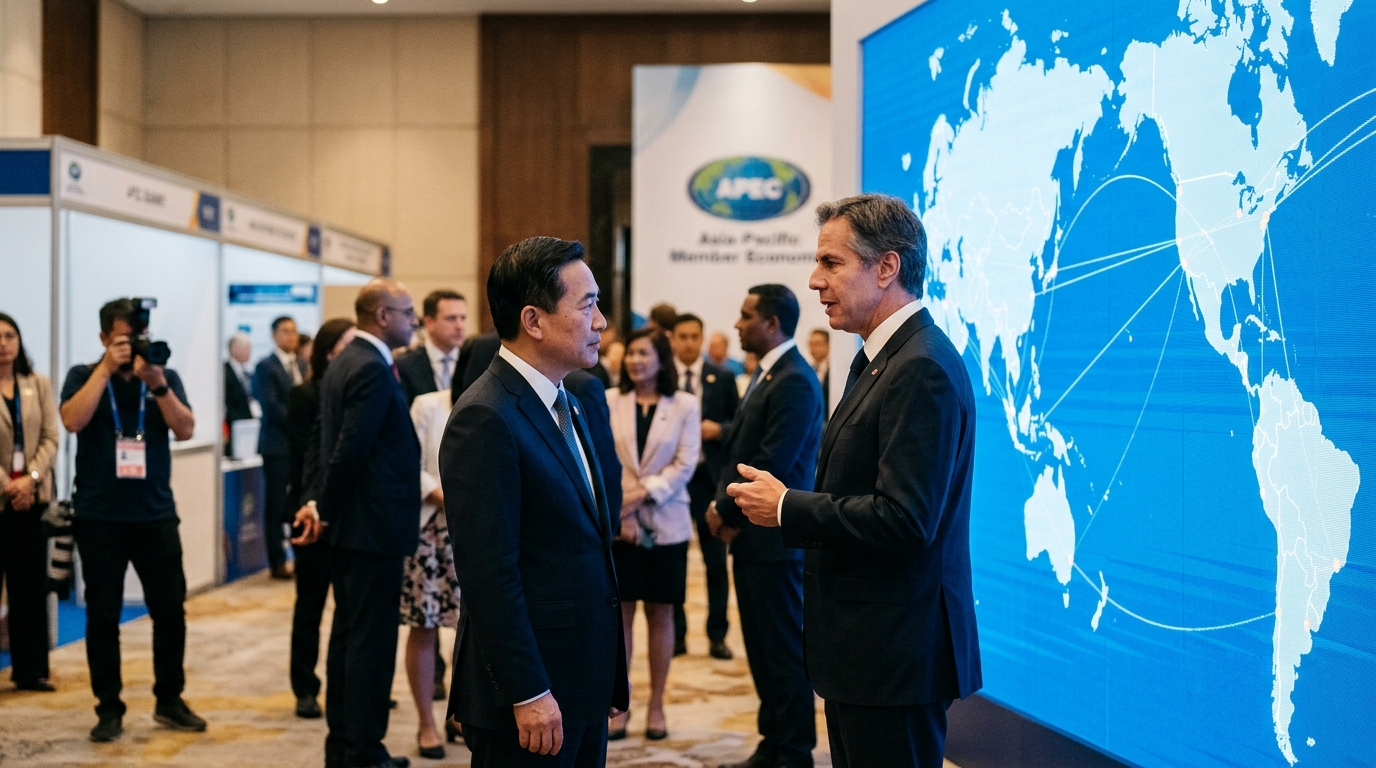
The recent summit of the Asia-Pacific Economic Cooperation (APEC) leaders marked a historic turning point in international relations. In a world often defined by geopolitical fragmentation, Artificial Intelligence (AI) is emerging as an unexpected catalyst bringing the 21 member economies closer together. From technological superpowers like the US and China to rapidly growing nations like Vietnam, the agenda is shifting from traditional tariffs to digital interoperability and the shared governance of algorithms.
The Geopolitics of Convergence and the Vietnamese 'Miracle'
Vietnam, the nation hosting recent pivotal discussions on the digital economy, serves as the perfect case study for this transformation. The Hanoi government has set an ambitious target for the digital economy to contribute 30% of the country's GDP by 2030. Here, AI is not viewed merely as a productivity tool but as a vehicle for 'leapfrogging'—bypassing traditional stages of industrial development through technology. Within the APEC framework, this translates into a concerted effort to bridge the digital divide between member states.
APEC economies represent approximately 60% of global GDP and half of world trade. When these powers agree on common standards for the ethical use of AI, the impact is global. The 'AI for All' strategy promoted within the organization aims to democratize access to computing power and large datasets, allowing smaller economies to develop localized solutions for agriculture, supply chain management, and climate change mitigation.
Supply Chains and Predictive Diplomacy
One of the most significant AI applications discussed is the optimization of Pacific supply chains. By utilizing predictive models, APEC economies can now anticipate maritime transport disruptions before they occur, whether caused by weather events or geopolitical tensions. This 'digital resilience' is crucial for the stability of global markets.
- Automation of customs procedures through intelligent algorithms.
- Use of AI for energy management in cross-border grids.
- Shared cybersecurity protocols to protect critical infrastructure.
However, the challenge remains to balance open innovation with national security. The US and China, despite their intense rivalry, find within APEC a venue for technical dialogue that bypasses political rhetoric. The necessity for shared technical standards is so pressing that it often transcends diplomatic friction.
Human Capital and the Reskilling Mandate
Convergence is not just about machines; it is about people. APEC is launching mass reskilling programs for millions of workers across the region. The concern that AI could widen inequalities is real and pressing. Consequently, cooperation focuses on 'Responsible AI,' ensuring that automation does not lead to social destabilization in the developing nations of Southeast Asia.
"Artificial Intelligence is the new common language of the Pacific. If we speak it correctly, we can build a bridge of prosperity based not just on commodities, but on knowledge," stated a senior APEC official during the recent forum in Hanoi.
In conclusion, AI is acting as a powerful unifying force for APEC. Despite differing political approaches, the shared recognition that technological supremacy is the key to economic survival in the 21st century is forcing countries into a form of 'mandated cooperation.' The bet for the coming years is whether this technological convergence will lead to a genuine geopolitical detente or if it will simply become the new battlefield of a digital Cold War.