Pompeii, the city frozen in time in 79 AD beneath layers of volcanic ash from Mount Vesuvius, never ceases to amaze humanity. However, 2026 marks a decisive turning point: Artificial Intelligence (AI) is no longer used merely for mapping ruins, but for "resurrecting" the very individuals who lost their lives on that fateful day. Through a groundbreaking collaboration between archaeologists, geneticists, and computer scientists, technology has managed to reconstruct with startling accuracy the face and life story of a victim, offering a new, deeply human dimension to historical research.
From Plaster to Pixels: The Evolution of Archaeological Methodology
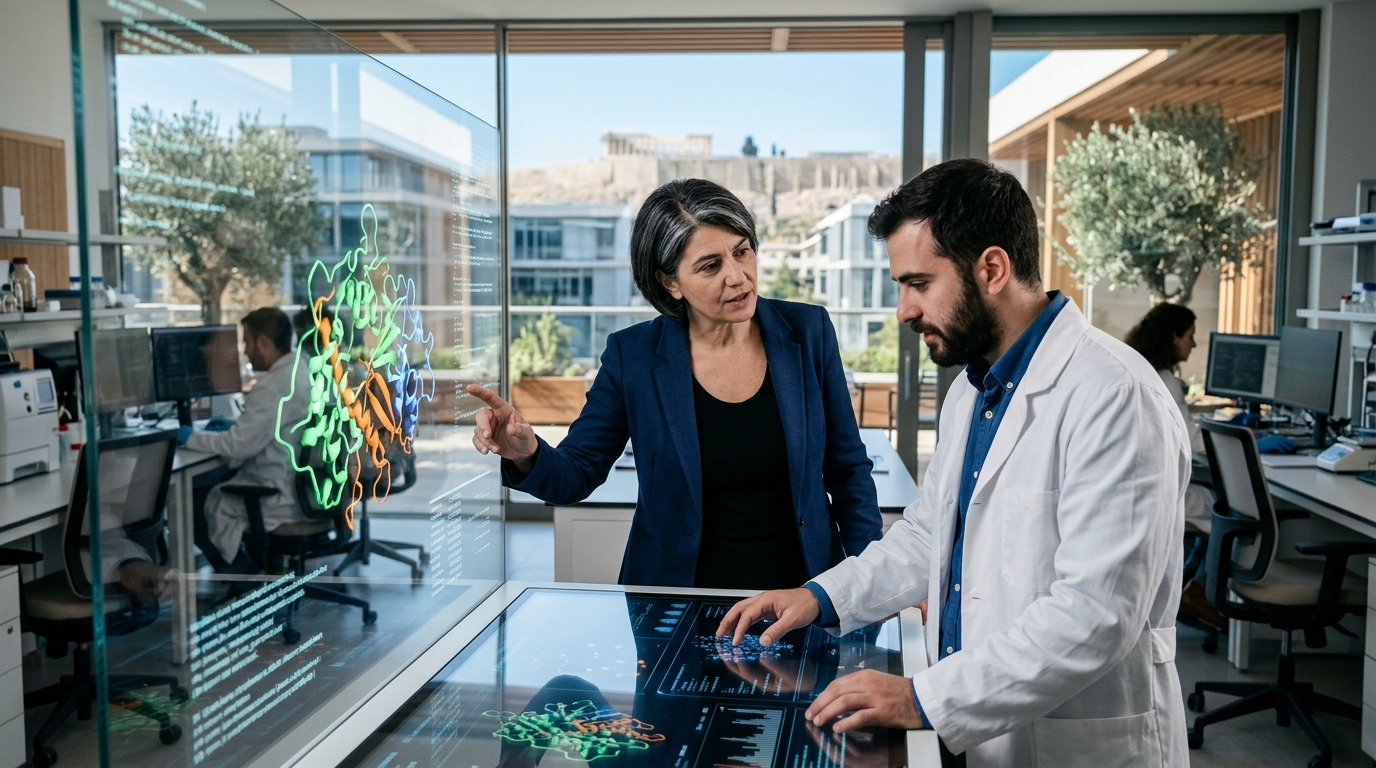
For over a century, our image of Pompeii's victims was based on Giuseppe Fiorelli's famous plaster casts. While haunting, these casts remained anonymous shapes of agony. Today, AI is changing the game. Using advanced machine learning algorithms, researchers process data from CT scans of skeletons found within the casts, combined with paleogenomic analysis of ancient DNA. The result is not just a 3D model, but a "living" representation that accounts for genetic predispositions for facial features, eye color, hair, and even traces of diseases or dietary habits etched into the bones.
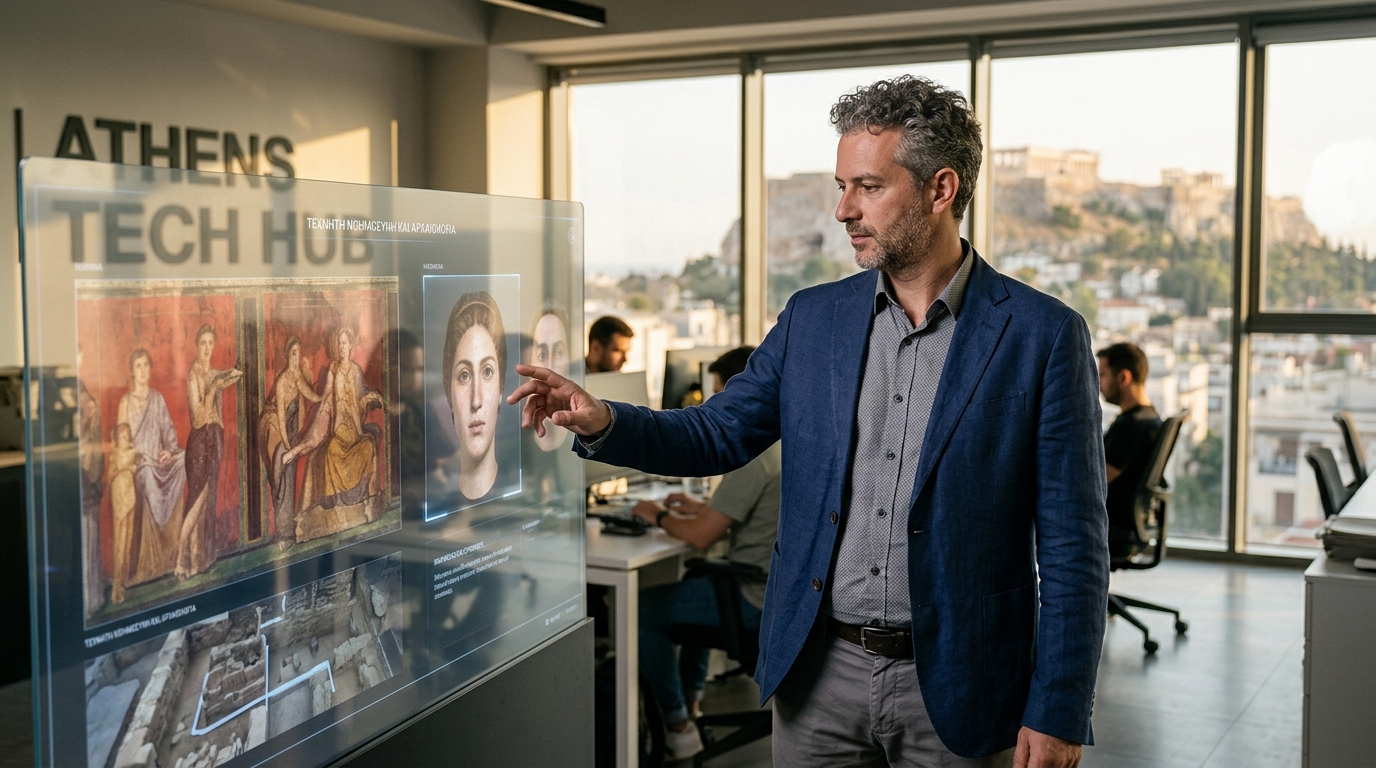
A recent case that gained public attention involves a man aged approximately 35-40, found in the "House of the Painters." AI managed to fill the gaps left by the ravages of time, reconstructing the soft tissue structure of his face. This process is not merely aesthetic; it is a scientific endeavor to understand the demographic composition of Pompeii, which, as it turns out, was a multicultural hub with residents from every corner of the Roman Empire and the Mediterranean.
Decoding Human Drama Through Data
The power of AI lies in its ability to synthesize disparate data. In Pompeii, this means cross-referencing archaeological finds—such as jewelry or tools found near victims—with genetic information and historical records. Algorithms can predict with high probability an individual's social status, profession, and origin. For example, isotope analysis of teeth, processed by AI models, has revealed that many "victims" were not born in Campania but had migrated there, likely from the Eastern Mediterranean or North Africa.
Furthermore, AI helps reconstruct the final moments of these people. By analyzing body posture and the dynamics of pyroclastic flow, computers simulate death conditions, allowing historians to understand whether the individual died from asphyxiation or thermal shock. This detailed approach transforms archaeology from a science of objects into a science of human experiences, making the past feel less like a museum and more like a mirror of our own existence.
Ethical Dilemmas and the "Resurrection" of the Dead
Like any technological revolution, the use of AI in archaeology raises serious ethical questions. Is it right to give a face and identity to people who died so tragically, without their consent? Is there a risk that technology will lead to a "Disneyfication" of history, where representation overrides scientific truth? Critics argue that AI, however advanced, relies on assumptions and probabilities. A wrong parameter in the algorithm could distort historical reality, creating a false image of the past.
However, proponents of the method emphasize that AI is the ultimate tool for the democratization of knowledge. By giving faces to victims, history ceases to be a static narrative of dates and battles and becomes a story of people we can identify with. In the case of Pompeii, the "rebirth" of victims through AI serves as a powerful link between the ancient past and the digital present, reminding us of the fragility of human life against the forces of nature.
The Future of Digital Archaeology
The success in Pompeii is just the beginning. Already, similar techniques are being applied to decode the Herculaneum scrolls, which were carbonized and impossible to read for centuries. AI can now "see" through the layers of burnt papyrus and recognize letters and words, bringing to light lost works of ancient Greek and Latin literature. The future of archaeology is undoubtedly digital, and Artificial Intelligence is the key that will unlock history's well-kept secrets, turning the silence of ruins into a living dialogue with yesterday.