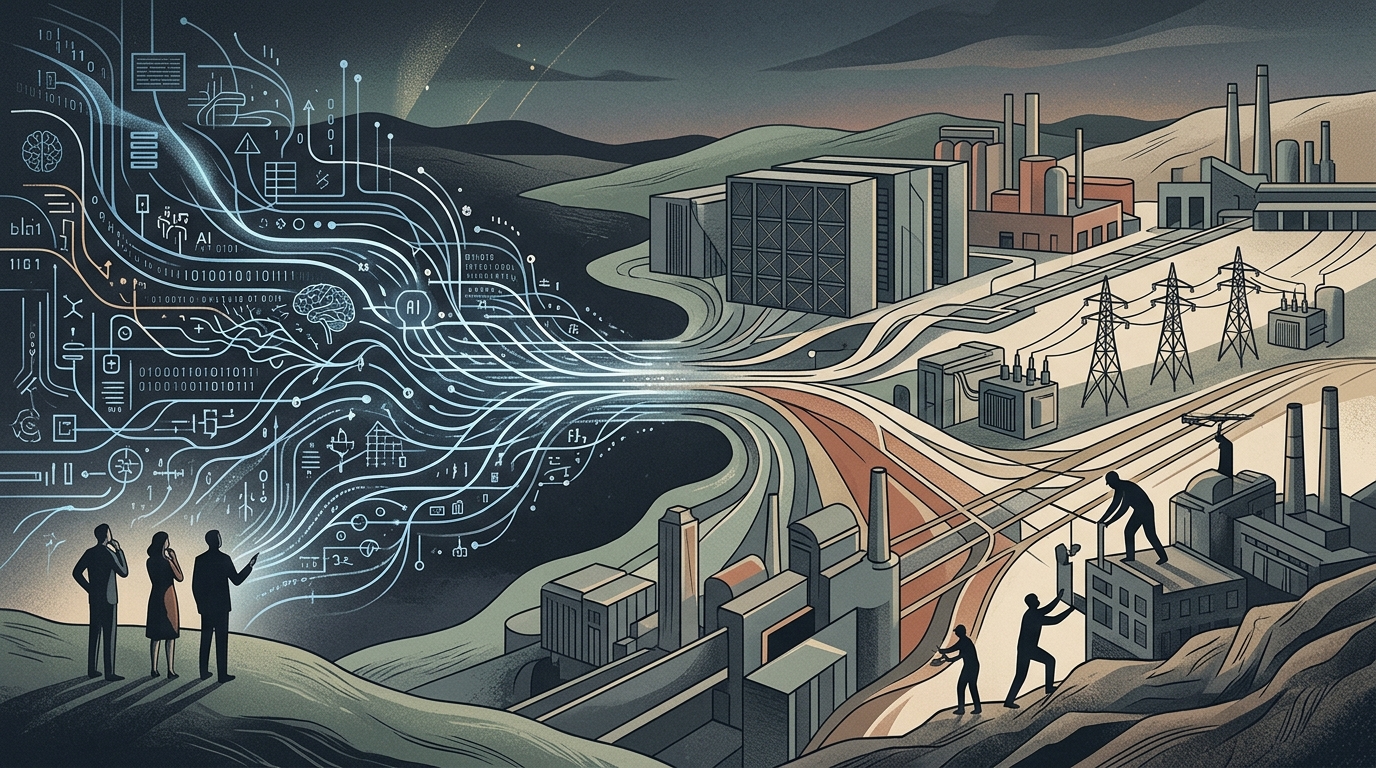
The discourse surrounding Artificial Intelligence (AI) is often trapped between two extremes: the utopian promise of a world without toil and the dystopian fear of humanity’s extinction by “smart” machines. However, the real battle is not being fought in the future, but in the present; and it is not about the survival of the species, but about the distribution of power. As highlighted by the analysis in the newspaper “I Epohi,” the critical question is not what the machine “can” do, but who owns it and for what purpose it is used within the framework of digital capitalism.
The Invisible Proletariat of Data
Behind the sleek interfaces of ChatGPT or Midjourney lies a vast army of workers that remains systematically invisible. This is the “digital proletariat” of the Global South—from Kenya to the Philippines—performing the manual labor of data labeling. These workers, paid mere dollars per hour, train algorithms to recognize violence, hate speech, and inappropriate content, often enduring severe psychological trauma in the process.
This “ghost work” debunk the myth that AI is an autonomous creation of pure mathematical intelligence. In reality, AI is the product of a massive process of extracting value from human activity. These models do not “think”; they synthesize collective human knowledge and creativity, which has been expropriated by major tech platforms without any compensation for the original creators.
Algorithmic Surveillance and the Erosion of Labor
In the developed world, AI is invading workplaces not just as an automation tool, but primarily as a means of discipline. “Algorithmic management” turns managers into code. From Uber drivers and delivery couriers to Amazon warehouse employees, workers are monitored by systems that measure every second of productivity, imposing rhythms that exhaust human limits.
- Loss of Autonomy: The worker ceases to make decisions and merely executes the commands of an algorithm optimizing for profit.
- Intensification: AI’s ability to analyze data in real-time allows for the elimination of any “dead time,” leading to widespread professional burnout.
- Weakening of Bargaining Power: When decisions about layoffs or promotions are made by algorithmic “black boxes,” collective action and negotiation become significantly harder.
Concentration of Power and the Digital Oligopoly
Digital capitalism is characterized by an unprecedented concentration of wealth and power. A handful of companies in Silicon Valley control the infrastructure (cloud computing), the data, and the talent required to develop AI. This creates a new form of “techno-feudalism,” where states and citizens become dependent on private platforms for essential social functions.
“Artificial Intelligence is not a neutral force of nature, but a political choice reflecting the priorities of those who fund it,” the analysis emphasizes.
The strategy of these giants is the creation of “walled gardens,” where access to information and technology is strictly controlled. AI is used to predict and direct consumer behavior, but also to influence the political process through micro-targeting and disinformation, reinforcing existing social inequalities.
Reclaiming the Machine: Toward Democratic Control
The response to the dominance of digital capital cannot be technophobia, but political action. The need for a new social contract in the AI era is urgent. This includes regulating the use of algorithms in the workplace, ensuring data transparency, and, most importantly, strengthening labor unions so they have a say in the design of technological systems.
Furthermore, the debate on AI must be linked to the reduction of working hours. If technology increases productivity, then this benefit must be spread across society rather than accumulating as surplus profit for Big Tech shareholders. The demand for public AI infrastructure, operating for the common good rather than the maximization of stock market value, is the great challenge for progressive forces in the 21st century. Who controls the machine? The answer to this question will determine the future of our democracy.