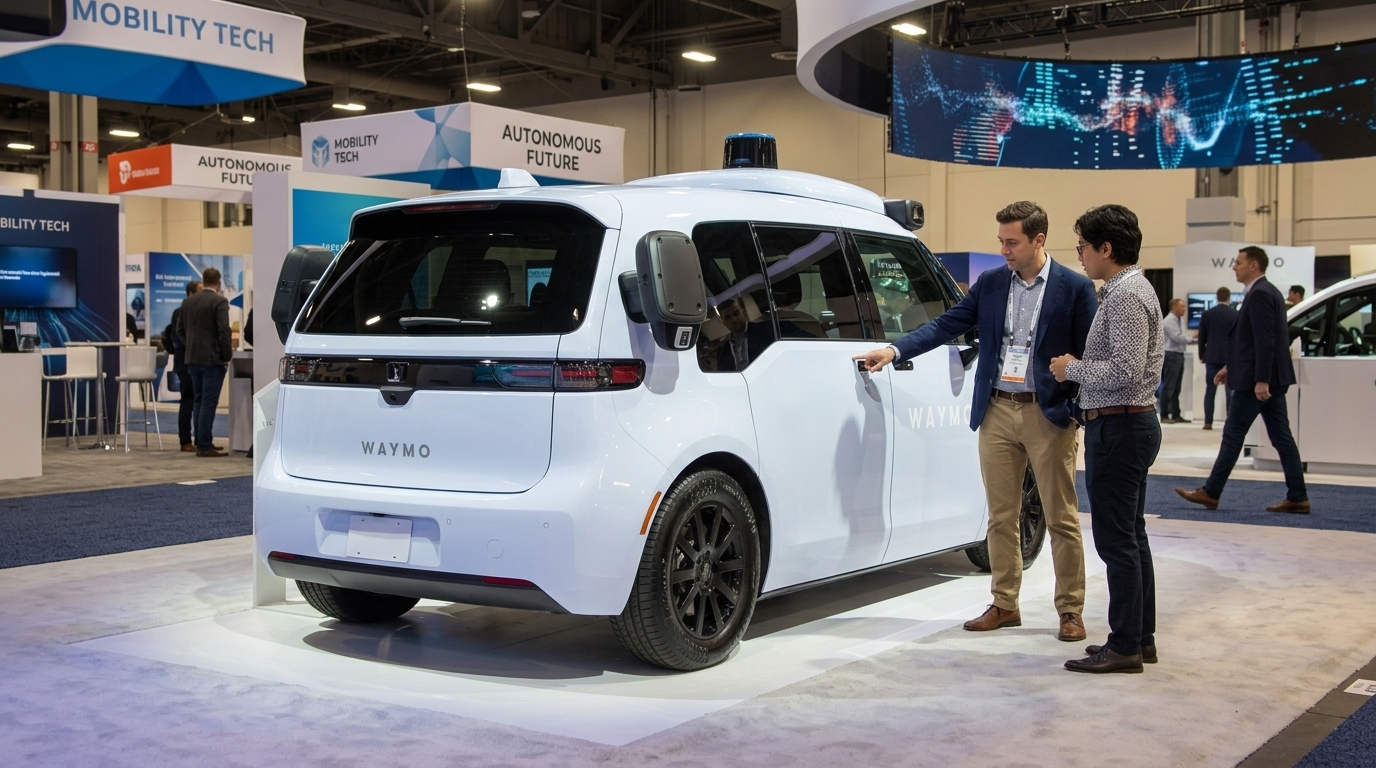
The evolution of autonomous driving is transitioning from the stage of experimentation to full industrial maturity. Waymo, the Alphabet subsidiary leading the robotaxi sector, has announced the commencement of passenger trips with its new vehicle, the Ojai. This purpose-built minivan, based on the Zeekr RT platform from China's Geely, is set to gradually replace the current fleet of Jaguar I-PACEs. This move is not merely a fleet refresh but a fundamental shift in the philosophy of urban mobility, as the Ojai is the company’s first vehicle designed from the ground up to operate without a human driver.
A Design That Redefines the Cabin
The Ojai (pronounced 'O-hi') stands out at first glance. Unlike previous Waymo models, which were modified production vehicles, the Ojai features a cabin that feels more like a mobile living room than a traditional car. The absence of a steering wheel and pedals allows for a completely flat floor, facilitating easy entry and exit for passengers, while the sliding doors provide a futuristic shuttle-like feel. The interior space is optimized for passenger comfort, featuring ample legroom and entertainment screens that provide real-time trip information and environmental visualization.
The vehicle’s technical foundation, Zeekr’s SEA-M architecture, was developed specifically for autonomous vehicles. This means that safety systems, weight distribution, and the placement of sensors (Lidar, radar, and cameras) have been integrated into the chassis in a way that maximizes the efficiency of the 'Waymo Driver'—the software stack that controls the vehicle. Waymo contends that transitioning to this new hardware will enable a reduction in cost-per-mile, making the service more competitive against traditional ride-hailing platforms like Uber and Lyft.
Geopolitical Challenges and Strategic Expansion
Despite the excitement surrounding technological progress, the introduction of the Ojai is not without its hurdles, primarily due to the vehicle's origins. Waymo’s partnership with Zeekr, owned by the Chinese giant Geely, takes place during a period of intense trade friction between the U.S. and China. The U.S. government has expressed concerns regarding data security and the reliance on Chinese technology within critical transportation networks. However, Waymo has taken measures to ensure that the 'brain' of the car—the software and critical sensors—is American technology and remains entirely under its control.
The rollout of the Ojai begins in San Francisco, Los Angeles, and Phoenix, the three cities where Waymo maintains its strongest presence. Initially, access will be granted to 'select riders' (Trusted Testers) before the service opens to the general public. This phased approach allows the company to gather data on public acceptance of a steering-wheel-free vehicle, which remains a psychological barrier for many users. The success of this phase will dictate the pace at which Waymo expands into new markets, such as Austin and Atlanta.
The Economic Dimension of the Autonomous Fleet
For Alphabet, the success of the Ojai is vital for Waymo's path to profitability. The Jaguar I-PACEs, while luxurious and capable, are expensive to maintain and operate as robotaxis. The Ojai is designed for high durability and lower operational overhead. With the capability to operate nearly 24/7 with minimal downtime for charging and maintenance, the Ojai promises to bring Waymo closer to the 'holy grail' of autonomous driving: a sustainable business model that does not rely on parent company subsidies.
Furthermore, the integration of the Ojai into the fleet coincides with a period of increased scrutiny from regulatory bodies. Following incidents involving vehicles from other companies (such as GM’s Cruise), Waymo is striving to prove that its technology is superior and safer. Utilizing a vehicle designed exclusively for autonomous use allows for the installation of multiple redundant safety systems that would not be feasible in a conventional car. The future of our cities seems to pass through the sliding doors of the Ojai, offering a glimpse into a world where car ownership might become the exception rather than the rule.