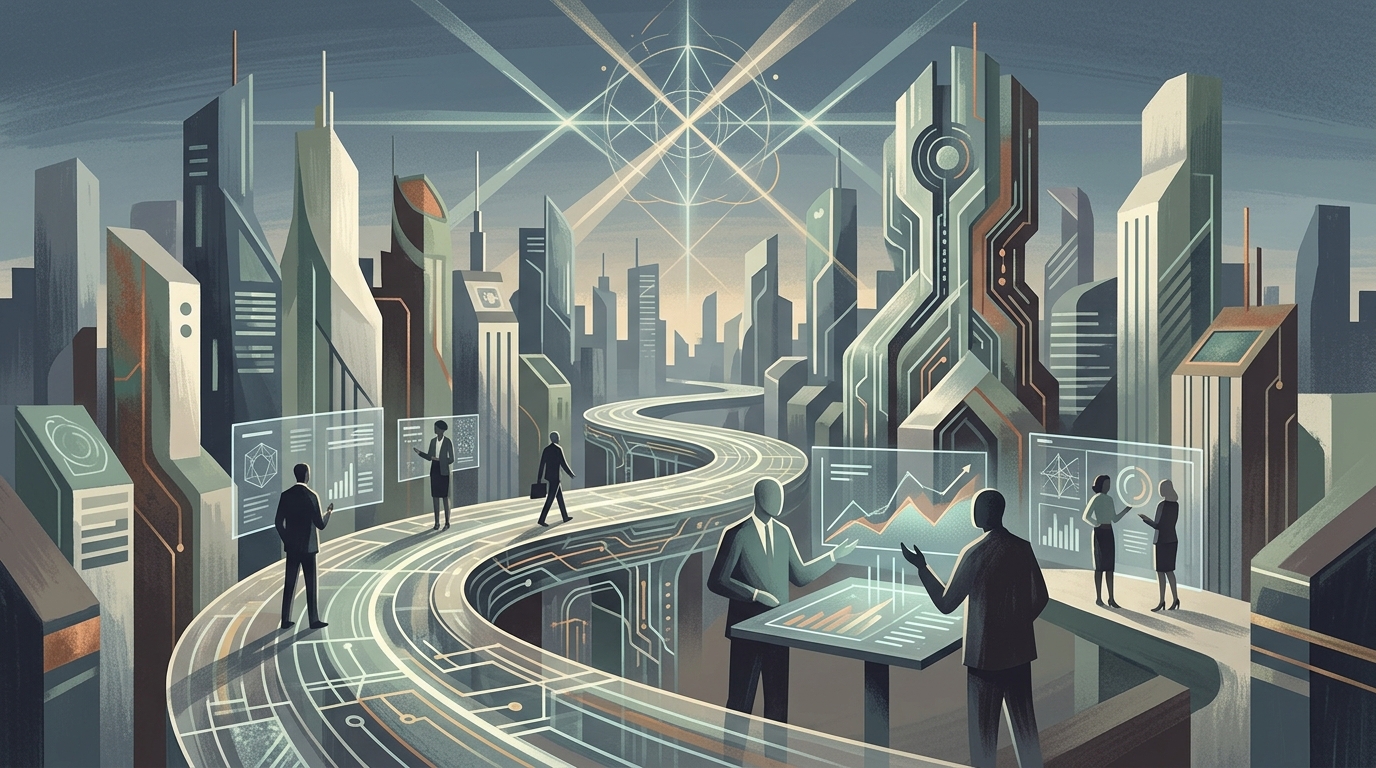
In an era where the global dialogue on Artificial Intelligence (AI) often focuses on dystopian science fiction scenarios, Thodoris Skylakakis, the Greek Minister of Environment and Energy, offers a profound political and economic analysis that challenges established certainties. His central thesis is clear: the first major wave of disruption from AI will not hit the developing world, as happened with previous industrial revolutions, but the developed world. This "inverse revolution" brings Western societies face-to-face with their responsibilities, demanding a radical reassessment of the social contract.
The Anatomy of the First Digital Disruption
Historically, major technological shifts began with the automation of manual labor. Steam engines replaced muscles; assembly lines replaced repetitive motion in factories. In those cases, the developing world often suffered due to a lack of capital to keep pace. Today, AI targets "cognitive labor." Lawyers, accountants, programmers, data analysts, and administrative executives—the backbone of the middle and upper classes in the developed world—are at the eye of the storm.
Mr. Skylakakis points out that the cost of intellectual labor in developed countries is exceptionally high. This creates a massive economic incentive for businesses to adopt AI tools that can perform these tasks at a fraction of the cost. Conversely, in a developing economy where manual labor remains cheap and the infrastructure for advanced AI is lacking, the pressure for automation is, for now, less intense. This creates a paradox: the very success and wealth of the West make it the most vulnerable target of the new technological world order.
Greece at the Crossroads of Change
For Greece, Skylakakis's analysis carries significant weight. As an economy heavily reliant on services, our country is directly exposed. The public sector, tourism (in terms of bookings and management), banking, and professional services will see their structures violently transformed. The Minister emphasizes that adaptation is not an option but a survival imperative. If Greece fails to integrate AI to boost productivity, it risks being left with a workforce whose skills will rapidly become obsolete.
- Education: The need for lifelong learning stops being a slogan and becomes a necessity.
- Public Administration: AI can eliminate bureaucracy, but it requires the political will to redistribute resources.
- Entrepreneurship: Greek SMEs must gain access to tools that were, until yesterday, the privilege of multinationals.
"Artificial Intelligence is not just a tool; it is a new factor of production that knows no borders but knows costs," note analysts who align with the Minister's views.
Social and Political Implications
Skylakakis's warning also touches on the issue of social cohesion. When disruption hits the middle classes, political instability is often the next stage. The developed world is accustomed to linear progress. The sudden devaluation of degrees and decades of experience could fuel populist movements promising a "return to the past." However, technological evolution does not have a pause button.
The solution, according to the perspective emerging from these statements, lies in proactive action. Developed nations must use their wealth not to protect obsolete jobs, but to invest in people's transition to new forms of employment that AI cannot—yet—replace: creativity, empathy, complex problem-solving in physical environments, and ethical judgment.
Conclusion: The Fear and the Opportunity
In conclusion, Thodoris Skylakakis's stance serves as a wake-up call. Artificial Intelligence will be the great equalizer or the great divider. If the developed world becomes complacent, thinking technology is just an extension of the existing model, the fall will be steep. But if it understands that the disruption starts from the "head" and not the "hands" of the economy, then it can lead a new era of prosperity based on essential human value rather than mere information processing.