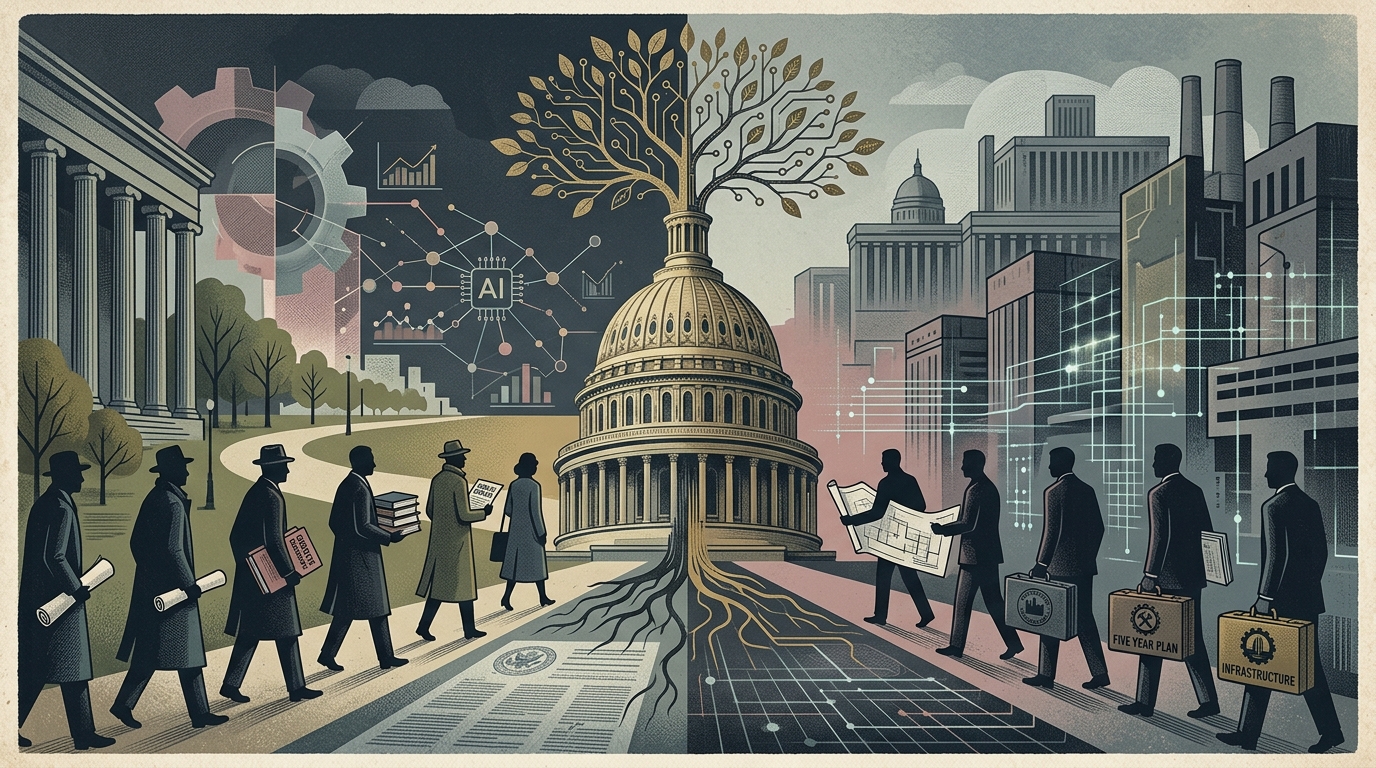
By April 2026, the image of a student sitting in a library surrounded by stacks of physical books feels like a nostalgic relic of a distant past. Artificial Intelligence (AI) is no longer an experimental tool or a mere source of plagiarism concerns; it is the central nervous system of the modern university experience. From the lecture halls of Ivy League institutions to public universities worldwide, the integration of Large Language Models (LLMs) and personalized learning algorithms has sparked a revolution comparable only to the invention of the printing press.
The Mutation of Pedagogy
The traditional "ex cathedra" method of teaching is under immense pressure. Today, personalized learning represents the tip of the spear. AI systems analyze student performance, knowledge gaps, and learning styles in real-time, offering hyper-customized educational content. If a student struggles with Quantum Mechanics, their digital tutor doesn't just provide an answer; it deconstructs the theory using analogies tailored to the student's specific background and interests.
However, this transition raises profound questions about the role of the professor. The academic of 2026 is no longer the sole gatekeeper of knowledge but rather an "orchestrator" of critical thinking. The emphasis has shifted from the memorization of facts to the ability to synthesize and evaluate the data generated by AI. Universities that refused to adapt are now facing an identity crisis, as students gravitate toward institutions that prepare them for a labor market where human-AI collaboration is the baseline requirement.
The End of Traditional Assessment and the New Integrity
Perhaps the greatest challenge higher education has faced in the last three years is the total collapse of traditional assessment methods. Take-home essays have essentially been rendered obsolete as a reliable measure of competence, given that AI can produce high-level academic prose in seconds. The response from universities has been a return to roots: oral examinations, proctored in-class writing without internet access, and, most importantly, the assessment of the "process" rather than just the final output.
- Utilization of blockchain technology to verify the authenticity of research data.
- Integration of AI as a "co-author" with mandatory disclosure of the prompts used.
- A pivot toward experiential projects and laboratory research requiring physical presence.
The concept of academic ethics has been fundamentally redefined. It is no longer considered "theft" to use AI for structuring a paper; however, it is a serious academic offense to uncritically accept algorithmic hallucinations. A student's ability to identify and correct machine errors has become one of the most valuable grading criteria in the modern curriculum.
The Digital Divide and the Commodification of Knowledge
Despite the promises of democratizing knowledge, the rise of AI in education threatens to widen social inequalities. Wealthy private universities are investing billions in proprietary, closed AI models trained on exclusive datasets and rare archives. In contrast, underfunded public institutions rely on free, commercial versions that often carry biases or limited analytical capabilities.
"Education risks turning into a two-tier subscription service," says Dr. Nicholas Pappas, an educational policy analyst. "If access to advanced intelligence depends on a student's wallet, then social mobility through education will become a thing of the past."
Furthermore, the reliance on Big Tech for educational infrastructure creates a dangerous dependency. Universities are tasked with safeguarding their intellectual independence at a time when corporate algorithms dictate the flow of information and, by extension, the cognitive development of future citizens.
Conclusion: The Return to the Human Element
As we head into the latter half of the 2020s, Higher Education seems to be completing a cycle. After the initial excitement and the subsequent panic regarding AI, we are returning to the core: human connection. AI can transfer information, but only a human professor can inspire, challenge, and cultivate character. The university of the future will not be a place for the mere transmission of knowledge, but a laboratory of wisdom, where technology serves human creativity rather than the other way around.